
Can a Foreigner Buy a Drift Car and Keep It in Japan? (2026)
The Rundown
- Article 4 of Japan's Automobile Storage Place Securing Act tells the registry not to process the registration at all unless a police-issued garage certificate is handed in, and the Cabinet Order caps the distance from your base of use to the parking space at 2 kilometres.
- The seal problem has a written answer: the Kanto Transport Bureau's registration manual accepts a signature certificate issued by an embassy, consulate or public office, showing name and address and issued within the last 3 months, in place of a Japanese seal certificate.
- A registered 2.0-litre car keeps billing you while you are away. Tokyo charges ¥39,500 a year on a car first registered on or before 30 September 2019, plus roughly 15 per cent more once it passes 13 years, and the compulsory insurance is ¥17,650 for 24 months.
- Temporary deregistration costs ¥500 at the counter or ¥450 by OSS, the plates go back, and Tokyo prorates the road tax from April to the month of deregistration.
- Every rule and figure here was read off the National Police Agency, MLIT, Tokyo Metropolitan Police and Tokyo tax bureau pages on 22 September 2026.
Contents
- Can you buy a drift car in Japan and leave it there?
- Why does the garage certificate stop most people?
- Can an embassy signature certificate replace a Japanese seal?
- What does a registered car cost while you are not in Japan?
- What changes if you keep the car deregistered?
- What does storing it at a shop actually involve?
Keeping a car in Japan at a glance
Can you buy a drift car in Japan and leave it there?
You can buy it, and the money side is the easy part. What you cannot do on a tourist stamp is put it on a Japanese number plate, because Article 4 of the Automobile Storage Place Securing Act tells the registry to withhold the registration unless a police-issued garage certificate is handed over, and that certificate is issued against a 使用の本拠の位置 (base of use) in Japan with the parking space inside a 2 kilometre radius. The route that does work is the opposite of the one most people imagine: you keep the car in 一時抹消登録 (temporary deregistration), which costs ¥500 at the counter, hands the plates back, stops the annual road tax, and turns the car into a track-only machine that reaches the circuit on a trailer. Every figure on this page was checked on the official National Police Agency, MLIT, Tokyo Metropolitan Police and Tokyo tax bureau pages on 22 September 2026.
Most readers arrive at this question after doing the sums on the alternative. Renting costs you a day at a time and gives you somebody else’s setup, and shipping the car home lands you in the age rules covered in the full import process. A car that lives in Japan skips both. It also takes on a set of Japanese obligations that do not pause while you are on the other side of the world.
Why does the garage certificate stop most people?
Start with the law, because it is unusually blunt. Article 3 puts a duty on the owner to secure a storage place off the public road. Article 4 then says that anyone seeking a registration decision must submit the police-issued document proving that space, and the second paragraph adds that the authority shall not make the decision without it. There is no discretion and no fee to pay your way past it.
The Cabinet Order sets the conditions. The parking space must be no more than 2 kilometres from the car’s base of use, the car must be able to get in and out from a road it is legally allowed to use, and the space must hold the whole vehicle. The police then want, per the National Police Agency’s own list, the application in duplicate, drawings showing where the space is and how the car sits in it, and proof that you are entitled to use it: a self-declaration if you own the land, or a 保管場所使用承諾証明書 (certificate of consent to use the storage place) signed by whoever does.
Fees are set prefecture by prefecture. Tokyo charges ¥2,400 at the police station window and ¥2,300 through the online OSS system, with reissue at ¥600 and the notification procedure free of charge. Chiba charges ¥2,200. Some places charge nothing because the requirement does not reach them: the law’s supplementary provisions switch Article 4 off outside areas named by Cabinet Order, and Chiba police spell out that anyone whose base of use sits in the former Miyoshi Village, Chosei Village or the former Hasunuma Village does not need to apply at all. Those exemptions are rural, and none of them helps you if your car lives near a circuit in a town that is covered.
The step with no paperwork workaround
Every other document on this page has a published substitute. The Japanese address behind the garage certificate does not, and that is the piece we stand in for: the base of use, the consent certificate for the storage space, the police filing and the registry counter. Before anything is bought we look at the car in Japan and send you a video and photo walkthrough of the underside, frame rails, engine bay and a cold start, so you decide from footage rather than from a listing. See how our export desk works, from bidding on your behalf through the Japan-side registry paperwork, quoted as one total up front.
Can an embassy signature certificate replace a Japanese seal?
Yes, and this is the part that surprises people, because the seal is the thing everyone expects to be impossible. The Kanto Transport Bureau’s registration manual is explicit: where the applicant is a foreign national who cannot produce a 印鑑登録証明書 (seal registration certificate), a signature certificate issued by an embassy, consulate or public office and showing the person’s name and address is treated as the seal certificate. The same manual lists the acceptable proof of a user’s address for an individual as a 住民票 (resident record), a seal registration certificate, or that same signature certificate, each issued within the last three months. A foreign company with no base in Japan is registered at its foreign address.
The Wakayama branch office adds what the certificate has to carry: name, overseas address, date of birth, and the signature or thumbprint itself. It also shows the catch. For someone who has left Japan, the office wants a 住民票の除票 (deleted resident record) linking the address on the 車検証 to their last Japanese address, which only exists if you had one. So the seal is solvable. The address is not, for a visitor who has never been on a Japanese municipal register.
Don't get caught out
A signature certificate proves who you are and where you live, and where you live is abroad. The garage certificate needs a point on a Japanese map with a parking space within 2 kilometres of it. Solving the seal does not solve the address, and no police station will issue against a hotel.
What does a registered car cost while you are not in Japan?
| Item | What it is | Figure, as checked 22 Sep 2026 |
|---|---|---|
| 自動車税種別割, 1.5–2.0L | Annual road tax, Tokyo, first registered on or before 30 Sep 2019 | ¥39,500 |
| 自動車税種別割, 2.0–2.5L | Same, next band up | ¥45,000 |
| 自動車税種別割, 2.5–3.0L | Same, band above that | ¥51,000 |
| 13-year surcharge | Petrol cars past 13 years from first registration | Roughly 15% on top, per Tokyo’s published rule |
| 自賠責, 24 months | Compulsory insurance, private passenger car, mainland rate | ¥17,650 (12 months ¥11,500) |
| 継続検査 fee | Government inspection fee, ordinary passenger car, walk-in | ¥2,600 (¥2,100 via a designated workshop) |
| 自動車重量税 | Weight tax charged at inspection | Not published as a flat table; MLIT gives it per vehicle |
| Shaken labour and parts | The actual workshop bill | Not officially published |
Read the top three rows off the 総排気量 (total displacement) line on the car’s 車検証, not off the badge. The tax falls on whoever is listed as owner on that document on 1 April, so a bill lands in Japan every spring whether or not anyone has turned a key. The inspection cycle keeps running too, and MLIT deliberately does not publish a single weight-tax number, pointing you instead at a lookup that answers for one specific chassis.
What changes if you keep the car deregistered?
一時抹消登録 is the procedure for temporarily stopping use of a car. MLIT’s document list is the owner’s registered seal, a seal certificate issued within the last three months, the 車検証, the fee slip, and the number plates, which are surrendered at the counter. The fee is ¥500 at the window or ¥450 through OSS, as of the 1 April 2026 fee table. Tokyo then prorates the road tax by the number of months from April to the month the deregistration lands.
What deregistration gives and takes
- Gives: plates handed back, the annual road tax prorated and then stopped, no inspection cycle to feed while the car sits
- Takes: the car cannot legally use a public road at all, not once, not to the circuit and not to the workshop
- Needs: a place to keep it, and a trailer or transporter for every single movement
- Costs to undo: ¥1,300 for the used-car new registration, ¥2,900 for a walk-in inspection, and a fresh garage certificate
That last line is the one to plan around. Bringing a deregistered car back onto plates is a new registration, so Article 4 applies again and the garage certificate question returns exactly as it was.
What does storing it at a shop actually involve?
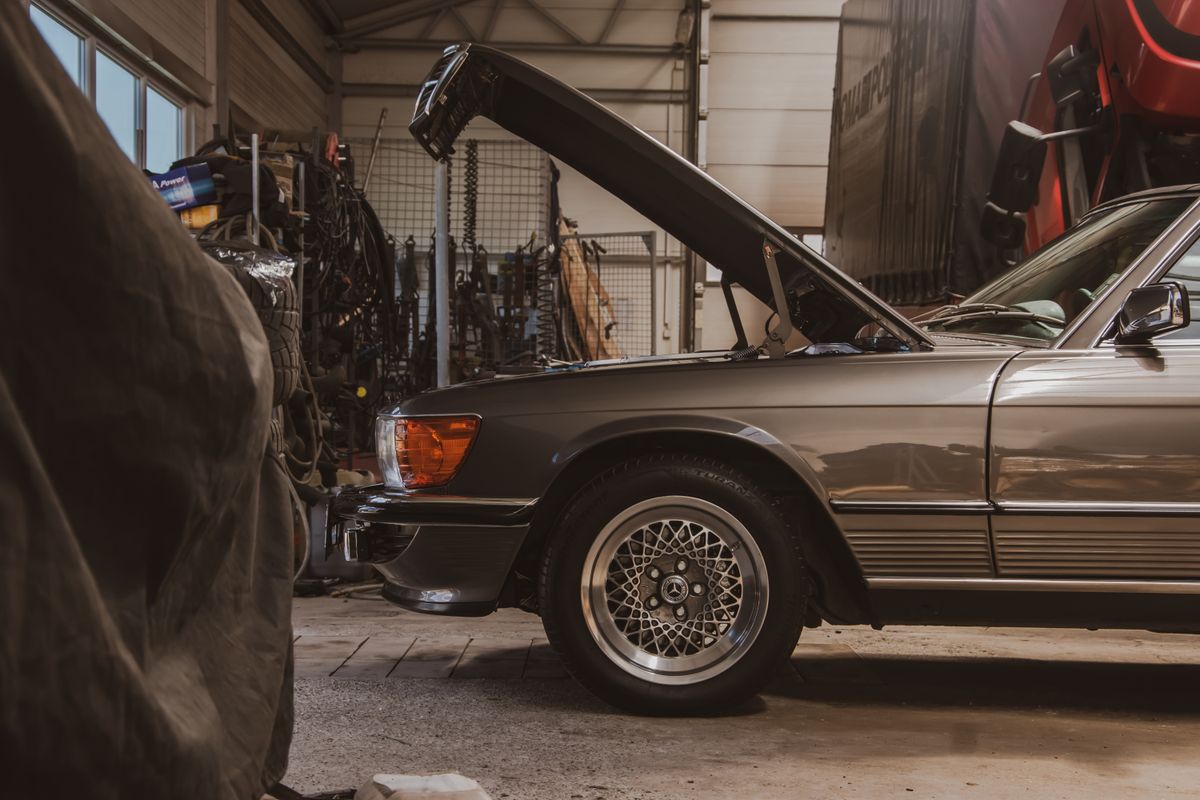
In practice the storage arrangement and the paperwork are the same conversation. If a workshop keeps your car, it is their land, so they are the ones who would sign the consent certificate the police want, and their address is the natural base of use. That is why the storage question is worth settling before the buying question rather than after it.
Rates are the honest gap here. No official body publishes a standard price for storing a car at a Japanese shop, or for a transporter run to a circuit, so both are quotes and nothing more until you have one in writing. What is published is the surrounding arithmetic on this page, which is enough to tell you which of the two routes you are actually on. If the plan is to fly in and drive, the practical side of getting seat time is in drift car rental in Japan and getting into a Japanese track day as a foreigner, and the dates you would be building the trip around are on the Drift Japan Event & Track Calendar. If the plan is to buy, the money side of the purchase itself is in how to buy a drift car from Japan.
Frequently asked questions
Can a tourist register a car in Japan?
Not on their own, as of 22 September 2026. Registration under Article 4 of Japan's Automobile Storage Place Securing Act cannot proceed unless a garage certificate issued by the police is submitted, and the second paragraph of that article tells the registry to withhold the decision when it is missing. The certificate is issued against a 使用の本拠の位置 (base of use) in Japan, and the Cabinet Order requires the parking space to be within 2 kilometres of it. A short-stay visitor has no 住民票 (resident record) and no registered seal, which are two of the three documents the Kanto Transport Bureau's own manual lists as proof of a user's address, so the car is normally registered to a Japanese address held by someone else, such as the shop that stores it.
How much is road tax on a 2.0-litre drift car in Japan?
In Tokyo, ¥39,500 a year for a private passenger car over 1.5 and up to 2.0 litres that was first registered on or before 30 September 2019, which covers every SR20-era chassis. The band above it, over 2.0 and up to 2.5 litres, is ¥45,000, and over 2.5 up to 3.0 litres is ¥51,000. Tokyo also applies a surcharge of roughly 15 per cent to petrol cars more than 13 years past their first registration, which is all of them. The tax falls on whoever is recorded as owner on the 車検証 on 1 April, and it was checked on the Tokyo Metropolitan Tax Bureau page on 22 September 2026.
Do I need a Japanese address to own a car in Japan?
You need a Japanese address for the registration, not for the ownership, and that distinction is the whole game as of 22 September 2026. The Kanto Transport Bureau's registration manual accepts a signature certificate from an embassy, consulate or public office, issued within the last 3 months and showing your name and address, in place of a Japanese seal certificate, and a foreign company with no Japanese base is registered at its foreign address. But the garage certificate is a separate document issued by a police station against a 使用の本拠の位置 in Japan, with the parking space within 2 kilometres of it. Without that Japanese point on the map, the registration stops.
What does it cost to keep a drift car deregistered in Japan?
The government side is small. Temporary deregistration itself is ¥500 at the counter or ¥450 through the OSS online system as of 1 April 2026, and putting the car back on the road later is ¥1,300 for the used-car new registration plus ¥2,900 for a walk-in inspection on an ordinary passenger car, plus a fresh garage certificate. What is not officially published is the commercial side: nobody publishes a standard rate for storing a car at a Japanese workshop or for trailering it to a circuit, so treat both as quotes rather than figures. Checked against the MLIT fee table on 22 September 2026.
 Reading a Goo-net or CarSensor Listing for a Drift Car (2026)
  The Japan-Side Export Paperwork for a Drift Car (2026)
  How to Import a Drift Car from Japan: The Whole Process (2026)
  Buying a Bare Drift Shell From Japan and Shipping It (2026)