
What Japan Actually Drifts: Every Car in D1's 2026 Rankings
The Rundown
- Across the official 2026 D1 Grand Prix and D1 Lights championship rankings there are 79 cars. Nissan accounts for 50 of them (63.3%) and Toyota for 22 (27.8%).
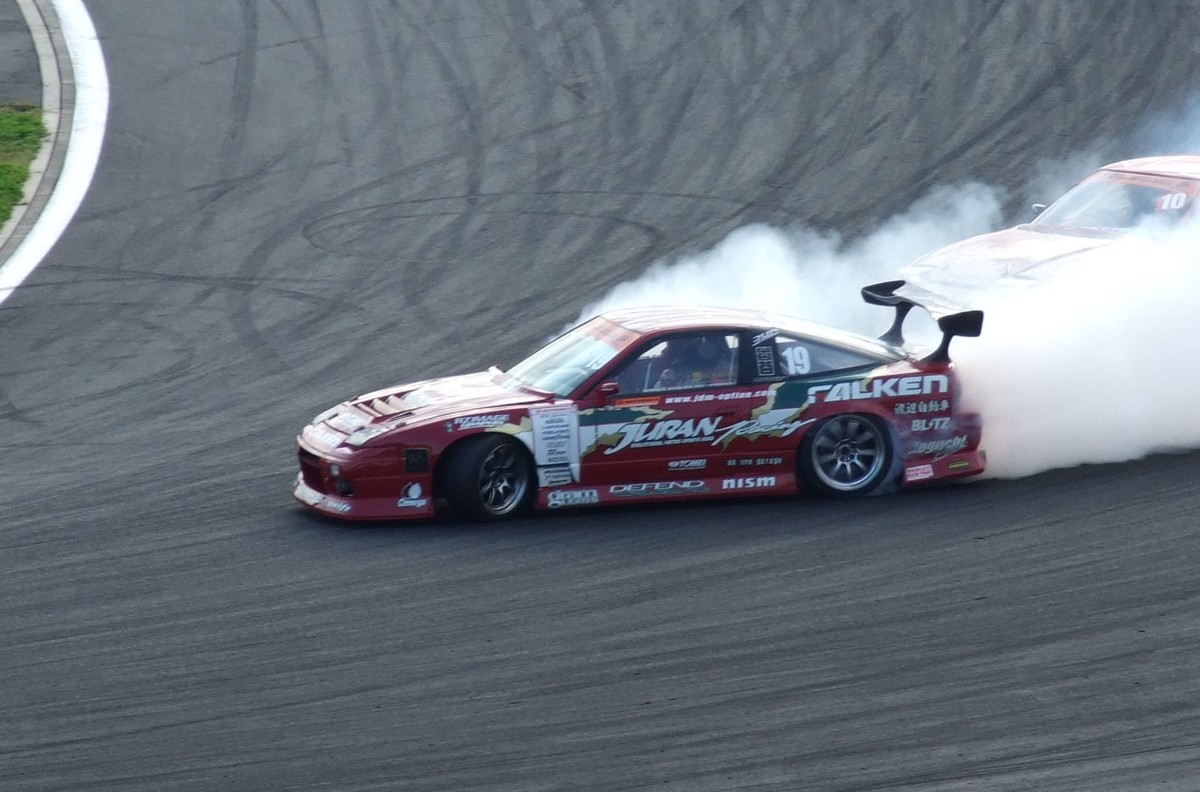
- The S-chassis family alone is 46 cars, 58.2% of the field: 20 S15, 11 180SX (RPS13), 9 S14 and 6 PS13.
- The single most common car is the Nissan Silvia S15, at 20 cars or 25.3% of everything running.
- The only modern challenger is Toyota's 86 twins: 10 GR86 (ZN8) and 3 earlier 86 (ZN6), 16.5% together, and they are concentrated in manufacturer-backed teams.
- Competition popularity does not track price. The S14 is the cheapest S-chassis at a ¥2.88M median yet only 9 run it, while the S13 is the dearest at ¥3.80M.
Contents
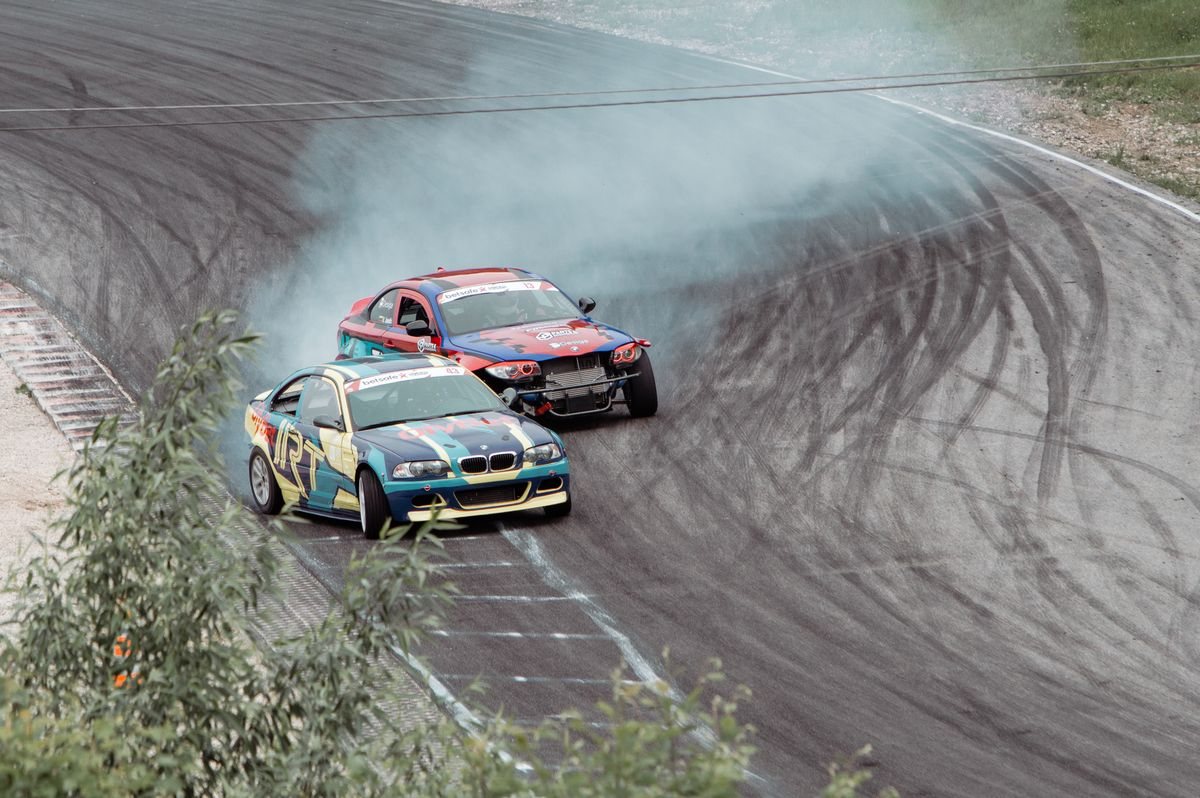
Ask what Japan drifts and you will get an opinion. We counted instead. Taking every car listed in the official 2026 D1 Grand Prix and D1 Lights championship rankings, checked on 21 September 2026, gives 79 cars. Nissan accounts for 50 of them, 63.3%. The S-chassis family alone is 46 cars, 58.2%, and the single most common car in Japanese competition drifting is the Nissan Silvia S15, at 20 cars, or a quarter of everything running.
The 2026 D1 field, counted
English-language drift writing tends to describe the Japanese scene from memory: everyone runs a Silvia, the 86 is coming, somebody has a Soarer. All three turn out to be roughly right, but the proportions are nothing like the impression you get from YouTube. Here is the whole field.
The count, in full
| Chassis | Cars | Share |
|---|---|---|
| Nissan Silvia S15 | 20 | 25.3% |
| Nissan 180SX (RPS13) | 11 | 13.9% |
| Toyota GR86 (ZN8) | 10 | 12.7% |
| Nissan Silvia S14 | 9 | 11.4% |
| Nissan Silvia PS13 | 6 | 7.6% |
| Toyota Chaser JZX100 | 4 | 5.1% |
| Toyota 86 (ZN6) | 3 | 3.8% |
| Nissan Skyline ER34 | 2 | 2.5% |
| Nissan Laurel C33 | 2 | 2.5% |
| Toyota Mark II / Chaser JZX90 | 1 | 1.3% |
| Toyota Mark II / Chaser GX100 | 1 | 1.3% |
| Toyota Soarer JZZ31 | 1 | 1.3% |
| Toyota Supra JZA80 | 1 | 1.3% |
| Toyota GR Supra A90 | 1 | 1.3% |
| Mazda RX-7 FC3S | 1 | 1.3% |
| Mazda RX-7 FD3S | 1 | 1.3% |
| BMW 3 Series E92 | 1 | 1.3% |
| Listed under type codes we did not map | 4 | 5.1% |
By make: Nissan 50 (63.3%), Toyota 22 (27.8%), Mazda 2 (2.5%), BMW 1 (1.3%), unclassified 4 (5.1%).
How this was counted. The two official ranking pages publish a chassis code against every driver, so no interpretation is involved. We read the D1 Grand Prix ranking, which lists 31 drivers, and the D1 Lights ranking, which lists 48, and counted one car per driver. Four entries appear under Japanese type-approval codes that we chose to leave unmapped rather than guess at a model, and they are shown as unclassified above rather than folded into a make. The script that does the counting lives in the site repo, so the numbers can be re-run when the season ends.
Two honest limits. First, this counts drivers who appear in the championship rankings, not everyone who entered a round. Second, D1 is the professional and semi-professional tier, so it is not a sample of what turns up to a Sunday track day at Meihan or Mobara. It is the sharp end.
Why the S-chassis still owns the sport
Forty-six of 79 cars come from one family of Nissan coupes that went out of production in 2002. Any of the four codes gives you a light, front-engined, rear-drive two-door with a huge aftermarket and a body that Japanese shops have been repairing for thirty years.
The interesting part is that popularity does not follow price. These are the medians from our own full counts of Japanese listings:
| Chassis | Median price in Japan | Cars in the 2026 D1 rankings |
|---|---|---|
| Nissan Silvia S13 | ¥3.80M | 6 (as PS13) |
| Nissan Silvia S14 | ¥2.88M | 9 |
| Nissan Silvia S15 | ¥3.66M | 20 |
| Nissan 180SX | ¥3.75M | 11 |
| Toyota Chaser JZX100 | ¥4.38M | 4 |
The S14 is the cheapest S-chassis on the Japanese market and the S13 is the dearest, yet the S15 outnumbers both. That ordering makes sense once you stop thinking of a competition car as a used car. The shell is a small fraction of the build, so a team picks the one with the best geometry, the strongest aftermarket and the newest bodyshell it can still find, and the extra million yen on the purchase disappears into the rest of the project.
The only challenger: Toyota’s 86 twins
Thirteen cars, 16.5%, are the GR86 or its ZN6 predecessor, and they are the only modern platform with real presence. They are also distributed differently from the Nissans: the 86s sit disproportionately with manufacturer-backed and well-funded teams rather than spreading evenly through the field, which is what you would expect of a car that is still expensive secondhand.
Beyond that the variety is thinner than the internet suggests. One Soarer, one JZA80 Supra, one A90 Supra, one FC3S, one FD3S, one E92. The single most under-represented thing relative to its fame is the AE86: it does not appear in the 2026 rankings at all, despite being the car the whole culture is named after in the popular imagination. Its story is the D1 history of the AE86, not the 2026 grid.
What this means if you are buying
If you want to build something that looks like what Japan actually competes in, the answer is unglamorous: an S-chassis, most likely an S15 or a 180SX, and the decision is usually made by the import rule in your country rather than by taste. The S15 is the newest of the family and was never sold new outside Japan, so it clears some age-based import rules years after an S13 or S14 already has. Our 25-year rule guide has the US position, and the whole import process covers the rest.
The other thing this table should tell you is where the parts are. A chassis with 46 cars in national competition has a deep supply of used uprights, arms, angle kits and panels in Japan. A chassis with one car in national competition does not, whatever its reputation abroad.
Median prices are retail, and retail is the ceiling
The figures above come from Japan's consumer listing sites, which carry dealer margin, preparation and warranty. The same shells move below that through trade auctions and inside the drift community, where cars change hands between people who already know what they are buying. Tell us the chassis and budget and we will look at that layer for you, with video walkarounds before you commit.
Where to see the cars in this table
Every venue these cars run at is in the track directory, and the remaining 2026 rounds for both series sit in our event and track calendar. If you want to see the S-chassis density for yourself, a D1 Lights round is the better ticket: it is the deeper field, it is where 48 of the 79 cars counted here run, and it is where a grassroots car still beats a works one often enough to be worth watching.
Frequently asked questions
What car do most Japanese drifters use?
In competition, the Nissan Silvia S15. Counting every car listed in the official 2026 D1 Grand Prix and D1 Lights championship rankings on 21 September 2026 gives 79 cars, and 20 of them are S15s, which is 25.3% of the field. Widening it to the whole S-chassis family, meaning S15, S14, PS13 Silvia and RPS13 180SX, gives 46 cars or 58.2%. Nissan as a make takes 50 of the 79.
Is the Toyota 86 taking over from the Silvia in Japanese drifting?
Not yet, but it is the only thing gaining. In the official 2026 D1 Grand Prix and D1 Lights rankings there are 10 GR86 (ZN8) and 3 of the earlier 86 (ZN6), 13 cars or 16.5% of the 79 counted, against 46 S-chassis. The 86s cluster in manufacturer-backed and well-funded teams rather than spreading through the grassroots field, which is what you would expect of a car you cannot buy cheap yet.
What is the cheapest chassis Japanese drifters actually compete in?
Of the four S-chassis in the rankings, the Nissan Silvia S14 is the cheapest to buy in Japan, at a ¥2.88M median across 70 priced cars. It is not the most popular: only 9 of the 79 cars counted are S14s, against 20 S15s at a ¥3.66M median. Cheapness and grid share do not move together, because a competition car's cost is mostly the build rather than the shell.
Do any non-Japanese cars run in D1?
Barely. Of the 79 cars in the 2026 D1 Grand Prix and D1 Lights rankings counted on 21 September 2026, exactly one is European: a BMW 3 Series E92. Mazda has two RX-7s, one FC3S and one FD3S. Four more cars are listed under Japanese type-approval codes we did not map to a model rather than guess at, so treat those four as unclassified rather than exotic.
 S13 and 180SX in D1: The Drivers Keeping the Chassis Alive (2026)
  JP Market Check #1: What S13, S14 & S15 Cost in Japan (Jul 2026)
  JP Market Check #2: The Levin Closes on the Trueno (Aug 2026)
  Nissan 180SX Price in Japan (2026): ¥3.75M Median, 85 Cars