
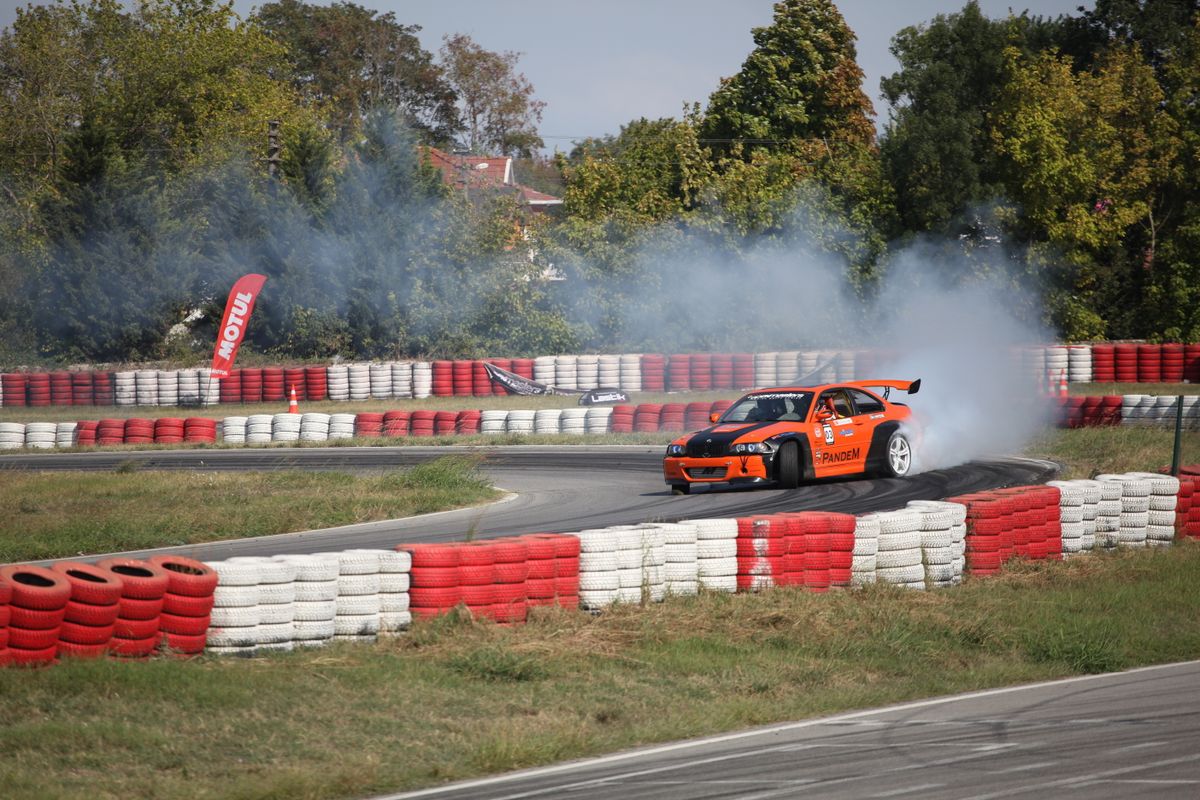
EDS Explained: How to Enter Ebisu's Drift Series in 2026
The Rundown
- Yes, you can enter a judged Japanese drift competition. EDS asks for no competition licence — the official eligibility line is "being a drift enthusiast who follows the rules."
- Round 3 entry opened 4 October 2026 and closes Friday 16 October 2026, 23:59 JST (race days 1 and 3 November). The field is first-come and capped at 70 cars, so it can shut before the deadline.
- Challenge class is the realistic first entry: solo judging only, ¥15,000 a round, no chase battles.
- Card payment through the online portal is the only route that works from abroad — the other two payment methods are Japan-domestic.
- The official English entry form has a Country field and support-company tick-boxes, so non-Japanese entrants are plainly expected.
Contents
EDS is the Ebisu Drift Series, Ebisu Circuit’s own judged championship in Nihonmatsu, Fukushima, and it asks for no competition licence: the official eligibility line is “being a drift enthusiast who follows the rules.” Entry is ¥15,000 a round for the Challenge class and ¥17,000 for the two chase classes, with each field capped at 70 cars, first come. The 2026 season runs 3 rounds, and every fee, date and rule below was read off the official English guidelines and entry form on 27 July 2026.
You have watched enough Ebisu footage to know the place by heart. The question you actually have is different: can a foreigner enter a real, judged Japanese drift competition — not a festival day, not an open practice session, but a series with qualifying, a points table and a champion at the end?
Yes. It is called EDS, and the entry route below is the same for every round.
EDS 2026 — read off the official English documents on 27 Jul 2026
What EDS is
EDS stands for Ebisu Drift Series. It is run by Ebisu Circuit Co., Ltd. in Nihonmatsu, Fukushima — the circuit’s own championship, on its own land, three rounds a year.
That makes it a different animal from the two Ebisu days most overseas fans know about. It is not a matsuri (festival — an open, unjudged drift day you run at your own pace), which we cover in the Drift Matsuri first-timer’s guide. It is also not a sōkōkai (走行会 — a private track day where an organiser rents the circuit and sells seat time). EDS has judges, a qualifying format, a points table, trophies and series prize money.
And unlike almost every championship at home, it does not gate you behind a graded competition licence. The official English guidelines state the eligibility for every class in a single line: “Being a drift enthusiast who follows the rules.” That is the whole requirement.
The 2026 rounds and their entry windows
Round 1 ran in May and Round 2 in August. Round 3 entry is open now: 00:00 JST on 4 October to 23:59 JST on Friday 16 October 2026, for race days on 1 and 3 November (re-checked on the official EDS page on 4 October 2026).
- Rd.1 · MayWest Course — figure-eight layout
chase Sun 3 May · Challenge Tue 5 May · practice 2 & 4 May
entry 5–17 Apr — closed - Rd.2 · AugWest Course — corners 1–2 (former FDJ course)
Challenge Sat 15 Aug · chase Sun 16 Aug · practice Fri 14 Aug
entry 19–31 Jul — closed - Rd.3 · NovWest Drift Course
chase Sun 1 Nov · Challenge Tue 3 Nov · practice 31 Oct & 2 Nov
entry 4–16 Oct — OPEN, closes 23:59 JST Fri 16 Oct
Each round uses a different piece of the West Course. Round 1 ran the figure-eight layout used by Formula Drift Japan today. Round 2 uses corners 1 and 2 — the former FDJ course. Round 3 moves to the West Drift Course. Note that the two class groups run on separate days, so book your travel around your own date, not the round.
If August is out of reach, the round still comes to you. Ebisu streams and posts its own rounds, and the Japanese drift channels travel up to Fukushima to cover them — this is the crew who broadcast Round 1 in May.
"From tomorrow we'll be making a racket at EDS at Ebisu Circuit. We're not driving in EDS ourselves — we'll be livestreaming the hell out of it on the Ebisu Circuit channel."
明日からエビスサーキットのEDSで騒ぎます(^^) EDSは自分達は走りませんよ(笑) エビスサーキットチャンネルでLIVE配信しまくります(^^)
View the original post ↗Watching is the consolation prize, though, not the plan. If you would rather be in the field than on the stream, the only date that matters is the one at the front of this guide.
The field cap can close a round before its deadline
Round 3 entry closes at 23:59 JST on Friday 16 October 2026. Entry is capped at 70 cars for the chase classes and 70 for the Challenge class, first-come, first-served — the organisers state entry can close early once a class is full. There are no refunds after registration, so be sure of your dates before you press submit.
Choosing your class
Three classes, and the split is about two things: how you are judged, and how much grip you are allowed.
One term to get straight first: TW is the UTQG treadwear rating printed on a tyre’s sidewall, and a higher number means a harder, lower-grip tyre. So EDS280 is the low-grip class and EDS200 permits softer, grippier rubber. The numbers map straight onto what the shops sell: SHIBATIRE’s 280 and 240 compounds and VALINO’s PERGEA 08R at treadwear 200 are priced brand by brand in our drift tyre directory.
| Class | Judging | Rear tyre | Per round | Annual entry |
|---|---|---|---|---|
| Challenge | Solo runs only (tansō) | TW280 or higher, up to 235 mm | ¥15,000 | ¥39,000 |
| EDS280 | Chase (tsuisō), low grip | TW280 or higher, up to 235 mm | ¥17,000 | ¥45,000 |
| EDS200 | Chase (tsuisō), high grip | TW200 or higher, up to 265 mm | ¥17,000 | ¥45,000 |
Tansō (単走) is a solo run — one car on track, judged on its own line, angle and commitment. Tsuisō (追走) is the chase run — a lead car and a chase car judged together, the format you see in the highlight reels.
For anyone flying in, Challenge is the sensible answer. It exists specifically for drivers with little competition experience or who only want solo judging, it costs ¥2,000 less per round, and it removes the one variable you cannot control on a strange course: another car’s door.
The format follows the class. Challenge runs two solo judged runs in the morning and two more in the afternoon, and your final placing is the combined score. The chase classes qualify on two solo runs, cut to a top 16, then settle the round in a battle bracket. Points run 25 for a win down through 21, 18, 16 and on to a single point for 16th. Series prize money is ¥50,000 / ¥20,000 / ¥10,000 for the top three in EDS200 and EDS280, and ¥30,000 / ¥20,000 / ¥10,000 in Challenge. The organisers note the judging method may change depending on how many entries come in.
You may double-enter across the two chase classes, and even run a different car in each — but you cannot change car partway through the competition.
How to enter
There are two other official routes, and both assume you are standing in Japan. One is a bank transfer paired with a faxed entry form to the circuit office (FAX 0243-24-2936), with the transfer name prefixed “Drift” — their own example is “Drift Ebisu Taro”. The other is genkin-kakitome (現金書留), a Japanese domestic postal service for mailing cash, posted with the form to the EDS office inside the circuit at 1 Sawamatsukura, Nihonmatsu City, Fukushima 964-0088.
Say it plainly: if you are applying from abroad, the online portal with a credit card is your only practical route. Convenience-store payment, domestic bank transfer and registered cash mail all need someone in Japan. That is the single biggest friction point in the whole process, and it is worth solving before the entry window opens rather than during it.
The portal, the pledge and the car are three separate problems
The entry system and the signed pledge with its inkan are Japanese-only, and a car for the round is a conversation with an operator that happens outside the entry form. Send us the round and class you want and we take that side of it: what we arrange at Ebisu, from entry paperwork to seat time and the days around it.
The car and the kit
The official entry form is a competition document. It asks for driver name, gender, date of birth, country, age, blood type, support company, team name, vehicle type, model, colour, horsepower, and your rear tyre brand, size and treadwear. Have those answers ready.
The form also carries a pledge on safety equipment:
Pledged on the official entry form
- Long sleeves and long trousers
- Athletic shoes
- Racing gloves
- A helmet — half helmets are not permitted
- A four-point seat belt
- A fire extinguisher carried in the car
- Driver-side windows fully closed
Worth reporting as an observed fact: the English entry form includes a Country field, and a Support company field with tick-boxes for Powervehicles, The Sideways Experience and Others. The paperwork is built expecting entrants from outside Japan and cars run through support operations. Whether any given operator will actually supply a car for an EDS round is a conversation between you and them — the official pages do not state it, so treat availability and price as unconfirmed. For the wider picture of who operates at the circuit, see our complete Ebisu guide.
What the official documents don’t say
Being honest about the gaps is more useful than guessing at them. The English guidelines and entry form say nothing about:
- whether a Japanese driving licence is required — not stated, TBC
- insurance arrangements for entrants from overseas — not stated, TBC
- any English-language drivers’ briefing on the day — not promised anywhere in the documents
Covered pits, incidentally, are a perk for annual entrants only, allocated by lottery if oversubscribed, with separate bookings for the chase classes and Challenge. On Round 2’s practice day, the pit area is prioritised for the EDS200 and EDS280 classes.
None of the unknowns above is a reason not to enter. They are a reason to ask before you pay, and to keep the round on your trip calendar rather than in your head.
Frequently asked questions
Do I need a racing licence to enter EDS?
No. The official 2026 English guidelines give one eligibility line for every class — being a drift enthusiast who follows the rules. There is no competition-licence requirement stated anywhere in them.
Which class should I enter first?
Challenge class. It is judged on solo runs only, with no chase battles, it is aimed at drivers with little competition experience, and at ¥15,000 a round it is the cheapest entry. The two chase classes cost ¥17,000 a round and put you into a 16-car battle bracket.
Can I pay the entry fee from outside Japan?
Only through Ebisu Circuit's online entry portal, which takes credit cards. That covers the ¥15,000 Challenge entry and the ¥17,000 chase-class entries per round. The other 2 official routes stated in the 2026 English documents, a Japanese bank transfer paired with a faxed form to 0243-24-2936 and registered cash mail to the EDS office in Nihonmatsu, Fukushima, both need someone inside Japan, and convenience-store payment is Japan-only (documents read on 27 July 2026).
 D1GP Ebisu Tickets and Gate Times: Rd.5 & 6, 26–27 Sept 2026
  Ebisu Drift Matsuri: The Complete First-Timer's Guide (2026)
 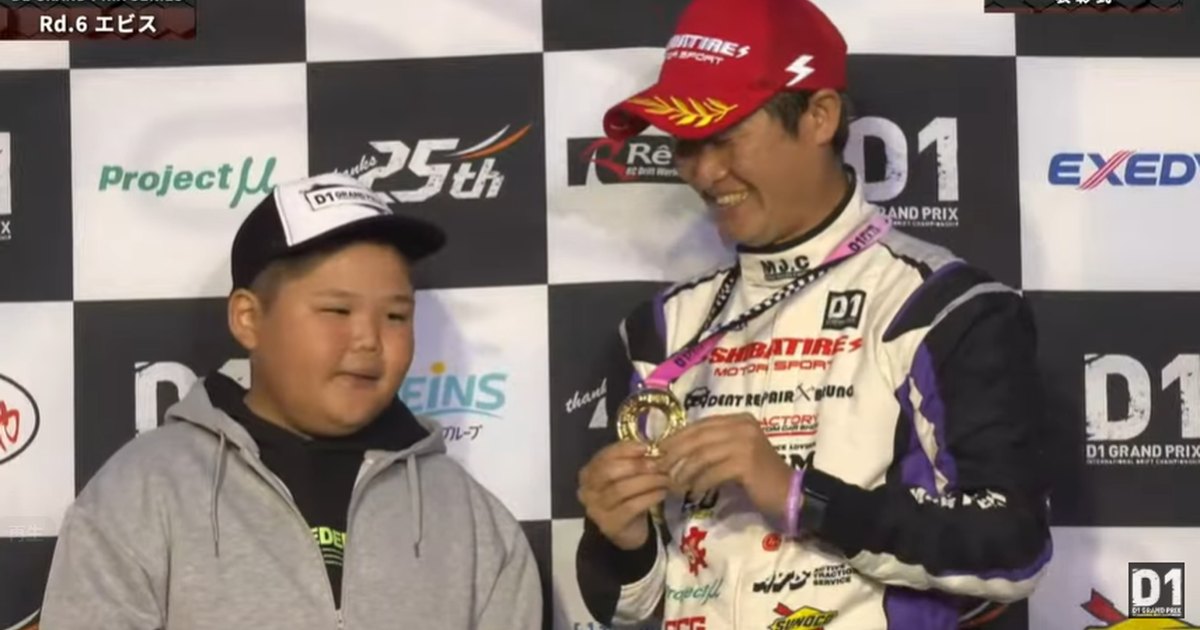 D1 Grand Prix 2026 Ebisu Results: Yokoi Wins Rd.5 and Rd.6
  Nikko Drift Victory 2026 & Kanto All-Star GP: How to Enter and Watch