
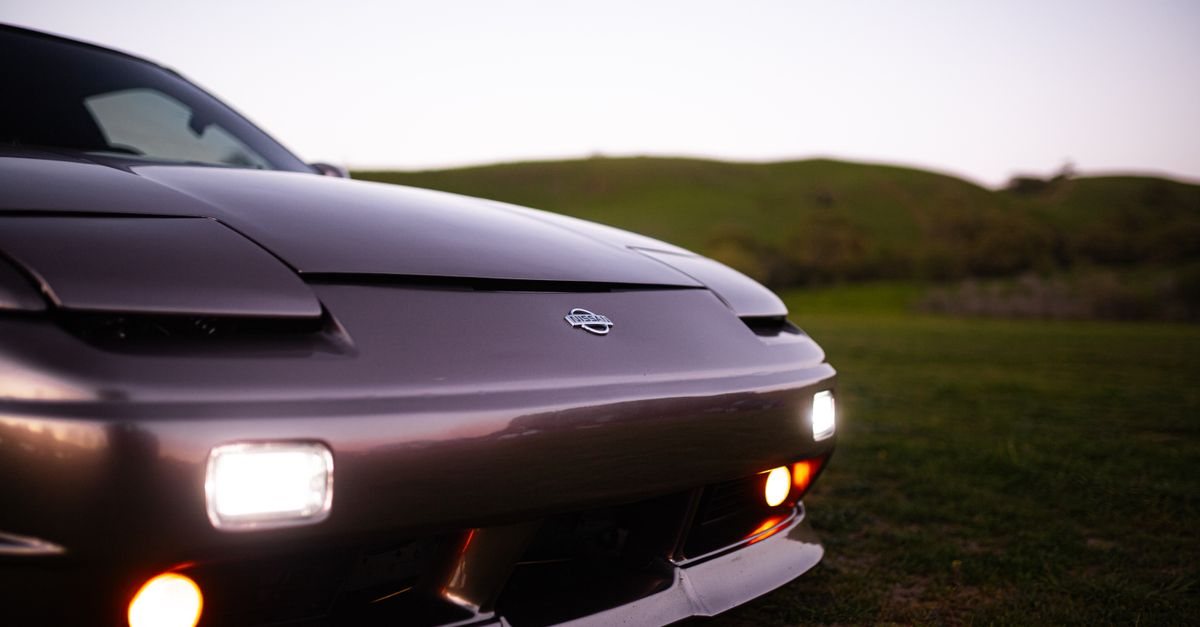
Importing a JDM Car into Brazil or the Dominican Republic (2026)
The Rundown
- Brazil does not authorise imports of used consumer goods (Portaria SECEX nº 249/2023, Art. 35). The car exception is a vehicle with more than 30 years of manufacture, imported for cultural and collection purposes.
- A 1991 Nissan 180SX is 35 years old in November 2026 and clears the age line. A 1998 Honda Integra is 28 and cannot use the collection route before its 30th anniversary in 2028.
- Right-hand drive is the second gate: CONTRAN Resolution 528/2015 bans registering RHD cars in Brazil, and its only exception is a collection vehicle over 30 years old with its original factory characteristics conserved.
- To be registered as a collection vehicle, CONTRAN Resolution 957/2022 asks for a CVCOL certificate; an original car must score 80 points or more out of 100 on factory originality.
- The Dominican Republic is a no for both cars: used light vehicles over 5 years old cannot be imported (Law 04-07), and Law 63-17, Art. 175 bans importing right-hand-drive vehicles, with a postal-service exception only.
Contents
Two questions keep landing in our inbox from Latin America and the Caribbean: can a 1991 Nissan 180SX go to Brazil, and can a 1998 Honda Integra go to the Dominican Republic? The short answers are “possibly” and “no”, and the reasons are written into a handful of official texts.
Brazil bans imports of used cars, with one exception that matters to enthusiasts: a vehicle with more than 30 years of manufacture, imported for cultural and collection purposes (Portaria SECEX nº 249/2023, Art. 35). A 1991 180SX clears that line in 2026, a 1998 Integra does not until 2028, and a right-hand-drive car also has to pass an originality test before it can be registered. Every rule below was checked on the official pages on 5 November 2026. Em português: importar carro do Japão para o Brasil, com a tabela dos modelos que já passam dos 30 anos.
Brazil and the Dominican Republic at a glance
Is it legal to import a used car into Brazil at all?
As a rule, no. Brazil’s import licensing ordinance, Portaria SECEX nº 249 of 4 July 2023 (the consolidated text we read lists amendments up to Portaria nº 523 of 15 July 2026), says in Article 35 that imports of used consumer goods, and their components, parts and accessories, are not authorised. A passenger car is a consumer good. Then it lists the exceptions, and only one of them fits a car bought from Japan by an enthusiast.
| Exception in Art. 35, §1 | Does it fit a JDM drift car? |
|---|---|
| Vehicles in NCM headings 8701 to 8705, 8709, 8711 and 8716 (cars are 8703) with more than 30 years of manufacture, for cultural and collection purposes, plus parts and accessories for their maintenance or restoration | Yes, if the car is old enough |
| Adapted cars owned by people with disabilities living abroad and moving to Brazil | Not for a purchase |
| Cars that meet the import-tax exemption in Arts. 187 and 188 of Decree 6.759/2009 (the diplomat and public-servant cases) | Not for a purchase |
| Goods received by inheritance, donations to public bodies, postal items without commercial value | No |
Two practical consequences. First, Article 21 makes used goods subject to non-automatic licensing by Decex, Brazil’s foreign trade department, so the import licence is applied for in Siscomex before the car ships, by the importer or a representative authorised by Receita Federal. Second, the same exception covers parts and accessories for maintaining or restoring a car that qualifies, which matters if you are already running a 30-year-old chassis in Brazil.
Does a 1991 180SX or a 1998 Integra qualify?
The text says “more than 30 years of manufacture” (com mais de 30 anos de fabricação). It is a build-date test, not a model-year or first-registration test.
| Car | Built | Age in November 2026 | Collection route |
|---|---|---|---|
| Nissan 180SX (RPS13) | 1991 | 35 | Clears the age line |
| Nissan Silvia S13 / AE86 Corolla Levin and Sprinter Trueno | 1988 to 1993 / 1983 to 1987 | 33 to 43 | Clears the age line |
| Honda Integra (DC2 era) | 1998 | 28 | Not before its 30th anniversary in 2028 |
| Silvia S14 | 1993 to 1998 | 28 to 33 | Builds up to late 1996 are old enough today; later ones wait |
| Silvia S15 | 1999 to 2002 | 24 to 27 | Not before 2029 at the earliest |
The ordinance does not spell out whether the 30 years are counted to the date of the licence request or to the date of arrival, so a car close to its anniversary should be treated as not yet eligible until a despachante aduaneiro (Brazilian customs broker) confirms the counting with the paperwork in front of them. For a 1991 car there is no ambiguity. For a 1998 car there is no shortcut either: it waits.
If you are weighing a 180SX in particular, our 180SX buyer’s guide covers the early and late body styles, which also tells you roughly where a given car’s build date falls.
What about right-hand drive and a modified drift build?
This is where most drift cars will actually be decided. Clearing customs is one thing; getting Brazilian plates is another, and two CONTRAN (National Traffic Council) resolutions sit between the port and the road.
Right-hand drive. CONTRAN Resolution 528/2015 prohibits registering and licensing motor vehicles whose steering wheel is on the right. Its single exception reads: collection vehicles with more than 30 years of manufacture and with their original factory characteristics conserved. Every 180SX built for Japan is right-hand drive, so this sentence applies to every one of them.
Collection status. CONTRAN Resolution 957/2022 defines a collection vehicle as one built more than 30 years ago, original or modified, with its own historical value. It splits them into two classes:
| Class | What the resolution says |
|---|---|
| Original | Scored 80 points or more out of 100 on original factory characteristics (mechanics, body, suspension, appearance, safety equipment, emissions, noise), assessed by an entity accredited by Brazil’s federal traffic authority |
| Modified | Modified in line with CONTRAN rules, with prior authorisation from the state traffic department and a CSV (vehicle safety certificate) from a licensed inspection body |
Registration as a collection vehicle needs a CVCOL (Certificado de Veículo de Coleção), valid for 60 months. And Article 9 covers imported collection cars that do not yet meet the requirements: they are barred from public roads until their adaptation or restoration is finished and the CVCOL is issued, and no CAT (traffic compliance certificate) is issued for them in the meantime.
The coilover-and-SR20 problem
Resolution 957 accepts a "modified" collection car, but the RHD exception in Resolution 528 is worded around original factory characteristics conserved. A 180SX on coilovers, a bucket seat and a tuned engine may clear customs as a 30-year-old collection vehicle and still not get plates as an RHD car in that state. Read together, the safest assumption is that a stock or easily-returned-to-stock car has the clearest path, and that a heavily modified one may stay off the road until it is put back. Ask a despachante and your state DETRAN how they read the two texts for your specific car before money moves.
What paperwork does Brazil ask for, step by step?
The Senatran service page on gov.br (“Importação de Veículo de Coleção”) lists the documents, and the order below follows how the texts fit together. The service itself is stated as free for the citizen; customs taxes are a separate matter.
Look at step 3. Before a Brazilian importer can file anything that holds together, the car needs a Japanese export certificate, and getting one means taking the car off the Japanese register at a transport branch office. That procedure wants the owner’s registered seal and a certificate of seal registration, which only people on a Japanese municipal residents’ register can get, plus someone standing at the counter to hand in the plates (the full Japan-side procedure is here). The Japanese registration papers also record the first-registration month (初度登録年月), which is not always the build date your licence and CVCOL depend on, so the chassis details need checking against the car itself.
We handle the Japan half of a Brazil import
We take on the Japan-side steps an overseas buyer cannot reach: the export deregistration with a Japanese seal and address behind it, the export certificate and invoice your despachante needs, and matching the chassis plate to the paperwork. Before you decide, we inspect the car locally and send you a video and photo walkthrough (underbody, frame rails, engine bay and a cold start), so you can judge how far it is from factory original, which is what a 528/2015 reading turns on. Costs are actual costs plus a fee, and we quote the total first. Send us the chassis number and we will check its build date and condition.
Can you import a JDM car into the Dominican Republic?
Not a 1990s one, and not a right-hand-drive one. Two separate rules close the door, and either is enough on its own.
| Rule | What the official text says | 1991 180SX / 1998 Integra |
|---|---|---|
| Age limit | Law 04-07 amended Law 147-00 to prohibit importing used motor vehicles more than 5 years old for light vehicles and more than 15 years for heavy vehicles (restated in Decreto 420-23, 2023) | Fails, by more than two decades |
| How age is counted | The DGA (customs) applies a vehicle-year cut-off every 30 June: after that date the oldest model year still allowed is treated as six years old and refused (DGA notice, 13 June 2019) | Model year, not build date |
| Right-hand drive | Article 175 of Law 63-17 prohibits importing and circulating vehicles with the steering on the right, with the sole exception of cases authorised by the Executive for the postal service (restated in Decreto 420-23) | Fails |
The 2019 DGA notice names only vehicles consigned to diplomatic and consular missions or accredited international organisations as outside the age limit. Neither text we read carves out a classic or collector car, so a Japanese 180SX, Integra, AE86 or Chaser has no route we could find in the official texts. If you are in the Dominican Republic and want Japanese hardware, parts are a different conversation from whole cars.
What the official pages do not say
- Brazil’s tax bill on a collection car. None of the pages above publishes an all-in figure. The federal import taxes are worked out on the customs value using the rates for the car’s NCM code (8703 for a passenger car), and the state adds ICMS on top. Your despachante computes it on the actual invoice, freight and insurance, on the day.
- How the 30 years are counted to the day. “More than 30 years of manufacture” is clear for a 1991 car and unclear for one a few weeks short. Treat near-misses as not eligible yet.
- How a state DETRAN reads 528/2015 against a modified 957/2022 car. The texts do not say it in one place. Get the answer for the specific car, in writing, before buying.
- Whether any of this will change. Rules move. The Portaria we read had been amended 19 times since 2023. Confirm with Brazilian customs or a despachante, or with the DGA in Santo Domingo, at the time of your import.
For how the whole Japan-side export chain runs, from purchase to sailing, see our step-by-step import process guide. If you are comparing Brazil’s 30-year line with the US version, the 25-year rule explainer shows how different a “classic car” exemption can look in practice.
Frequently asked questions
Can I import a used car from Japan into Brazil?
Only in narrow cases. As of 5 November 2026, Portaria SECEX nº 249/2023 (Art. 35) states that imports of used consumer goods are not authorised, and the exception that applies to an enthusiast car is a vehicle with more than 30 years of manufacture imported for cultural and collection purposes, together with parts and accessories for its maintenance or restoration. The import goes through a non-automatic licence from Brazil's Decex in Siscomex. A newer used car from Japan, such as a 2000s Silvia or Skyline, has no route in.
Can I import a 1998 Honda Integra into Brazil in 2026?
Not under the collection exception yet. As of 5 November 2026, Brazil's rule in Portaria SECEX nº 249/2023 requires more than 30 years of manufacture, and a 1998 car is 28 years old. The earliest it can qualify is after its 30th anniversary of manufacture in 2028, and even then it must be imported for collection purposes and, if it is right-hand drive, keep its original factory characteristics to escape the RHD registration ban in CONTRAN Resolution 528/2015.
Can a right-hand-drive JDM car be registered in Brazil?
Only as a collection vehicle. As of 5 November 2026, CONTRAN Resolution 528/2015 prohibits registering and licensing motor vehicles with the steering wheel on the right, and states that the ban does not apply to collection vehicles with more than 30 years of manufacture and their original factory characteristics conserved. A 1991 Nissan 180SX can meet the age test; a modified drift build may struggle with the originality wording, so confirm with a despachante and the state DETRAN before buying.
Can I import a 1990s JDM car into the Dominican Republic?
No, under the rules in force as of 5 November 2026. The Dominican Republic prohibits importing used light vehicles more than 5 years old (Law 04-07, which amended Law 147-00), and the DGA applies the cut-off by model year each 30 June. Separately, Article 175 of Law 63-17 prohibits importing and circulating right-hand-drive vehicles, with the only exception being cases the Executive authorises for the postal service. A 1991 180SX or 1998 Integra from Japan fails both tests.
 Can You Ship Parts Inside a Car Exported from Japan? (2026)
 Used Front Knuckles & Angle Kits From Japan: Silvia, JZX Prices (2026)
 Used Steering Racks From Japan: Silvia, JZX and Z33 Prices (2026)
 Silvia and 180SX Windscreen From Japan: Used vs New Glass (2026)