
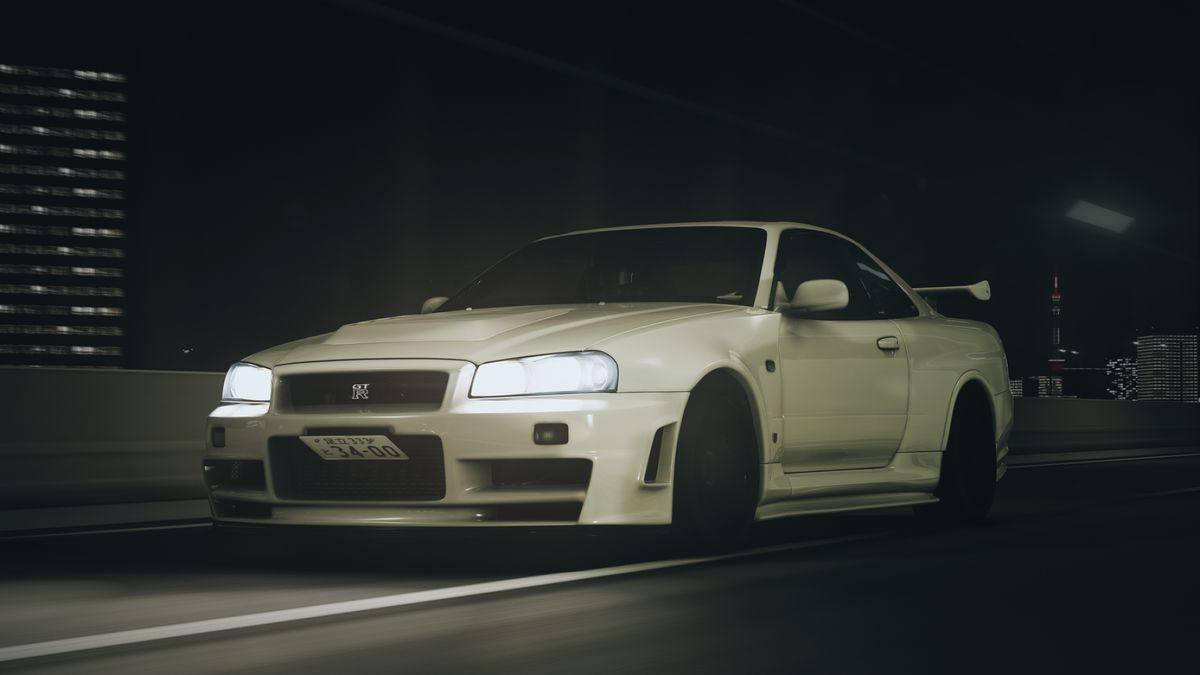
Nissan Silvia S14 Price in Japan (2026): Zenki vs Kouki & Import
The Rundown
- The S14 (1993–1998) is the value entry to Silvia ownership: median ¥2.88M across 70 priced listings — about ¥1M under an equivalent S13.
- Same SR20DET as its siblings, rated 220 PS in K's trim — more than the S13 — with the same strut front / multilink rear layout.
- The market is tight: half of all S14s sit between ¥2.49M and ¥3.38M, and the national ceiling is just ¥4.55M.
- Every S14 has now cleared the US 25-year rule (production ended 1998), so any example can be imported without a cutoff date.
- Zenki vs kouki (1996 facelift) changes the front end and the price — decide which face you want before you shortlist.
Contents
The internet spent twenty years calling the S14 the unloved middle child of the Silvia family. The Japanese market listened, and that’s exactly why it’s the most interesting Silvia to buy in 2026. Same SR20DET, same rear-drive platform, more power than an S13, for roughly a million yen less. This guide covers what the S14 actually is, what Japan charges for one, and how to buy it from overseas without inheriting a drift team’s leftovers.
S14 in the Japanese market — census of Aug 12, 2026
Live today, not last month
Every S14 listed on Japan’s largest used-car site this morning, with prices in yen and dollars and a button that has us go and look at it: S14s for sale in Japan today. The month-by-month medians behind this guide: JP Drift Car Price Index. Parts for the car once it is yours: S14 parts from Japan.
What the S14 is
The S14 arrived in late 1993 as the sixth-generation Silvia, replacing the S13. Nissan grew the car, 4,500 mm long and, crucially for Japan, 1,730 mm wide, which pushed it into the larger “3-number” tax classification that hurt its showroom appeal at home. Overseas it sold as the 240SX. The chassis kept what mattered: front struts, multilink rear, rear-wheel drive.
S14 grades and production years
The S14 was Nissan’s current Silvia from 1993 until the S15 was announced on 19 January 1999. Zenki cars cover 1993 to the 1996 facelift, kouki cars 1996 to 1998. Grades carried over from the S13’s playing-card scheme:
| Grade | Engine | Output | Character |
|---|---|---|---|
| Q’s | SR20DE (2.0L NA) | ~160 PS | The commuter Silvia |
| K’s | SR20DET (2.0L turbo) | 220 PS | The one you want |
| K’s Type S | SR20DET | 220 PS | K’s with aero — rear spoiler, dress-up |
Nissan’s official Heritage Collection spec for the K’s Type S: SR20DET at 220 PS / 6,000 rpm and 28.0 kgf·m of torque, 1,220 kg curb weight. That’s 15 PS up on the S13’s SR20DET, a detail the “middle child” narrative always skips.
There is a second thing that narrative skips: who chose to build on this chassis. When NISMO put its own name on a complete car for the first time. The 270R, built for its tenth anniversary in 1994. It started with an S14 K’s.
"Sold in 1994 to mark the 10th anniversary of NISMO's founding. Based on the S14 Silvia (K's), with the SR20DET tuned up — maximum output 270 ps."
1994年にNISMO創立10周年を記念して販売しました#S14 シルビア(K's)をベースに、#SR20DETをチューンナップ 最高出力270psを発生します
View the original post ↗In 1996 the S14 got its facelift. Zenki (early phase, 1993–1996) cars have the rounded, almost gentle front end; kouki (late phase, 1996–1998) cars got the slanted, aggressive headlights that drift media made iconic. Production ended in late 1998 to make way for the S15, which Nissan launched in January 1999.
How much does a Nissan Silvia S14 cost?
A Nissan Silvia S14 costs a median of ¥2.88M in Japan. That is the middle of every priced S14 on Goo-net, 70 cars of the 75 listed, counted on 12 August 2026. Half the market sits in a narrow ¥2.49M–¥3.38M band, the cheapest car in the country was ¥1.48M and the dearest ¥4.55M. That median is roughly ¥1M below an S13, an S15 or a 180SX, which is the whole reason to look at this chassis. Prices and specifications here were checked on the official pages on 10 September 2026; the census figures are from our August 2026 count and are not re-collected for this update.
The full distribution behind those numbers:
| Metric | Price |
|---|---|
| Cheapest listed | ¥1.48M |
| Lower quartile (Q1) | ¥2.49M |
| Median | ¥2.88M |
| Upper quartile (Q3) | ¥3.38M |
| Most expensive | ¥4.55M |
Put those numbers next to the rest of the family and the story writes itself: S13 median ¥3.80M, 180SX median ¥3.75M, S15 median ¥3.66M against S14 median ¥2.88M. Close to a million yen under everything else wearing an S-chassis badge.
Zenki vs kouki S14 price
The late-phase kouki asks more, but by less than its reputation suggests. We split the 54 priced S14s listed on Goo-net on 4 October 2026 by model year: 1995 and earlier as zenki, 1997 and later as kouki. The facelift landed part-way through 1996, so 1996 cars only count where the seller labels them 前期 (zenki) or 後期 (kouki) themselves.
| Phase | Priced cars | Lower quartile | Median | Upper quartile | Range |
|---|---|---|---|---|---|
| Zenki (1993–1995) | 23 | ¥2.34M | ¥2.79M | ¥3.15M | ¥1.98M–¥3.79M |
| Kouki (1997–1998) | 22 | ¥2.53M | ¥2.92M | ¥3.71M | ¥2.00M–¥4.70M |
| 1996, phase not labelled | 9 | ¥2.89M | ¥3.26M | ¥3.98M | ¥2.18M–¥4.58M |
The medians sit about ¥130,000 apart. The bigger gap is higher up: the upper quartile is ¥3.71M for kouki against ¥3.15M for zenki, and the dearest kouki asked ¥4.70M where no zenki went above ¥3.79M. Two cautions. A seller’s “kouki” label can mean a converted face on an earlier car, which is why we sorted by model year. And with about 20 cars on each side, a single well-built car moves the median, so read this as a direction rather than a price list. These are asking prices on the same retail tier as the census above.
Two more things the distribution tells you:
This is the tightest Silvia market. Sixty-three of the 70 priced cars sat between ¥2M and ¥4M. Only five cars in the whole country listed under ¥2M, and only two over ¥4M. There’s no wild speculative top end here. The ceiling was ¥4.55M, which is barely Q3 money in the S15 market.
The entry point is genuinely accessible. At the ¥2.49M lower quartile you’re not scraping the barrel. You’re a quarter of the way into a market whose whole span is narrow. Compare that with chasing the bottom of the S15 or S13 markets, where the cheap tail is where the horror stories live.
The full family comparison — all three Silvia generations plus 180SX, AE86 and JZX Chasers — is in our July 2026 Market Check, and the August 2026 Market Check is the count the figures on this page come from.
What to check on an S14
The S14’s discount means many were bought cheap and used hard. Value lives or dies on:
- Chassis rails and underside. The classic tell of a hard drift life. Rippled rails, tweaked crossmembers and clutch-kicked driveline components are common on cars from the cheap end.
- Rust. Sills, rear arches, boot floor and around the rear subframe mounts. Later production than the S13 helps, but a 1994 car is still past thirty.
- Front-end identity. Zenki-to-kouki conversions are everywhere. Fine if done well, but a converted car should be priced as what it is underneath, and crash-repair conversions need a closer look at the front chassis legs.
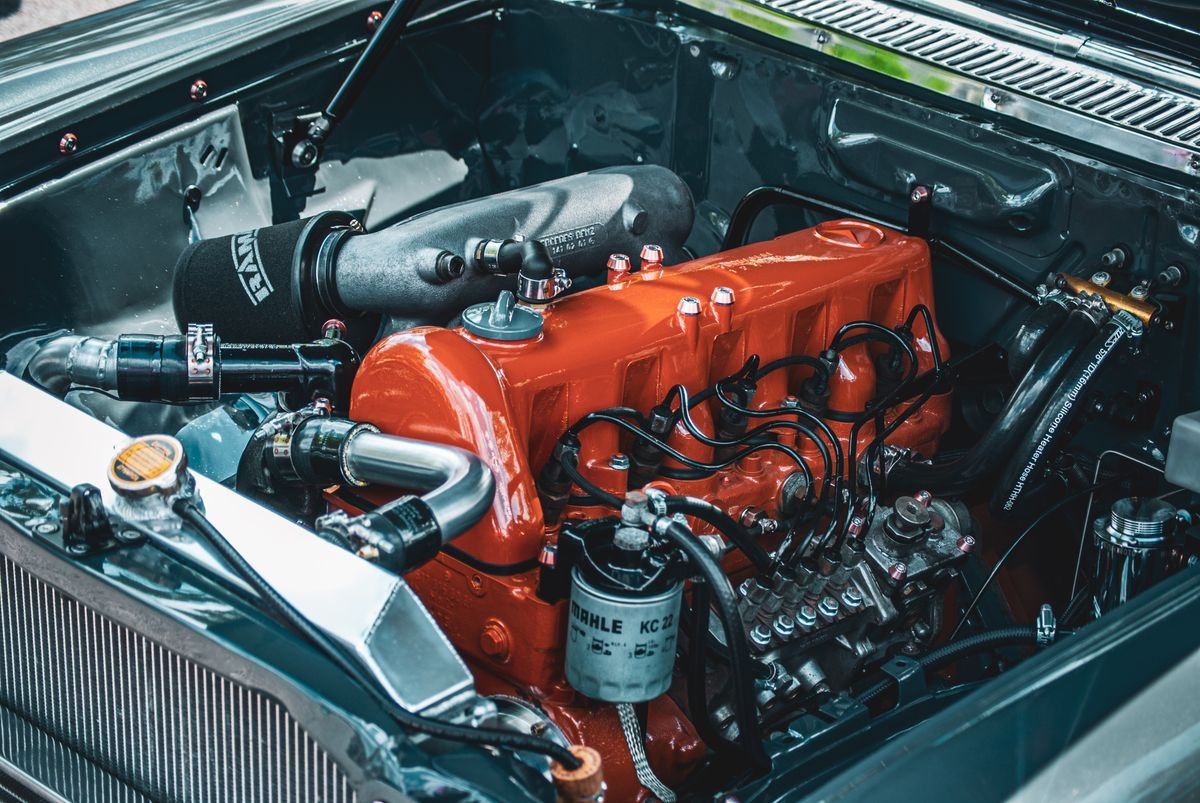
- Turbo and SR20 health. Compression and smoke on cold start tell you more than the odometer. These engines take abuse well, but not indefinitely.
You can’t judge any of that from six listing photos, and nobody expects you to fly over and crawl under candidate cars. This is precisely what we do instead: in-person inspection with a full video and photo walkthrough (underside, chassis rails, engine bay, cold start), shared with you before any commitment, so the “is this cheap car actually good” question gets answered with footage, not faith.
The other half of the problem is where the cheap S14s actually are. The narrow retail band above is Japan’s dealer tier; the wider market runs through the trade auctions, and those are closed to you — a bidding account needs a Japanese company or a Japanese address and guarantors, which is not something an overseas buyer can assemble from home.
That auction account is the wall. We're on the other side of it
We bid inside the Japanese auctions and the drift-community private market on your behalf, then send the inspection footage before anything is committed. Tell us the grade, the face and the condition you're after and we'll work an S14 up from Japanese auction and private stock, with the walkthrough video and a single all-in figure before you decide.
Budget for parts as well as purchase. Plenty of S14 trim, lights and interior pieces are long out of production, and what is left tends to live on Japanese domestic listings rather than in export catalogues. Our guide to buying JDM drift parts from Japan covers what a proxy can and cannot get out of the country.
Importing: fully cleared, everywhere that counts
S14 production ended in 1998, which means every S14 has now passed the US 25-year rule. The last cars aged in back in 2023. Any example can enter the US exempt from FMVSS and EPA conformity. Canada’s 15-year rule stopped being relevant a decade ago. As with the S13, age is no longer a barrier in any major market, so the whole Japanese inventory above is genuinely shoppable.
Decide zenki or kouki before you shortlist
The 1996 facelift changes the front end, and the price. Pick the face you actually want first, otherwise you will spend weeks comparing cars that are not really competing with each other.
Where that leaves you
The S14 is the rational Silvia: the same hardware as its dearer siblings, a market that hasn’t inflated, and a tight price band that makes value easy to judge. Anchor on the ¥2.88M median, treat the ¥2.49–3.38M middle as the fair zone, and remember the census counts retail — Japan’s dealer-prepared, warrantied tier. The same chassis also change hands below those numbers at auction and within the drift community, without the showroom prep built into the price. Less polish, better money, provided someone has actually looked underneath first.
Frequently asked questions
How much does a Nissan Silvia S14 cost in Japan in 2026?
A Nissan Silvia S14 costs a median of ¥2.88M in Japan, across 70 priced S14s counted on Goo-net, Japan's largest used-car site, in August 2026; half of them asked between ¥2.49M and ¥3.38M. Splitting the 54 priced S14s listed on 4 October 2026 by phase, late kouki cars (1997–1998) had a median of ¥2.92M and early zenki cars (1993–1995) ¥2.79M. These are dealer retail asking prices before export costs, not auction or private-sale prices.
When was the Nissan Silvia S14 released?
Nissan's own heritage record says the sixth-generation Silvia S14 was rolled out in 1993 as the S13's replacement, and dates the K's Type S it holds in the collection to 1994. Nissan does not publish a launch month in that record, so treat 1993 as the release year rather than quoting a specific day. The S14 was replaced when Nissan announced the S15 on 19 January 1999. Checked on Nissan's official pages on 10 September 2026.
What years was the S14 Silvia made?
Nissan's heritage record puts the sixth-generation S14 on sale in 1993 as the S13's replacement, and Nissan announced the seventh-generation S15 for Japan on 19 January 1999 — so the S14 was the current Silvia from 1993 to the end of 1998. That is the whole run: there is no later S14 model year to hold out for, and every one of them has cleared the US 25-year rule.
Is the S14 the same car as the 240SX?
Yes — Nissan's heritage record notes the S14 sold in overseas markets as the 240SX. The grade that matters to drift buyers is the Japanese-market K's, the turbo car rated at 220 PS from the SR20DET on Nissan's own spec sheet. That is the version the census prices on this page are counting.
Why is the S14 so much cheaper than the S13 and S15?
Sentiment, not engineering. The S14 lost the pop-up-light nostalgia of the S13 era's 180SX sibling and never had the S15's 'last Silvia' halo. In Japan it also carried larger-car tax when new, which dented its popularity. Mechanically it's the same SR20 rear-drive formula — the market discount is about image, which is exactly why it's the value entry.
Should I buy a zenki or a kouki S14?
Buy the face you actually want, because converting later costs more than choosing correctly now. Zenki S14s (1993 to the 1996 facelift) have the rounder, softer front end; kouki S14s (1996–1998) have the slanted headlights most drift fans picture, and they ask more: on 4 October 2026 the 22 priced kouki S14s on Goo-net had a median of ¥2.92M against ¥2.79M for 23 zenki cars. Front-end conversion parts flow both ways, so a converted car should be priced as what it is underneath. As of 4 October 2026.
Can I import an S14 to the United States in 2026?
Yes. S14 production ended in 1998, so every example is now at least 25 years old and can be imported exempt from FMVSS and EPA conformity under the 25-year rule. There is no remaining cutoff for this chassis.
Is a cheap S14 a smart drift base?
Often, yes — that's the classic use of this chassis. But of the 70 priced S14s counted on Goo-net in August 2026, only five listed under ¥2M, and cars in that tail usually got there through hard drift use or rust rather than luck. Below the ¥2.49M lower quartile, treat the price as a question rather than a bargain: we inspect candidate cars in Japan and share full video of the underside, chassis rails, engine bay and cold start so you can judge that before committing. Figures as of 10 September 2026.
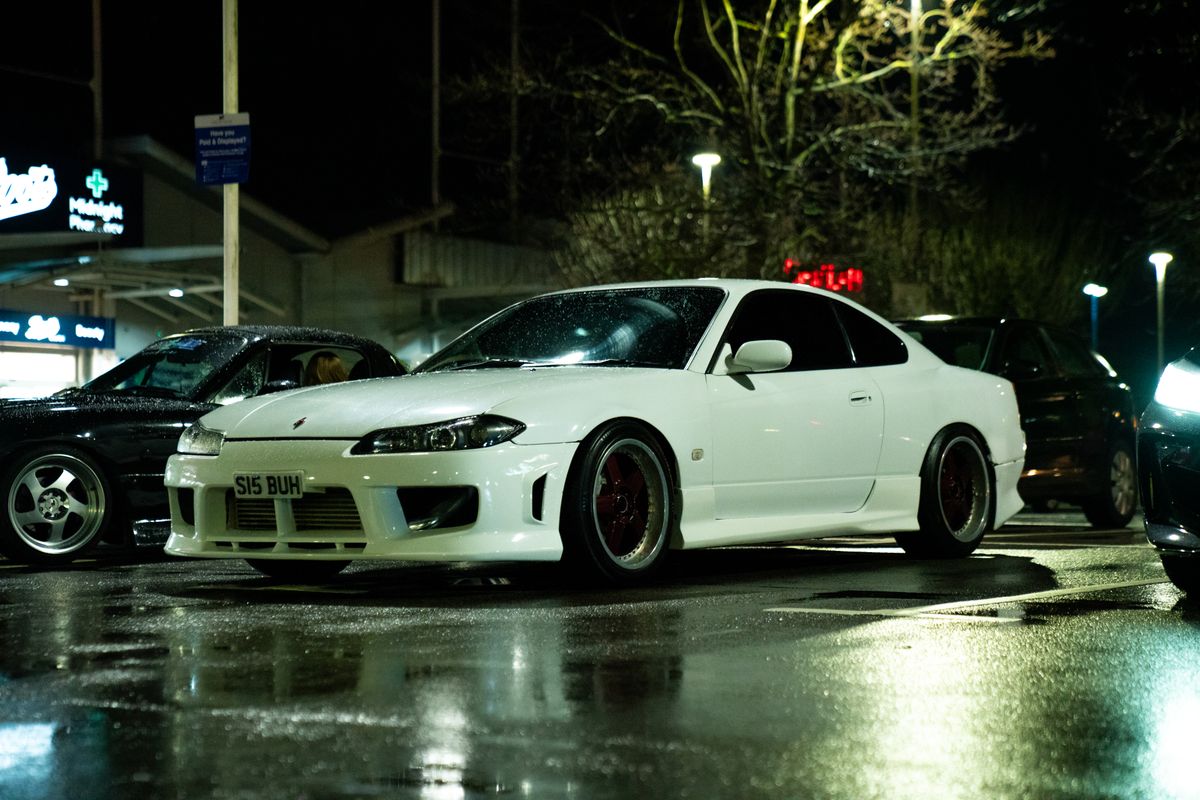 Nissan Silvia S15 for Sale in Japan: Prices & How to Buy One (2026)
 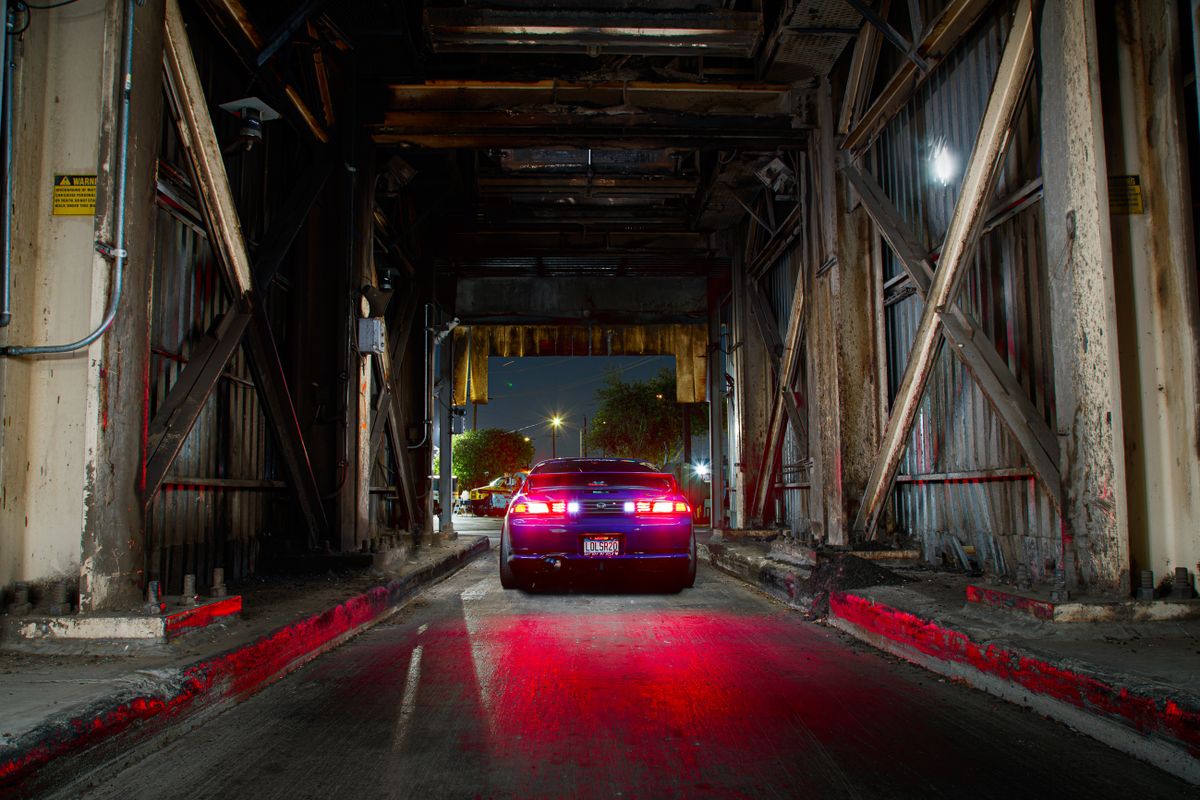 Nissan Silvia S13 for Sale in Japan: Prices & How to Buy One (2026)
  Nissan 180SX for Sale in Japan: Prices & How to Buy One (2026)
  JP Market Check #1: What S13, S14 & S15 Cost in Japan (Jul 2026)