
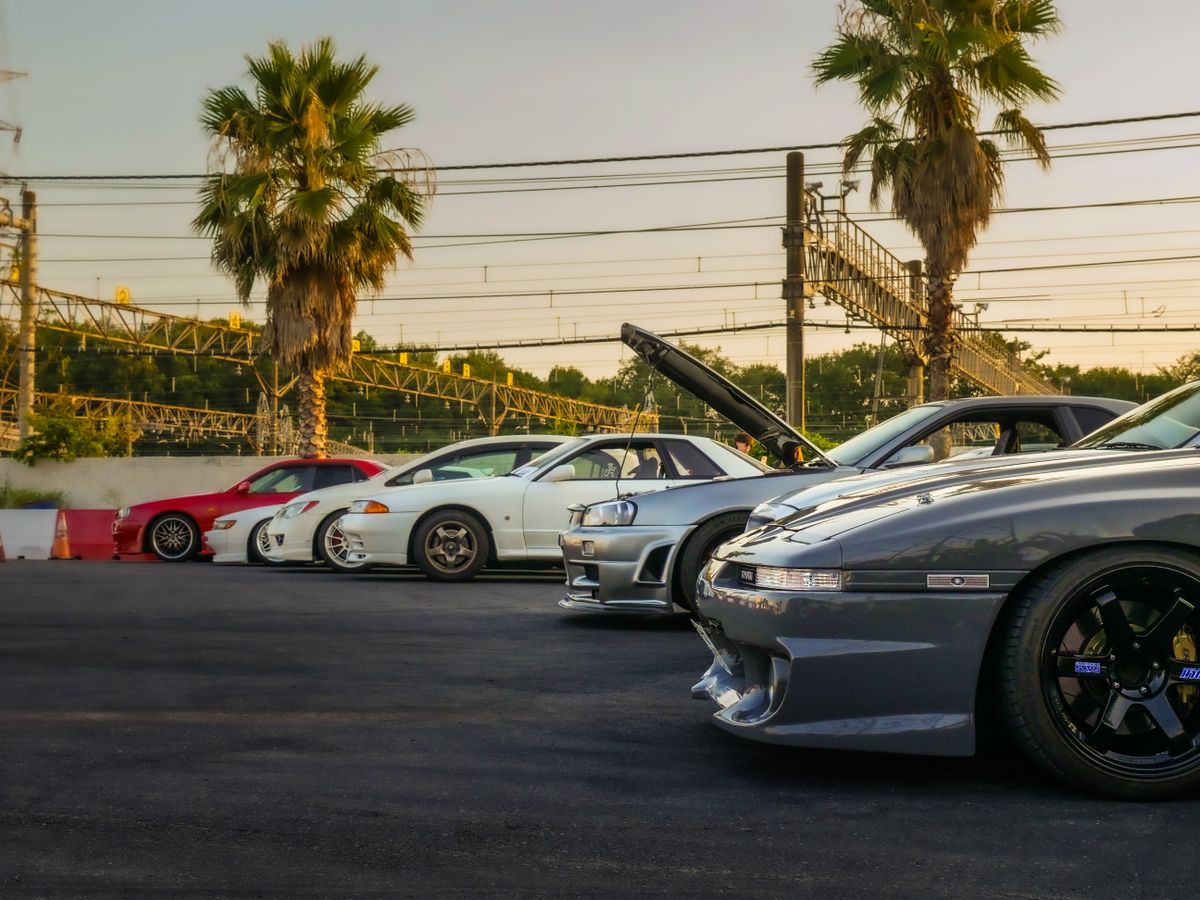
AE86 for Sale in Japan: Trueno vs Levin Prices & How to Buy (2026)
The Rundown
- Census of every priced AE86 on Goo-net (Aug 21, 2026): Sprinter Trueno median ¥5.39M across 29 cars, Corolla Levin median ¥3.69M across 39.
- That's a ¥1.71M gap between two cars that share the chassis, the 4A-GE engine and the entire driveline.
- 17 of 29 Truenos ask ¥5M or more; only 1 sits under ¥3M. For Levins it's the reverse: 11 of 39 under ¥3M.
- The premium buys pop-up headlights and the panda paint Initial D made famous — not different hardware.
- Every AE86 (1983–1987) cleared the US 25-year rule decades ago, and Toyota is reissuing 4A-GE parts through GR Heritage in 2026.
Contents
Here is a market puzzle you can state in one sentence: in Japan right now, two versions of the same car — same chassis code, same engine, same gearbox, same axle — are priced ¥1.71 million apart, and the expensive one is the one with hidden headlights. This is the AE86 story the price guides skip, and we have the full numbers because we counted every listed car in the country.
The AE86 price gap — census of Aug 21, 2026
Live today, not last month
Every AE86 listed on Japan’s largest used-car site this morning, with prices in yen and dollars and a button that has us go and look at it: AE86s for sale in Japan today. The month-by-month medians behind this guide: JP Drift Car Price Index. Parts for the car once it is yours: AE86 parts from Japan.
One chassis, two badges
First, the shared DNA. The AE86 (hachi-roku, “eight-six,” as all of Japan calls it) is the rear-drive sports version of the fifth-generation Corolla/Sprinter line, built from 1983 to 1987. Toyota’s own heritage page is precise about what makes an 86 an 86: only cars carrying the 1.6-litre DOHC 16-valve 4A-GE engine got the AE86 code. That engine made 130 PS in JDM trim, in a shell weighing roughly 900–1,065 kg, with GT, GT-V and GT-APEX grades and a choice of two-door notchback coupe or three-door hatchback in both model lines.
The two badges were a dealer-network split, common in Japan at the time: the Corolla Levin (fixed headlights) sold through one channel, the Sprinter Trueno (retractable pop-ups) through another. Different nose panels, different lights, different badges. Everything that moves the car is the same.
The census: two markets wearing one chassis code
On August 21, 2026 we crawled the model pages for both cars on Goo-net and logged every vehicle price (price on request cars excluded). Not page one, not a sample, the full count. Every figure in the table below was read off those model pages on August 21, 2026:
| Sprinter Trueno | Corolla Levin | |
|---|---|---|
| Priced listings | 29 of 32 | 39 of 48 |
| Range | ¥2.79M – ¥9.49M | ¥1.89M – ¥6.95M |
| Median | ¥5.39M | ¥3.69M |
| Middle 50% (Q1–Q3) | ¥3.98M – ¥6.07M | ¥2.99M – ¥4.30M |
| Cars at ¥5M or above | 17 of 29 (59%) | 7 of 39 (18%) |
| Cars under ¥3M | 1 of 29 | 11 of 39 (28%) |
The median gap is ¥1.71M. But the distribution tells it better: a majority of Truenos on sale ask ¥5M or more, while nearly three in ten Levins sit under ¥3M — money that only reaches the bottom quartile of the S13 market in the same census. Exactly one Trueno in the entire country is listed below ¥3M. These are not one market with a premium trim at the top; they are two different markets that happen to share a parts catalogue.
The gap is also moving. In July it stood at ¥1.99M; a month later the Levin median had climbed 9.0% while the Trueno sat still, closing it to ¥1.71M — the month-by-month breakdown is in Market Check #2, where the Levin was the biggest mover of any drift chassis.
The ¥1.7M is buying a story, not a spec
There’s no mechanical explanation, so the explanation is cultural, and everyone in Japan will give you the same word: Initial D. Takumi Fujiwara’s tofu-delivery car is a three-door Trueno GT-APEX in white-over-black two-tone — the panda scheme — and thirty years of manga, anime and arcade machines have made that specific nose one of the most recognisable in car culture. This is not ancient history, either: Toyota GAZOO Racing marked the franchise’s 30th anniversary at Fuji Speedway in September 2025, unveiling reproduction 4A-GE parts at the event. The icon is still being actively celebrated by the manufacturer itself.
The announcement landed three days before that weekend, and it named the two parts specifically.
"We have decided to reproduce engine parts for the Corolla Levin / Sprinter Trueno (AE86). Under the GR Heritage Parts project, we are reissuing two 4A-GE engine parts: the cylinder head SUB-ASSY and the cylinder block SUB-ASSY."
カローラレビン・スプリンタートレノ(AE86)エンジン部品の復刻を決定🚗✨️ ✅ #GRヘリテージパーツ プロジェクトから 4A-GEエンジン部品2点の『シリンダーヘッドSUB-ASSY』『シリンダーブロックSUB-ASSY』を復刻します。
View the original post ↗So the pop-up headlights function as a provenance certificate. A panda Trueno hatch is the poster; a Levin, mechanically its twin, merely drives like it. Markets pay for posters. The census simply puts a number on it: ¥1.71M at the median.
Worth adding: drift history proper is even-handed here — Keiichi Tsuchiya, the Drift King whose career made the hachi-roku a legend on track, is associated with the Trueno, but Levins fought the same touge (mountain pass) battles. The premium tracks the manga, not the motorsport.
What Toyota’s parts program means for both
The strongest recent development applies to Levin and Trueno equally. Through the GR Heritage Parts Project, Toyota has been reissuing discontinued AE86 parts — axle shafts, steering knuckle arms, brake calipers, gearbox internals — and in September 2025 announced reproduction 4A-GE cylinder heads and blocks, scheduled to go on sale around May 2026. For a forty-year-old car, factory-new engine castings are a genuine safety net. If your worry was “can I keep an 86 alive outside Japan,” the manufacturer just answered it.
Buying either one from abroad
At this age the car is the condition, and condition on an 86 means rust: sills, rear arches, seam lines, floor. It also means originality questions — matching 4A-GE, genuine GT-APEX trim, how much of the car has been replaced across four decades of drift and touge life. None of that is visible in listing photos, and with cars at this price the gap between a good and bad example is enormous.
The workable approach from overseas is evidence before money: the car gets inspected where it stands, and you get the full video walkthrough — underside, seams, engine bay, cold start — so the decision is made on footage, not faith. On a ¥5M Trueno, that discipline is worth more than anywhere else in this census.
That inspection is the step that stops most AE86 buys from abroad, because it has to happen at the car, in Japanese, on the seller’s timetable, before anyone will hold it for you. Send us the badge, grade and body style you are after and we will go and inspect the car in Japan, then send you the underside and cold-start footage before you commit.
What the ¥1.71M actually buys
Pop-up headlights and the panda paint scheme. The chassis, the 4A-GE and the entire driveline are shared. If the driving is the point rather than the silhouette, the Levin is the same car for two-thirds of the money.
Import eligibility: long since open
The US 25-year FMVSS exemption stopped being a factor for the AE86 a generation ago — the newest 1987 cars cleared it in 2012, and every AE86 is now 39 to 43 years old. It is fully importable to essentially every market that allows classic vehicles at all; the country-by-country version of that test is in our guide to the 25-year rule and which drift chassis have cleared it.
Which sharpens the real question this census answers. You are not choosing whether you can own a hachi-roku; you are choosing what the money buys. At ¥3.69M, the Levin is the same chassis, the same 4A-GE, the same newly-supported parts future — for Silvia money. At ¥5.39M, the Trueno is all of that plus the pop-ups and the poster. Both are honest purchases. Just know which one you’re making.
Frequently asked questions
Is the Levin really mechanically identical to the Trueno?
Yes. Toyota's own AE86 heritage page treats them as one model line: only cars with the 1.6-litre DOHC 16-valve 4A-GE got the AE86 code, in both Levin and Trueno bodies. They differ in nose panels — fixed versus retractable headlights — and originally in which dealer network sold them. Engine, gearbox, axle and suspension are shared, and GR Heritage reproduction parts cover both.
Will the Trueno–Levin gap close?
It has started to. Between the July and August censuses the gap fell from ¥1.99M to ¥1.71M — the Levin median rose 9.0% in a month while the Trueno moved 0.4%. We don't predict from that; we measure it. The full count runs monthly and every result is archived, so the next Market Check either extends the trend or ends it.
Which AE86 body style should I buy, hatchback or notchback coupe?
Both body styles exist under both badges across the 1983–1987 AE86 run. The Initial D car is the three-door hatchback Sprinter Trueno in GT-APEX trim, so that exact configuration carries the strongest icon demand; our census of every priced AE86 on Goo-net on Aug 21, 2026 put the Sprinter Trueno median at ¥5.39M across 29 cars against ¥3.69M across 39 for the Corolla Levin. The two-door notchback is stiffer in the shell and has its own following among grip and club racers in Japan.
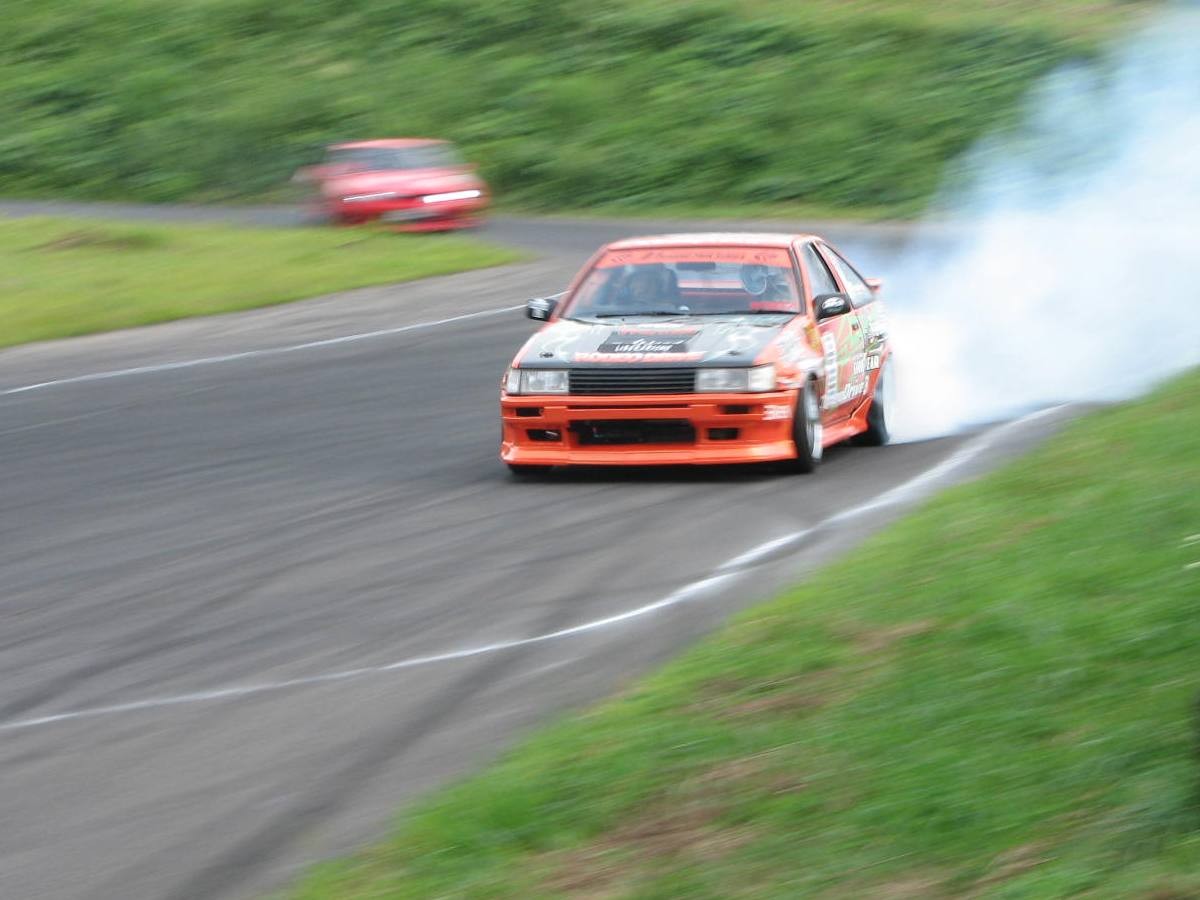 AE86 in D1 Grand Prix: Drivers, Cars and the 2026 Grid
  JP Market Check #1: What S13, S14 & S15 Cost in Japan (Jul 2026)
 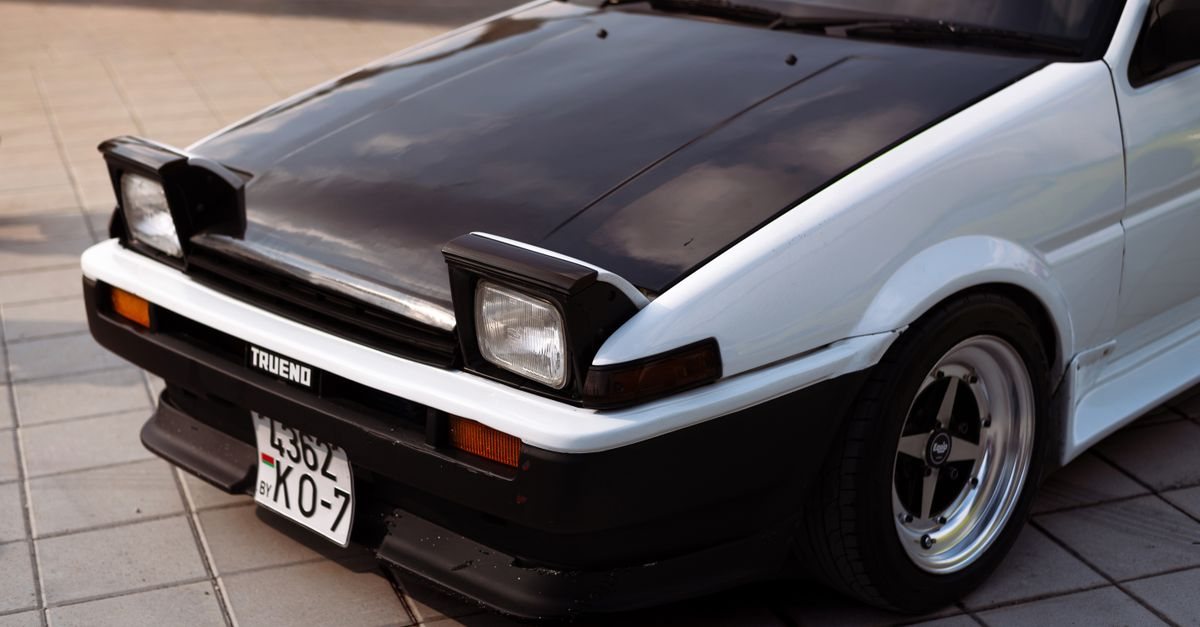 JP Market Check #4: Japan Drift Car Prices, Levin Up 5.8% (Oct 2026)
  JP Market Check #3: Japan's Drift Car Prices Fell (Sept 2026)