
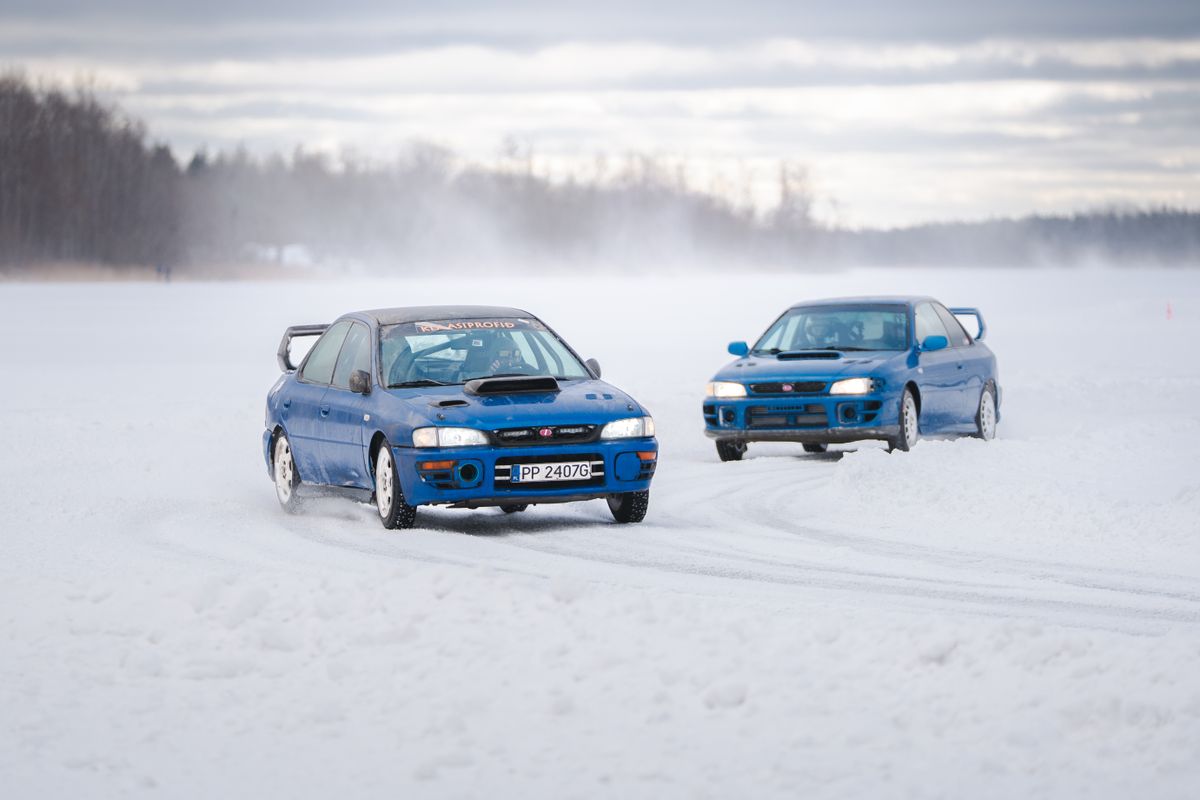
Drifting in Hokkaido (2026): Two Circuits and a Snow Season
The Rundown
- Two Hokkaido venues sell drift running to the public. Shin-Chitose Motorland (新千歳モーターランド) prices its Active Safety Park free running from ¥4,000 for a weekday morning to ¥11,500 for 9:00–21:00, on a table dated 23 April 2023. Tokachi Speedway (十勝スピードウェイ) sells its Short Course at ¥5,000 for under two hours and ¥8,000 for two hours or more, closed Mondays and Thursdays.
- At Shin-Chitose Motorland the first person to book decides what the slot is. The venue's own pages say the discipline of each morning, afternoon or night session is set by whoever reserves it first, that bookings are taken only inside a two-week window, and that reservations close at 17:00 the day before.
- Winter is a product, not a shutdown. Shin-Chitose runs 12 December to February on snow: bring-your-own free running is ¥5,500 for a weekday half-day and ¥7,700 at weekends, and the venue's snow rental drift runs from ¥2,200 for three laps to ¥16,500 for an hour, with an interpreter listed as a bookable option at ¥5,000 for up to two hours.
- Tokachi Speedway banned drifting on its Junior Course in 2014 and moved it to the Short Course, a 23,000 m² banked layout completed in 2015. Its winter ice course runs from the third Monday of January to about 20 February and is sold by whole-day hire only, at ¥250,000 to ¥650,000 a day.
- Kamui Ski Links hosted D1 NEXT Hokkaido Round 2 on 5 July 2026, but it is a ski resort: its published season is 13 December 2025 to 31 March 2026 and its site carries nothing about cars in any of its five languages.
Contents
Drifting in Hokkaido at a glance
Hokkaido has two venues that sell drift running to the public: Shin-Chitose Motorland (新千歳モーターランド, officially New Chitose Motor Land, Hokkaido) at Chitose, from ¥4,000 for a weekday morning session, and Tokachi Speedway (十勝スピードウェイ, Hokkaido) at Sarabetsu, from ¥5,000 for under two hours on its Short Course. Every fee, season and bus fare below was read off the official pages on 10 September 2026. The island’s third famous name, Kamui Ski Links, hosted a D1 round in July 2026 and sells nothing to a drifter at all.
Can you drift in Hokkaido?
Yes, and the answer is unusually clean for a Japanese region: two venues, both with drift written on their own price lists, at opposite ends of the island.
| Venue | Where | Can you drift here? | Price | Reachable without a car? |
|---|---|---|---|---|
| Shin-Chitose Motorland | Chitose | Yes — Active Safety Park free running, and the day’s discipline is set by whoever books first | ¥4,000 weekday morning to ¥11,500 for 9:00–21:00; ¥6,000 on an all-you-can-drift day | Taxi only — 10 min from JR Minami-Chitose, the stop before the airport |
| Tokachi Speedway | Sarabetsu | Yes — the Short Course is described on its own page as the drift and gymkhana course | ¥5,000 under two hours, ¥8,000 over. Closed Mon and Thu | No — nearest scheduled stop is about 4 km short of the gate |
| Kamui Ski Links | Asahikawa | No — a ski resort. Hosted D1 NEXT Hokkaido Rd.2 on 5 July 2026 as an organiser’s event | Not applicable to cars | Not applicable |
Shin-Chitose is the one that behaves like a drift circuit. Its Active Safety Park is a JAF-approved gymkhana course of 15,000 m² with a 140 m maximum straight and floodlights, and it sells free running in three blocks: morning 9:00 to 12:00, afternoon, and a night session from 17:00 to 21:00. The catch is a rule you will not find anywhere else in Japan in this form — whoever books a slot first decides what that slot is. Reserve it as a drift session and only drift cars join you; reserve it as a gymkhana (ジムカーナ) session and no drift car gets in. The venue spells this out on three separate pages, with the same worked example each time.
Tokachi Speedway is the surprise. It is an FIA-graded facility 40 km from Obihiro, and the English assumption is that big Japanese circuits are grip-only. Tokachi is not: its sports-running price list carries two Short Course lines reading “drift and gymkhana course”, and the course page says the Short Course mainly hosts drift free running, drift events and gymkhana. What it did do was move drift off the Junior Course — a notice still on the site announces that from 2014 drift was banned there and is possible only on the Short Course, completed in 2015 at about 23,000 m², 10 to 15 m wide, with a banked corner.
How much does a Hokkaido track day cost?
There are two rungs, and they are both cheap by Japanese standards.
The cheap one is a single Shin-Chitose block. On a weekday that is ¥4,000 for 9:00 to 12:00, ¥6,000 for the afternoon, ¥6,500 for the night session, ¥8,200 for morning plus afternoon and ¥11,500 for the whole 9:00 to 21:00 day. Saturdays run ¥5,500 to ¥12,500 and Sundays and public holidays ¥6,000 to ¥15,500. A second driver sharing your car is ¥2,200; a spectator pays ¥700, and your own admission is inside the running fee. The table is dated 23 April 2023 and is the current one on the site. Two small honesty notes: the venue’s own pages disagree on when the afternoon block starts, giving 12:30 on the drift page and 13:00 on the Active Safety Park page, and night running is described as starting from May.
The packaged one is a hashiri-houdai (走り放題, all-you-can-run) day: ¥6,000 for the day plus ¥700 admission, capped at 50 cars, with running from 9:00, a course-maintenance break at noon and the afternoon from 13:00. Those are open days rather than a slot you have to negotiate. Organisers add more: Shin-Chitose’s own calendar carries outside soukoukai (走行会, organiser track days) through the autumn.
At Tokachi the Short Course is ¥5,000 for a unit of under two hours and ¥8,000 for two hours or more, on any day except Monday and Thursday. Admission is ¥1,000 a head but free from Monday to Friday outside event days, so a Tuesday costs exactly ¥5,000. The site’s ordinary-vehicle sports-running block says a plated road car needs only a briefing rather than a licence for the Clubman and Junior courses; it does not spell out the Short Course requirement, so treat that as TBC until you ask.
What a Hokkaido drift day assumes you already have
- Your own dorisha (ドリ車, a drift car) in the tarmac season. Shin-Chitose's car rental appears only on its winter pages; the summer Active Safety Park rules assume you bring something, and accept FF, FR, MR or 4WD with no tyre restriction
- A helmet that covers your ears. Shin-Chitose takes jet or full-face with a visor and refuses half-caps, and requires helmet and belt for the passenger too, with the driver's window fully shut
- Long sleeves, long trousers and trainers. Sandals and heels are refused at the gate; gloves that cover the whole hand are required, and the venue sells its own at ¥330
- A roll bar, if your car is a convertible at Tokachi. Open cars need a four-point bar or better; a hardtop or a fashion bar is not accepted
- Cash and a date that is not the wrong season. Shin-Chitose runs tarmac March to November and snow December to February; Tokachi's ice course runs mid-January to about 20 February
Can you drive on snow in Hokkaido?
This is the strongest reason to put Hokkaido on an itinerary rather than Kanto.
Shin-Chitose Motorland splits its year deliberately: tarmac from March to November, and from December to February the entire site becomes a snow and ice circuit, 75,000 m² across two venues, with the 15,000 m² kart-and-Active-Safety-Park layout rebuilt in snow and a separate 50,000 m² special snow course opposite it. The venue’s own first-timer page claims this is the only snow motorsport operation in Japan.
Bring your own car and the winter free-running page prices a half-day at ¥5,500 on a weekday and ¥7,700 at weekends and public holidays, in 9:00–12:00 and 13:00–16:00 blocks, studless tyres only, reservation required. If five or more cars are out, or vehicle types are mixed, the venue may switch to 20-minute rotations.
Turn up with nothing and there is a second product: snow rental drift, where the car is supplied at the course. It runs ¥2,200 for three laps, ¥4,400 for ten minutes, ¥7,700 for twenty, ¥13,200 for forty and ¥16,500 for an hour, plus ¥2,200 per passenger, and needs an ordinary driving licence. The same page lists an option that is rare enough in Japanese motorsport to be worth naming: an interpreter, ¥5,000 for up to two hours and ¥2,000 an hour after that, bookable in advance. Whether a foreign licence or an International Driving Permit satisfies that requirement is stated nowhere on the venue’s pages — treat it as TBC and settle it before you fly. Both snow pages are dated (2 December 2020 and 24 December 2019) and still live; the current first-timer page confirms winter operation and winter car rental, so the season is real, but these are the figures the venue has left published rather than a freshly issued tariff.
Tokachi runs a winter course too, and it is a different business. Its ice layouts open from the third Monday of January to about 20 February, 9:00 to 15:00, from an 800 m central course to a 1,500 m full course — and they are sold by whole-day hire only, at ¥250,000 for the central course, ¥450,000 with the east loop and ¥650,000 for the full course. That is a test and event product, not a session you buy alone.
March and December are the two months that can waste a trip
Shin-Chitose's tarmac season is March to November and its snow season December to February, and the price-list page adds that summer operation is "planned from around March" rather than fixed to a date — so an early-March booking can fall between the two products. Tokachi's ice course does not open until the third Monday of January and closes around 20 February, which leaves December and the first half of January with no winter running at either venue.
Can you get to Shin-Chitose Motorland without a car?
Almost, and the near-miss is the whole story. The circuit sits at Bibi 1292-560 in Chitose, and its own driving directions have you leave Route 36 shortly after passing New Chitose Airport — which makes it the best-placed drift venue in Japan on a map and one of the worst on a timetable.
| Venue | What actually exists on the ground |
|---|---|
| Shin-Chitose Motorland | The access page names one route: 10 minutes by taxi from JR Minami-Chitose Station. That station is the stop before New Chitose Airport on the JR rapid service, which runs six times an hour from Sapporo in 33–37 minutes for ¥1,230 |
| Bibi Airport Line (city bus) | Runs from Chitose Station through the airport into the Bibi district — but past the terminal it stops only at the Chitose Institute of Science and Technology and Rapidus-mae, and Chitose City’s timetable states that Rapidus-mae is inside the factory site and closed to non-employees |
| Airport shuttle (the circuit’s own) | Real, free, and not for you: the venue runs a free New Chitose Airport transfer, but only bundled with its rental-kart packages from ¥8,000 a head, booked three days ahead |
| Tokachi Speedway | Tokachi Bus’s Hiroo line reaches Kamisarabetsu, ¥1,200 from Obihiro Station bus terminal — and the circuit’s own page puts that stop about 4 km from the gate. Special buses run from Obihiro for big events only |
So the last mile is a taxi, and the step before it is worse. Shin-Chitose takes Active Safety Park reservations only inside a two-week window, first come, with the previous day’s 17:00 as the cut-off, and the discipline of your session depends on who rings first. There is a Japanese reservation form, but the venue’s general enquiry page returns “contact form not found” — in the Chinese version as well as the Japanese one — which leaves a landline in Chitose as the only way to settle a date.
Your date only becomes a drift date when somebody rings up and makes it one
This is the step a visitor cannot take. The booking window opens fourteen days out, not six months, the slot belongs to whoever claims it first and takes its discipline from them, and the venue's own enquiry form is broken in both of the languages it offers, so what is left is a phone call to Chitose in Japanese. We take that leg on: we make the call inside the window, get the session opened as a drift session, put the kit list, the vehicle rules and the licence question into English for you, and arrange the run from the station to the paddock and back. Actual costs plus a fee, quoted as one total before anything is booked. Send your travel window and we will set up the Hokkaido drift day.
What about Kamui Ski Links and the D1 rounds?
Kamui Ski Links in Asahikawa is the venue English readers find first, because D1 NEXT Hokkaido Round 2 ran there on 5 July 2026. It is a ski resort and behaves like one: its published operating season is 13 December 2025 to 31 March 2026, 9:00 to 17:00, and its only green-season product on the site is a nine-day autumn gondola ride from 10 to 18 October 2026. The site runs in five languages and not one of them mentions cars. It was an organiser’s venue for one day in 2026 — the same pattern as Okuibuki Motor Park in Shiga, where a ski resort’s ground becomes a drift course.
Plan around the competition rather than at it. The 2026 D1 NEXT Hokkaido series was two rounds and no more: Round 1 at Shin-Chitose Motorland on 14 June and Round 2 at Kamui on 5 July. Shin-Chitose’s own calendar is busier: October 2026 alone carries the Fyl Fot track day on the 4th, a drift rookies’ session on the 12th and STREET WANTED on the 18th. Check the event and track calendar before fixing dates around a series round.
Which one should you build a Hokkaido trip around?
Shin-Chitose, unless you are already going to Obihiro. It is the cheapest session on the island at ¥4,000, the only one you can reach from an international runway by taxi, and the only venue here that will hand you a car on snow. Tokachi is the better circuit and the worse trip: ¥5,000 buys two hours on a banked short course, but it is 220 km from Sapporo and 4 km beyond the last bus stop.
If your dates fall between December and February you are choosing snow whether you meant to or not — a different discipline from the tarmac in our Tohoku regional guide, and worth reading beside our winter drifting guide. Layouts for the rest of the country are in the track directory.
Frequently asked questions
Can I drift in Hokkaido as a tourist?
Yes, at two venues, as of 10 September 2026. Shin-Chitose Motorland (新千歳モーターランド) in Chitose, Hokkaido runs free-running sessions on its Active Safety Park at ¥4,000 for a weekday morning, ¥6,000 for a weekday afternoon and ¥11,500 for a full 9:00–21:00 weekday, on a price table dated 23 April 2023, and the discipline of each session is set by whoever books it first. Tokachi Speedway (十勝スピードウェイ) in Sarabetsu, Hokkaido sells its Short Course — which its own page describes as the venue's drift and gymkhana course — at ¥5,000 for under two hours and ¥8,000 for two hours or more, on any day except Monday and Thursday. Neither venue publishes an English booking page.
How much is a drift day at Shin-Chitose Motorland?
Shin-Chitose Motorland (新千歳モーターランド, Hokkaido) publishes an Active Safety Park free-running table dated 23 April 2023 with six time blocks. On a weekday it is ¥4,000 for the 9:00–12:00 morning, ¥6,000 for the afternoon, ¥6,500 for the 17:00–21:00 night session, ¥8,200 for morning plus afternoon and ¥11,500 for the whole 9:00–21:00 day. Saturday runs ¥5,500 to ¥12,500 and Sunday or a public holiday ¥6,000 to ¥15,500. A second driver in the same car is ¥2,200 and a spectator ¥700, with the driver's own admission included. The venue also runs occasional all-you-can-drift days at ¥6,000 plus ¥700 admission, capped at 50 cars. All figures as of 10 September 2026.
Is there snow drifting in Japan?
Yes, and Hokkaido is where it is sold. Shin-Chitose Motorland (新千歳モーターランド, Hokkaido) splits its year into a tarmac season from March to November and a winter season from December to February, when the whole site becomes a snow and ice circuit. Its snow free-running page prices a bring-your-own half-day, studless tyres only, at ¥5,500 on a weekday and ¥7,700 at weekends and public holidays, in 9:00–12:00 and 13:00–16:00 blocks. Its snow rental drift, where the car is provided at the course, runs ¥2,200 for three laps, ¥4,400 for ten minutes, ¥7,700 for twenty, ¥13,200 for forty and ¥16,500 for an hour, needs an ordinary driving licence, and lists an interpreter as a bookable option at ¥5,000 for up to two hours. Both pages were checked on 10 September 2026.
Can you get to a Hokkaido drift circuit without a car?
Only as far as a taxi rank, as of 10 September 2026. Shin-Chitose Motorland's own access page names exactly one public-transport route: ten minutes by taxi from JR Minami-Chitose Station, which is the stop before New Chitose Airport on the JR rapid service that runs six times an hour from Sapporo for ¥1,230. Chitose City's own bus network does run a Bibi Airport Line past the airport into the Bibi district, but its only stops beyond the terminal are the Chitose Institute of Science and Technology and Rapidus-mae, and the city timetable states in writing that Rapidus-mae is inside the plant and closed to non-employees. At Tokachi Speedway the nearest scheduled stop is Kamisarabetsu on the Tokachi Bus Hiroo line, ¥1,200 from Obihiro Station bus terminal, and the circuit's own access page puts it about 4 km short of the gate.
 Drifting in Tohoku (2026): Four Tracks Beyond Ebisu
  Drifting in Chugoku (2026): Hiroshima & Okayama Without a Car
  Drifting in Tokai (2026): Five Venues Near Nagoya That Say Yes
  Drifting in Shikoku (2026): Four Prefectures, Two Phone Numbers