
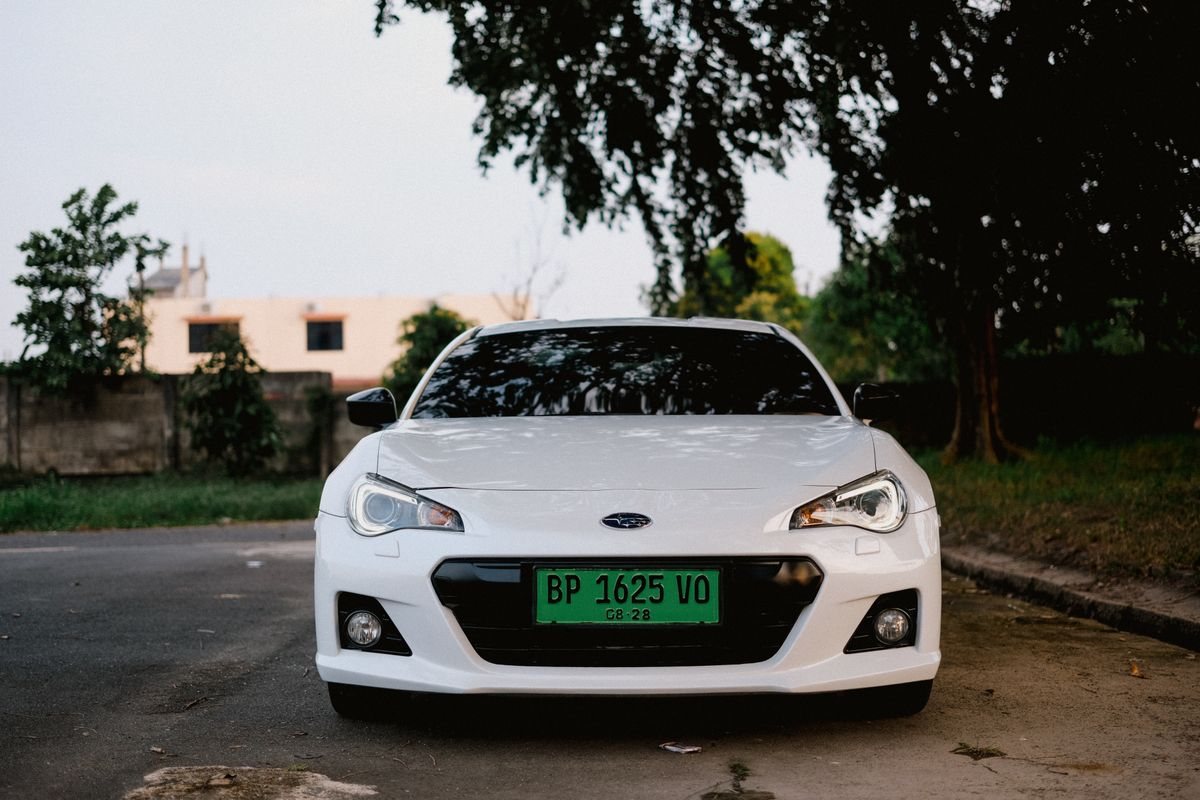
What Is JDC Drift? Japan Drift Champions Explained (2026)
The Rundown
- Japan Drift Champions (JDC) is a three-round, solo-judged drift series restricted to the Toyota 86 and Subaru BRZ, and in 2026 all three rounds run at Bihoku Highland Circuit in Niimi, Okayama.
- The 2026 final, Rd.3, is Sunday 29 November on the B course. Watching costs the circuit's ¥500 admission; driving costs ¥15,000 a series class (¥10,000 beginner) plus a ¥1,000 gate fee, cash on the day.
- Driver entry opens 29 September and closes at 11:00 on 17 November 2026: a Japanese paper form and pledge, photographed and sent to the organiser's LINE account. Each class is capped at 20 cars, first-come.
- The only licence asked for is an ordinary driving licence. Rd.1 drew 29 cars from 11 prefectures, ages 15 to 56; Rd.2 classified 22 cars in the wet.
- 29 November is a Sunday, so the ¥300 Niimi shared taxi to the gate does not run. You arrive by car — about 15 minutes from Hokubo IC — or by metered taxi from Ikura Station on the JR Hakubi Line.
Contents
Japan Drift Champions 2026 — read off the official JDC and Bihoku pages on 4 Sep 2026
Japan Drift Champions (JDC) is a grassroots, solo-judged drift series for the Toyota 86 and Subaru BRZ, and in 2026 all three rounds run at Bihoku Highland Circuit in Niimi, Okayama. The season final, Rd.3, is Sunday 29 November 2026 on the B course; watching costs the circuit’s ¥500 admission, and driver entry opens 29 September and closes at 11:00 on 17 November. Every date and price here was checked on the official JDC and Bihoku pages on 4 September 2026.
If you found “JDC” on a Japanese event calendar and hit a wall of Japanese pages, this is what those pages say — and where they stop.
What JDC is, and how it differs from D1 or Formula Drift Japan
JDC is run by the Japan Drift Champions Association, the event division of Total Garage Dai, a shop in Saijo, Ehime, across the water on Shikoku. Its stated purpose is a competition decided by skill under equal conditions — the organiser calls it an antithesis to ever-rising power and build costs. From 2026 the whole field is restricted to the 86 and BRZ, split by engine (2.0-litre FA20 or 2.4-litre FA24) and by whether it is force-fed.
The other defining trait is the judging. JDC is tansō (単走 — solo runs, one car judged alone on line, angle and commitment) from start to finish: practice, two qualifying runs, two final runs. There is no tsuisō (追走 — the lead-and-chase tandem battle) at all.
| Japan Drift Champions (JDC) | D1 Grand Prix | |
|---|---|---|
| Where | One circuit — Bihoku Highland Circuit (Okayama) — for all three 2026 rounds | Tours big circuits: Ebisu 26–27 Sep, Autopolis 24–25 Oct, and a 14–15 Nov final whose venue still read T.B.A on 4 Sep |
| Format | Solo runs only: 2 qualifying + 2 final runs, scored | Solo qualifying, then tandem battles decide the winner |
| Cars | Toyota 86 / Subaru BRZ only, 5 classes | Open — the professional field |
| To drive | Ordinary driving licence, ¥15,000 a round, 20 cars a class | Professional championship — see our D1 spectator guide |
| To watch | ¥500 circuit admission | Ticketed; prices published per round |
Formula Drift Japan sits with D1 on that table — touring, ticketed, tandem. JDC is the one-venue, one-model layer underneath both, where an ordinary licence and a stock-bodied 86 get you a start number.
The 2026 calendar: three rounds, one circuit
JDC visited Suzuka Twin and YZ in earlier seasons; for 2026 the schedule page lists Bihoku for every round.
- Rd.1 · 31 MayBihoku Highland Circuit — B course
dry · 29 cars entered from 11 prefectures, ages 15 to 56
round run - Rd.2 · 16 AugBihoku Highland Circuit — B course
wet · 22 cars classified across the 5 classes
round run - Rd.3 · 29 NovBihoku Highland Circuit — B course · SERIES FINAL
official practice Sat 28 Nov on the B course · JDC all-free run on the A course on the 29th
entry 29 Sep – 11:00 on 17 Nov
The Saturday and the A-course line come from the circuit, not the series. Bihoku publishes its bookings as Google calendars, and on 4 September those showed the B course reserved for a JDC practice day on Saturday 28 November and for JDC Rd.3 on Sunday 29 November, with the A course given to a JDC all-free drift run on the Sunday. At Rd.2 the organiser sold that A-course slot as a run class — ¥6,000, any car, 40 places — and the practice day at ¥10,000 in advance or ¥13,000 on the day. Rd.3 prices are TBC until its documents appear from 29 September.
What the day looks like if you are watching
The Rd.3 timetable was not published as of 4 September. The last full timetable JDC posted, for its 2025 opener, ran: drivers’ gate 7:30, spectator gate 9:00, practice from 9:00, qualifying from 11:30, the solo tournament from 12:45, podium at 15:00, spectator gate closed at 16:00. Bihoku’s own winter hours (November to February) are 8:30–16:00 on a Sunday, so expect something close to that.
You pay the circuit’s ¥500 admission at the gate as a non-driver; nothing on the JDC pages sets a separate spectator price. The circuit’s FAQ is blunt — no fuel and no food on site — and the organiser takes entry money in cash only, so treat the whole day as cash. A YouTube live stream is listed as planned. For the circuit itself and its ¥5,000–6,500 free-run days, see our Bihoku Highland guide.
How to enter Rd.3 — and where it stalls
Two deadlines and no way back
Rd.3 entry closes at 11:00 JST on Tuesday 17 November 2026, and any class can shut earlier once its 20 places are taken. The pledge states that the entry fee is not refundable under any circumstances, including a cancelled or altered event, so be certain of your dates before you send the photo.
The car side is short: an 86 or BRZ with standard doors, glass and boot lid; tyres no wider than 215 mm; a silenced muffler under 105 dB; tow hooks, a four-point harness and a fire extinguisher; a full-face helmet, racing gloves and shoes for you. Eligibility is one sentence — a valid ordinary driving licence, under-18s with a guardian. Whether an international driving permit satisfies it is not stated — TBC.
Now the part that stalls. The JDC site’s menu is bilingual — HOME, WHAT’S JDC, SCHEDULE, RANKING — and that is where the English ends. Every page behind it, the entry form, the pledge and the LINE account are Japanese only. The organiser’s published contacts are a landline and a fax number in Ehime; there is no email, no English form and no card payment. For a Japanese club driver that is routine. From abroad it is three Japanese-language conversations before you have a start number.
Getting to Bihoku on a Sunday
Bihoku Highland Circuit is at 3190 Toyonaga-Sabushi, Niimi, in the hills of northern Okayama, about 15 minutes and 7 km by car from Hokubo IC on the Chugoku Expressway — an easy detour off the Osaka–Hiroshima axis, and a car is what almost everyone at a JDC round arrives in.
Without one, the weekday answer is good and the weekend answer is not. Take the JR Hakubi Line to Ikura Station in Niimi; from there Niimi City’s shared taxi lists the circuit as a designated stop for ¥300 a ride. But it runs Monday to Friday, 08:30 to 16:00, never on public holidays — and 29 November is a Sunday, the practice day a Saturday. For the final you are on a metered taxi from Ikura or a rental car from Okayama. The weekday route, and every other Chugoku venue, is in our Hiroshima and Okayama without a car guide.
Both stalls are ours to take
The JDC entry is a Japanese paper form sent over LINE and settled at a reception desk that works in Japanese, and the last leg to the gate on a Sunday is a taxi you have to phone for in Japanese. We take both: the entry conversation with the organiser if you are driving, and the ride from Ikura Station plus a spot on the bank if you are watching. Watch the JDC final with someone who knows the paddock — tell us your dates.
Is JDC worth building a trip around?
Be honest about scale. This is not D1: 22 to 29 cars, one 1,100 m course, no grandstand, and a podium of trophies and tyres rather than prize money. What ¥500 buys is a full day of judged 86 and BRZ runs at a circuit small enough that every clip zone is in view from the bank, with a field that already pulls from beyond the region — Rd.1’s entry list ran from Kanagawa in the east to Kumamoto in Kyushu.
It also lands in a busy fortnight for the same tarmac: the circuit’s calendars show a West Japan AE86 drift day on Saturday 21 November and Final Bout SSJ West on Sunday 22 November, then the JDC practice day and final the following weekend. The full late-autumn picture is in our November 2026 drift trip planner, and every date above sits on the calendar with the day it was last checked.
Frequently asked questions
What is JDC in Japanese drifting?
JDC stands for Japan Drift Champions, a grassroots drift series run by the Japan Drift Champions Association, the event division of a shop called Total Garage Dai in Saijo, Ehime. From 2026 it is restricted to the Toyota 86 and Subaru BRZ, split into five classes by engine size and turbocharging, and every run is judged solo — two qualifying runs and two final runs, with no tandem battles. All three 2026 rounds are at Bihoku Highland Circuit in Niimi, Okayama: 31 May, 16 August and 29 November. Checked on the official JDC pages as of 4 September 2026.
When and where is the JDC 2026 final?
The Japan Drift Champions 2026 final, Rd.3, is on Sunday 29 November 2026 at Bihoku Highland Circuit in Niimi, Okayama, on the B course. The circuit's own calendar also lists an official JDC practice day on the B course on Saturday 28 November and a JDC all-free drift run on the A course on the 29th. The organiser states that dates can change, so re-check the JDC schedule page before booking travel. As of 4 September 2026 the Rd.3 timetable had not been published.
How much does it cost to watch or enter JDC Rd.3 at Bihoku?
Watching costs Bihoku Highland Circuit's standard ¥500 admission for non-drivers; no separate JDC spectator ticket is published. Driving costs ¥15,000 for the four series classes or ¥10,000 for the beginner class, plus a ¥1,000 circuit entry fee on the event day and again on the practice day, all paid in cash at reception. The Saturday practice session cost ¥10,000 in advance or ¥13,000 on the day at Rd.2; Rd.3 figures are TBC until its documents appear from 29 September 2026. Prices as of 4 September 2026.
Can a foreigner enter Japan Drift Champions?
Nothing on the official pages excludes overseas drivers: the stated eligibility is an ordinary driving licence, with under-18s allowed if a guardian attends. The practical barriers are the process and the car. The entry form and pledge are Japanese only, the pledge carries a seal box, both are photographed and sent to the organiser's LINE account between 29 September and 11:00 on 17 November 2026, and fees are paid in cash at reception. The car must be a Toyota 86 or Subaru BRZ on tyres no wider than 215 mm with a muffler under 105 dB. Whether an international driving permit satisfies the licence line is not stated. As of 4 September 2026.
How do I get to Bihoku Highland Circuit for the JDC final without a car?
Take the JR Hakubi Line to Ikura Station in Niimi, Okayama. On weekdays Niimi City's shared taxi stops at Bihoku Highland Circuit for ¥300, but it runs Monday to Friday, 08:30 to 16:00 only, and 29 November 2026 is a Sunday. For the JDC final you therefore need a metered taxi from Ikura or a rental car; the circuit is about 15 minutes by car from Hokubo IC on the Chugoku Expressway. Confirmed against the Niimi City shared-taxi guide and the circuit's access page on 4 September 2026.
 D1 Lights 2026 Rd.7 & 8 Bihoku Results: Nakagawa and Seto Win
  Formula Drift Japan 2026 Schedule: Season Results, FDJ3 Dates, Access
  Formula Drift Japan 2026 Rd.6 Okayama Results: Sobagiri Wins the Title
  D1GP Autopolis 2026 Tickets: Prices, Parking and Access (Oct 24–25)