
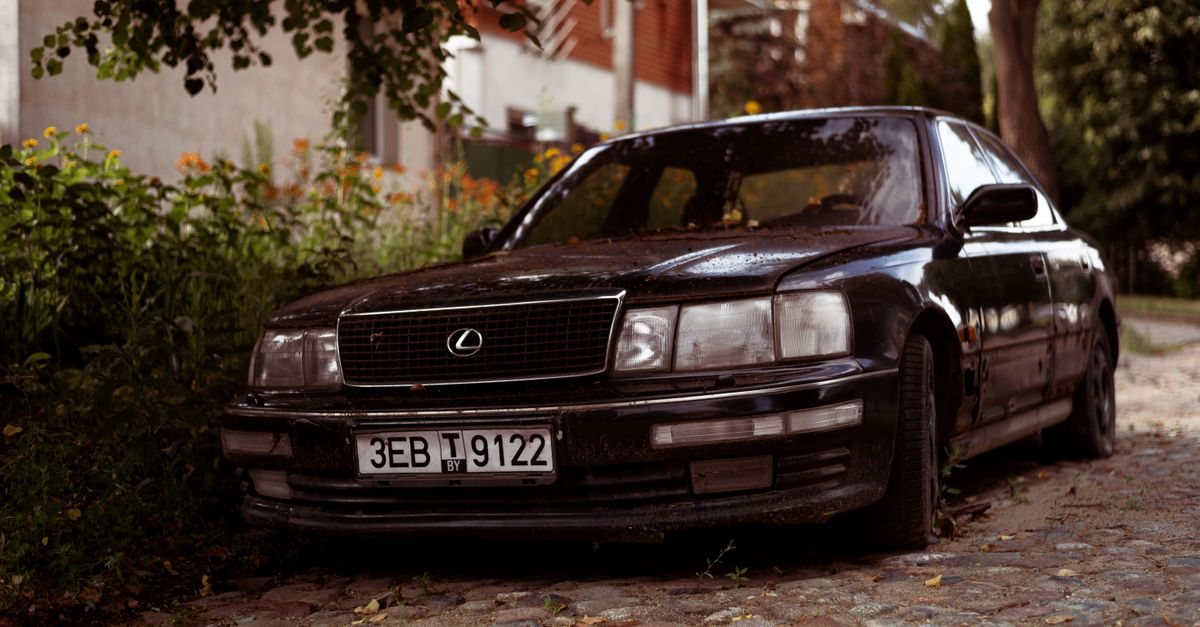
Toyota Celsior UCF10/20/30 for Sale in Japan: Prices & Guide (2026)
The Rundown
- Goo-net listed 320 Toyota Celsiors for sale in Japan when we read it on 16 November 2026: 217 third-generation UCF30/UCF31 cars, 85 second-generation UCF20/UCF21 cars and 18 first-generation UCF10/UCF11 cars.
- Median asking prices were ¥1,670,000 for the UCF30/31 (215 priced cars, about $10,400 at ¥160 to the dollar), ¥1,648,000 for the UCF20/21 (80 priced cars) and ¥1,950,000 for the UCF10/11 (17 priced cars).
- Toyota's history pages, read on 21 November 2026, give the launch dates as 9 October 1989, 11 October 1994 and 31 August 2000. The first two generations use the 4.0-litre 1UZ-FE V8 (260 PS, then 265 PS, then 280 PS from July 1997); the third uses the 4.3-litre 3UZ-FE (280 PS).
- In all three generations the C-spec has its own chassis code (UCF11, UCF21, UCF31). Toyota describes the first-generation C-spec as the electronically controlled air-suspension car and the A-spec and B-spec as coil-sprung.
- For the US, every UCF10/11 and UCF20/21 is past the 25-year line. A UCF30/31 qualifies by build month: in November 2026 that means cars built by November 2001. Duty on a Japanese-built passenger car is 12.5% in total since 24 July 2026.
Contents
- How much is a Toyota Celsior in Japan right now?
- Which Celsior generation should you look for: UCF10, UCF20 or UCF30?
- What do A-spec, B-spec, C-spec and eR Version mean?
- What should you check on a Celsior before you buy?
- Can you import a Toyota Celsior to the US or Canada?
- How do you buy a Celsior from Japan if you live abroad?
Toyota Celsior in the Japanese market at a glance
A Toyota Celsior in Japan costs about ¥1.67 million for a third-generation UCF30/UCF31, about ¥1.65 million for a second-generation UCF20/UCF21 and about ¥1.95 million for a first-generation UCF10/UCF11. Those are the medians of the priced cars in our Goo-net listings snapshot of 16 Nov 2026, when 320 Celsiors were listed. For the US, every first- and second-generation car is old enough to import, and a UCF30 qualifies car by car from its build month. Model facts and import rules were checked on the official pages on 21 November 2026.
The Celsior is the car Toyota sold abroad as the Lexus LS. In Japan it is also the default base for VIP style, or bippu: a big rear-drive sedan sat low on wide wheels. Three generations, two V8s and a set of grade names that decide whether the car rides on air or on coils. This guide sorts those out, shows what the money buys, and explains how a buyer outside Japan gets one.
How much is a Toyota Celsior in Japan right now?
We read every Celsior listing on Goo-net’s type-code pages on 16 November 2026. These are dealer body prices, before export costs. Cars listed as price on request are left out.
| Point in the market | UCF30/UCF31 (2000–2006) | UCF20/UCF21 (1994–2000) | UCF10/UCF11 (1989–1994) |
|---|---|---|---|
| Listed | 217 | 85 | 18 |
| With a price | 215 | 80 | 17 |
| Cheapest | ¥680,000 ($4,250) | ¥880,000 ($5,500) | ¥1,150,000 ($7,200) |
| Lower quarter | ¥1,328,000 ($8,300) | ¥1,350,000 ($8,400) | ¥1,580,000 ($9,900) |
| Median | ¥1,670,000 ($10,400) | ¥1,648,000 ($10,300) | ¥1,950,000 ($12,200) |
| Upper quarter | ¥2,040,000 ($12,800) | ¥2,000,000 ($12,500) | ¥2,470,000 ($15,400) |
| Dearest | ¥4,460,000 ($27,900) | ¥4,850,000 ($30,300) | ¥3,450,000 ($21,600) |
Dollar figures use ¥160 to the dollar. The newest generation is also the most common, and its median sits almost level with the one before it. The oldest cars are the scarcest and ask the most at the median. Here are a few real listings from the same read, all with no recorded accident repair:
| Listing | Year | Mileage | Asking price |
|---|---|---|---|
| UCF30/31 C-spec F Package Interior Selection, timing belt replaced at 95,000 km | 2002 | 118,000 km | ¥1,198,000 |
| UCF30/31 B-spec eR Version, garage kept, factory 17-inch wheels | 2002 | 49,000 km | ¥1,580,000 |
| UCF30/31 C-spec Interior Selection, lowered, 20-inch wheels, air-suspension controller | 2006 | 112,000 km | ¥1,998,000 |
| UCF20/21 C-spec, late model, BBS LM 17-inch wheels, beige leather | 1999 | 164,000 km | ¥898,000 |
| UCF20/21 B-spec eR Version, sunroof, leather | 1999 | 93,000 km | ¥1,298,000 |
| UCF20/21 B-spec on coilovers and 20-inch wheels | 1996 | 55,000 km | ¥2,350,000 |
| UCF10/11 C-spec, air suspension, factory wheels | 1991 | 90,000 km | ¥1,380,000 |
| UCF10/11 C-spec F Package, one owner, fully stock, sunroof | 1990 | 85,000 km | ¥2,280,000 |
| UCF10/11 C-spec, WALD 19-inch wheels, coilovers, two-tone repaint | 1993 | 61,000 km | ¥2,500,000 |
The list shows how this market works. Many Celsiors are already modified, so the same money buys either a stock car or someone else’s build. Decide which you want before you compare prices.
What is on sale this week is on our JDM VIP cars for sale page, which refreshes from the Japanese listings every morning.
Which Celsior generation should you look for: UCF10, UCF20 or UCF30?
| UCF10/UCF11 | UCF20/UCF21 | UCF30/UCF31 | |
|---|---|---|---|
| On sale (Toyota) | 9 October 1989 | 11 October 1994 | 31 August 2000 |
| Production (Carsensor) | Oct 1989 – Sep 1994 | Oct 1994 – Jul 2000 | Aug 2000 – May 2006 |
| Engine | 1UZ-FE, 3,968 cc V8 | 1UZ-FE, 3,968 cc V8 | 3UZ-FE, 4,292 cc V8 |
| Power (Toyota, net) | 260 PS | 265 PS; 280 PS from July 1997 | 280 PS |
| Automatic gearbox | Four-speed | Four-speed; five-speed from July 1997 | Five-speed; six-speed from August 2003 |
| Wheelbase | 2,815 mm | 2,850 mm | 2,925 mm |
| Length | 4,995 mm | 4,995 mm | 4,995 mm at launch |
| Weight, A-spec to C-spec | 1,690–1,750 kg | 1,640–1,680 kg | 1,780–1,800 kg |
Toyota’s own history page calls the first Celsior the Japanese version of the Lexus LS 400, launched in North America in September 1989 and in Japan a month later. It won the 1989–1990 Japan Car of the Year. The second generation kept the look, stretched the wheelbase by 35 mm and lost weight. Its July 1997 facelift is the one that matters to a buyer: VVT-i, 280 PS, a five-speed automatic, discharge headlamps and stability control. Japanese adverts call these later cars 後期 (kōki, late model).
The third generation is the last Celsior. Toyota lists a drag coefficient of 0.25, a wheelbase 75 mm longer and the 4.3-litre 3UZ-FE. The August 2003 facelift brought new headlamps, bonnet, wings and boot lid, and the six-speed automatic. Toyota says the Celsior name ended in 2006 after the Lexus brand opened in Japan in August 2005. Abroad this body is the Lexus LS 430 that Lexus’s US newsroom lists from model year 2001.
If you want a Toyota flagship one size up, our Toyota Century GZG50 buyer’s guide covers the V12 car. If you want a turbo straight six in a smaller four-door, see the Toyota Aristo JZS161 and JZS147 buyer’s guide. How the Celsior compares with the Cima and Majesta as a VIP base is on our best VIP base cars page.
What do A-spec, B-spec, C-spec and eR Version mean?
The grade tells you the suspension, and the suspension is the biggest difference between two Celsiors of the same year.
C-spec (C仕様)
- Chassis code ends in 1: UCF11, UCF21, UCF31
- Electronically controlled air suspension (Toyota, first generation; Goo-net catalogue, third)
- F Package: rear-seat equipment
- Interior Selection on the UCF31: semi-aniline leather
A-spec, B-spec and eR
- Chassis code ends in 0: UCF10, UCF20, UCF30
- Coil springs (Toyota, first generation)
- eR Version: Euro-tuned coil suspension, an option on A and B-spec UCF30s
- From August 2003 the eR-spec replaces the B-spec, on 18-inch wheels
Toyota’s page for the first generation adds one detail: the B-spec had Piezo TEMS, an electronically controlled damper system, on its coil springs. For the second generation, Toyota’s page lists the C-spec under UCF21 but does not describe its suspension, so we treat that as not officially stated there and confirm it on the car.
For a VIP build the choice cuts both ways. A C-spec gives you height control from the factory, and the 2006 car in our table has an aftermarket controller on the original air suspension. An A or B-spec starts on coil springs, which is what a coilover kit replaces, and the 1996 B-spec in the table already has one.
The grade on the advert is not always what is under the car
A listing titled C-spec can be sitting on coilovers, and the 1993 car in our table is exactly that. If you are buying the car for its air suspension, ask what is fitted now, and whether the change is on the papers.
What should you check on a Celsior before you buy?
The listings themselves show where cars differ:
- Suspension as fitted. Factory air, air with a controller, or coilovers. On an air-suspension car we film it from a cold start so you can see it rise, settle level and hold its height.
- Timing belt. One 2002 C-spec in our read states the belt was replaced at 95,000 km. If the advert does not say, ask for the date and mileage.
- Facelift or not. On a UCF20, the gearbox count tells you: the 1996 car in our table is a four-speed and the 1999 cars are five-speeds. On a UCF30, five speeds means a car from before August 2003.
- Repair history. Japanese listings flag recorded accident repair (修復歴, shūfukureki). Every car in our table is listed without it.
- Mileage units. Adverts list mileage in units of 10,000 km (万km), so “11.8万km” is 118,000 km.
- Modifications on the papers. One listing describes its coilovers as officially registered (公認). Others say nothing. If the car is modified, ask which it is.
You do not need to fly to Japan for any of this. We inspect the car locally and send you a video and photo walk-through: the underside, the frame, the engine bay, a cold start and, on a C-spec, the air suspension going through its heights. You decide after you have seen it. If the car is at auction, our guide to reading a Japanese auction sheet explains the grades and repair marks.
Can you import a Toyota Celsior to the US or Canada?
| Country | Rule (official page, read 21 Nov 2026) | What it means for a Celsior |
|---|---|---|
| United States | Vehicles under 25 years old must meet all US safety standards | Every UCF10/11 and UCF20/21 is eligible. UCF30/31: built by November 2001, eligible now; later builds month by month until May 2031 |
| Canada | Vehicles over 15 years old are not regulated at import under the Motor Vehicle Safety Act | Every Celsior, all three generations |
United States. CBP’s importing page says that as a general rule, motor vehicles less than 25 years old must comply with all US safety standards. The age runs from the month of manufacture. The second generation ended in July 2000, so the last UCF20 crossed the line in July 2025. The UCF30 went on sale on 31 August 2000, so the first cars crossed in August 2025, and the Japanese catalogues list production to May 2006. In practice a US buyer today is choosing among early, five-speed UCF30s or any older Celsior. Our import eligibility calendar lists the dates month by month.
The year on the advert is not the build month
A UCF30 listed as "2001" can be a January build that qualifies for the US or a December build that does not yet. In November 2026 the line falls on November 2001 builds. The 2003 and 2006 cars in our table are years away. Check the manufacture date on the specific car before you pay.
Duty is where older guides go wrong. CBP’s page lists a 2.5% base duty for cars and 25% for trucks, but since 24 July 2026 USTR’s Section 301 action (heading 9903.05.49) lifts goods made in Japan with a base rate under 12.5% to 12.5% in total. We checked that heading in the US tariff schedule on 21 November 2026. On a ¥1,670,000 Celsior (about $10,400), 12.5% is about $1,300. The forms and the order you file them in are in importing a drift car to the USA.
Canada. Transport Canada says vehicles older than 15 years are not regulated at import under the Motor Vehicle Safety Act. The newest Celsior, a May 2006 build, passed 15 years in May 2021. Every Japanese-market Celsior is right-hand drive, so check your province’s licensing rules first. For Australia and the UK, see importing a drift car to Australia, the UK and Canada.
How do you buy a Celsior from Japan if you live abroad?
There are two price tiers. The first is the one in the tables above: Japanese retail listings. You can browse them yourself for free, and they are the ceiling of the market, not the floor. A dealer car has usually come from a trade auction or a trade-in, been prepared, and been marked up. Many Celsiors change hands below that, at the auctions and in private sales.
The second tier is an exporter-handled purchase. It adds the work a listing price leaves out: finding the car, inspecting it, the Japanese paperwork and getting it to a port. With us that is quoted as actual costs plus a fee, as one total, up front. The full route from deposit to your port is in our step-by-step import process guide.
Three steps stop foreign buyers. You cannot tell from advert photos whether a 25-year-old air suspension still holds its height, or what the underside of a lowered car looks like. The trade auction halls do not admit private overseas buyers, because membership needs a Japanese business. And export deregistration usually wants the owner’s registered seal and seal certificate, which only Japanese residents can get; our export deregistration guide explains why.
Those are the steps we take for you
Have us find a Celsior in Japan, film the underside and the air suspension for you, and handle the export paperwork. Tell us the generation, the grade and the build month your country needs. We search dealers, auctions and private sellers, send you candidates with walk-through footage, and quote one total before anything is bought.
If you are in Japan anyway and want to see the cars and the scene around them, the dates we track are on our drift calendar.
Frequently asked questions
How much does a Toyota Celsior cost in Japan in 2026?
When TSUISO read Goo-net, Japan's large used-car listing site, on 16 November 2026, 320 Toyota Celsiors were for sale. The 215 priced third-generation cars (UCF30/UCF31, 2000 to 2006) asked a median of ¥1,670,000 (about $10,400 at ¥160 to the dollar), from ¥680,000 to ¥4,460,000. The 80 priced second-generation cars (UCF20/UCF21, 1994 to 2000) asked a median of ¥1,648,000, from ¥880,000 to ¥4,850,000. The 17 priced first-generation cars (UCF10/UCF11, 1989 to 1994) asked a median of ¥1,950,000, from ¥1,150,000 to ¥3,450,000. These are Japanese dealer body prices before export paperwork, shipping and import duty.
What is the difference between the Celsior UCF10, UCF20 and UCF30?
They are the three generations of the Toyota Celsior, the Japanese-market version of the Lexus LS. According to Toyota's 75-year history pages, read on 21 November 2026, the UCF10/UCF11 went on sale on 9 October 1989 with the 4.0-litre 1UZ-FE V8 of 260 PS. The UCF20/UCF21 followed on 11 October 1994 with 265 PS, and a July 1997 facelift added VVT-i, 280 PS and a five-speed automatic in place of the four-speed. The UCF30/UCF31 went on sale on 31 August 2000 with the 4.3-litre 3UZ-FE of 280 PS, and an August 2003 facelift changed the automatic from five to six speeds. In each generation the code ending in 1 (UCF11, UCF21, UCF31) is the C-spec.
Which Toyota Celsior has air suspension?
The C-spec. Toyota's history page for the first-generation Celsior, read on 21 November 2026, says the A-spec and B-spec use coil springs and the top C-spec uses electronically controlled air suspension, and it lists the C-spec under its own chassis code, UCF11. The same split of codes continues as UCF21 and UCF31, and Goo-net's catalogue describes the third-generation C-spec as the electronically controlled air-suspension grade. The eR Version (later the eR-spec) is a coil-sprung car with what the catalogue calls Euro-tuned suspension. Many cars have since been converted to coilovers or fitted with an air-suspension controller, so check what the specific car has now.
Can I import a Toyota Celsior from Japan to the United States?
Yes, once the specific car is 25 years old, counted from its month of manufacture. US Customs and Border Protection says vehicles less than 25 years old must comply with all US safety standards. Every UCF10/UCF11 (1989 to 1994) and every UCF20/UCF21 (1994 to July 2000) is past that line. The UCF30/UCF31 went on sale on 31 August 2000 and Japanese catalogues list production to May 2006, so as of 21 November 2026 cars built by November 2001 qualify and the last ones qualify in May 2031. Duty on a Japanese-built passenger car is 12.5% in total since 24 July 2026: a 2.5% base rate lifted to 12.5% by USTR's Section 301 heading 9903.05.49, which we checked in the US tariff schedule on 21 November 2026.
 Nissan Cima Y32 & Y33 for Sale in Japan: Prices & Guide (2026)
 Toyota Aristo JZS161 & JZS147 for Sale in Japan: Prices & Guide (2026)
 Mitsubishi Pajero for Sale in Japan: Prices & How to Buy (2026)
 Kei Truck from Japan to the US: Prices, Duty & Registration (2026)