
Asbestos & Biosecurity Checks on a JDM Import (2026)
The Rundown
- Australia's asbestos import prohibition has no tolerance level, and the ABF's own vehicle factsheet says it applies to all vehicles of any type, age or value. Tolerance levels set by other countries are not accepted at the Australian border.
- A letter saying the car is asbestos-free is worth nothing. The ABF states that a declaration on its own is not evidence, whether it comes from the importer, the manufacturer or a supplier — and that a face-value letter from the seller's mechanic is insufficient assurance.
- Brakes and gaskets are the parts most commonly found to contain asbestos at the Australian border. The ABF's preferred fix is removal before shipment: it says testing or removal before shipping are the preferred options, and removal may be cheaper than sample-and-test.
- Used vehicles get a full external and internal inspection on arrival in Australia unless they were processed by an offshore provider the department recognises — and every recognised used-vehicle facility on that list is in Japan.
- Into New Zealand it is not optional: MPI states that for a used car, truck, bus, campervan or caravan from Japan, the cleaning must be carried out by an MPI-approved system in Japan.
Contents
Your chassis cleared the age gate. The Japan-side deregistration is done, the freight is booked, and you are counting weeks. Two things can still stop the car on the dock, and neither of them is a form you can email from home.
The first is asbestos. The second is dirt.
Both are settled by physical work that happens in Japan, next to the car, before it is loaded — and after the container leaves, your remaining options are remediation, storage charges or re-export. Everything below was read off the official pages on 15 August 2026. Those pages are the authority, not this one, and they change.
| Asbestos | Dirt | |
|---|---|---|
| Australia | Prohibited import, no tolerance level, all vehicles of any age | Used cars get full external and internal inspection unless processed offshore by a recognised provider |
| New Zealand | Not addressed on the MPI vehicle pages we read | Cleaning must be done by an MPI-approved system in Japan for a used car from Japan |
| Canada | Import of asbestos and products containing it is prohibited, with exemptions we could not resolve for a used car — TBC | Anything more than a fine film of dust counts as soil contamination |
| United Kingdom | Banned since 1999; illegal to supply any article containing asbestos | No published vehicle-cleanliness regime found — TBC |
Australia’s asbestos ban has no low-level setting
All types of asbestos have been banned for use in Australia since 2003, and the border control went in at the same time. Importing asbestos or goods containing asbestos is prohibited under Regulation 4C of the Customs (Prohibited Imports) Regulations 1956 unless a permission or exception applies. The ABF’s own vehicle factsheet is blunt about scope: the prohibition applies to all vehicles of any type, age or value.
The trap for a Japanese car is the word tolerance. Many countries allow a low percentage of asbestos in friction materials. The ABF’s position is that tolerance levels set by other countries will not be accepted at the Australian border, and that goods labelled “asbestos free” overseas are still not allowed in except in very limited circumstances. Aftermarket parts count as much as original ones — the factsheet says aftermarket parts from countries that allow asbestos in manufacturing can be as much a risk as older OEM parts.
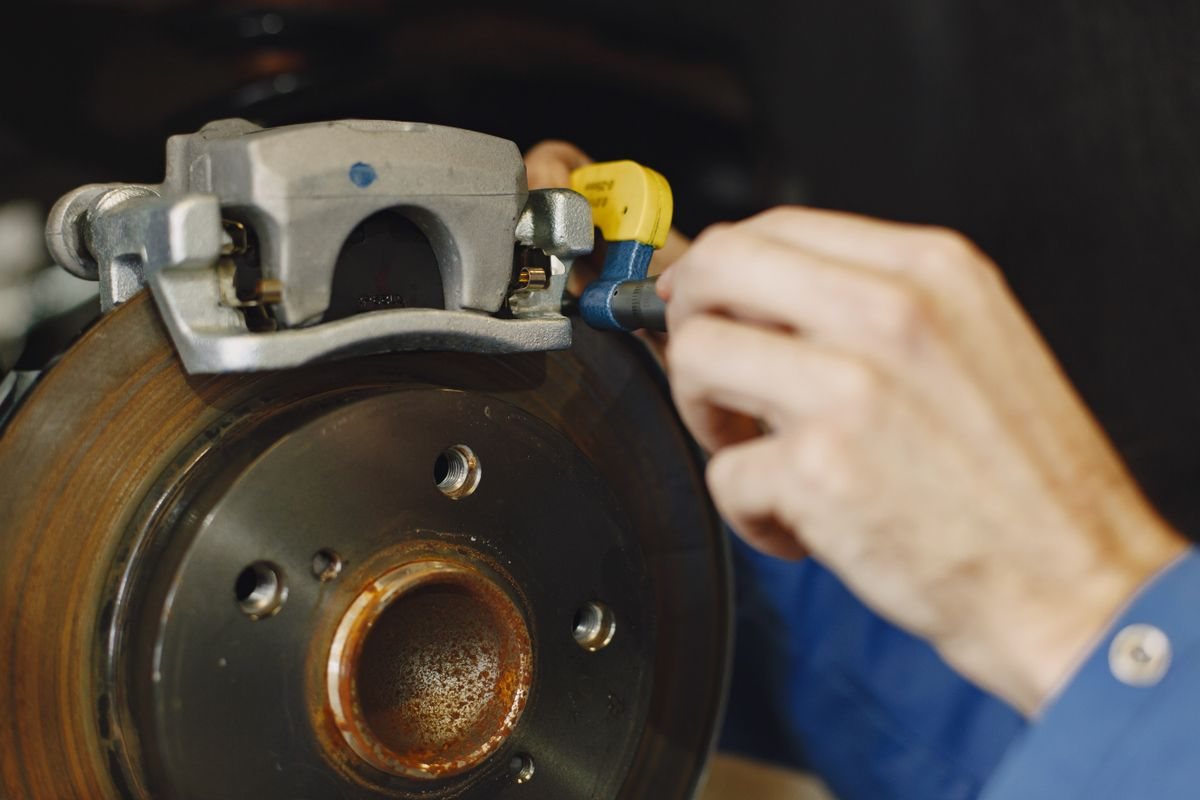
Where it hides on a 1990s dorisha (drift car) is exactly where you would guess. The ABF says the most common vehicle parts found to contain asbestos at the border are brakes and gaskets in locations designed to resist heat, and its at-risk list runs through brake pads and shoes, clutch linings, cylinder head, exhaust and extractor gaskets, heat shields, firewalls, bonnet liners, sound-deadening and acoustic padding, fibrous washers, window and fuel-tank seals, mastic sealants, body seams and wiring wrap.
A letter from the seller's mechanic is not evidence
The ABF states that declarations of no asbestos content have no value unless supported by valid documentary evidence, and that a declaration on its own is not evidence whether it comes from the importer, the manufacturer or a third-party supplier. The vehicle factsheet goes further: a "face value" letter from the supplier, or the supplier's mechanic, merely stating there is no asbestos content is insufficient assurance. What is accepted is an accredited laboratory report using recognised scientific microscopy — from a NATA-accredited lab, or one accredited by an authority that holds a Mutual Recognition Arrangement with NATA — written in English and tied to the actual shipment. Readings from hand-held digital analysers are named as not accepted.
The ABF also states its preference, and it is the cheap one: testing or removal of suspect components before shipment are the preferred options, and it may be more cost effective to remove than to sample and test. If parts are removed, keep the work records and the evidence of what went on in their place — the factsheet asks for both.
What the border is actually looking at for dirt
Australia’s agriculture department lists the risks by name: live insects, seeds, soil, mud, clay, animal faeces, animal material and plant material such as straw, twigs, leaves, roots and bark. It is the importer’s responsibility to ensure the vehicle is clean and free of them before it arrives.
Then the sentence that decides your schedule: used vehicles are subject to full external and internal inspection on arrival in Australia unless they have been processed by an offshore treatment provider recognised by the department, in which case a reduced level of inspection applies because contamination should already have been addressed in the country of export. Under that scheme — ROCIP — an approved facility’s consignments drop to a 5% onshore verification rate, and the whole consignment is held until that 5% is done.
Read the department’s list of recognised used-vehicle facilities and the point of this article becomes obvious: every one of them is in Japan. JEVIC at Yokohama, Nagoya, Osaka and Moji; Autoterminal Japan at Kisarazu, Kuwana and Kobe; Bordercheck Japan at Osaka; Automotive Technologies at Nagoya, Kobe and Kisarazu; FF Forwarding at Nagoya. The Australian government’s answer to contamination is a wash bay on the other side of the ocean.
New Zealand removes the choice. MPI requires used vehicles, machinery and parts to be cleaned inside and out, and states that for a used passenger car, truck, bus, campervan or caravan from Japan the cleaning must be carried out by an MPI-approved system in Japan. Its approved-system list includes Auto Terminal Japan, FF Forwarding and JEVIC. MPI adds the line every seller should read twice: valet cleaning will not remove all biosecurity risks.
The inspection points published by the Australian department describe a drift car’s worst weekend almost item by item — wheels, wheel guards and mud guards, the underside, inside the chassis rails, the engine bay, external vents, window seals, and internally the boot and spare wheel well, the console, under the seats and mats, in the seat folds and around the door seals. Keys must be handed over so officers can open it all up. A car that has spent five years on a dirt-strewn circuit and been swept out with a shop broom is not close.
| What fails | What happens | Who pays |
|---|---|---|
| Contamination found on arrival, Australia | Treatment such as cleaning or fumigation; export from Australia if heavily contaminated; or destruction | Importer or owner |
| Contamination MPI cannot verify away, New Zealand | Cleaning by MPI or at an MPI-approved facility; partial or full dismantling if cleanliness cannot be verified; reshipment or destruction if it cannot be contained and removed | Importer |
| Soil on a vehicle arriving in Canada | Goods are inadmissible and ordered removed; CBSA may instead authorise treatment at a CFIA-approved bonded cleaning facility, then re-inspection | Importer or the person in care and control |
| Asbestos suspected, Australia | Goods detained and examined; importer directed to have them sampled and tested at their own cost while held under customs control, by a qualified independent competent person they engage | Importer |
| Asbestos found, Australia | Seized as a prohibited import and forfeited to the Crown for disposal, with fines or prosecution possible | Importer |
No agency publishes a price for any of that. The pages say the cost is yours; they do not say what it is. The published timings are thin too: MPI expects to carry out verification within 12 hours of unloading, and under ROCIP a facility gets a high-level contamination report within 48 hours. Nothing puts a number on how long a held car sits.
The step that has to happen in Japan
Strip out the legislation and one practical sequence is left, and all of it is done by somebody standing next to the car in Japan.
Steps 1 to 4 and 6 are the part nobody sells you. They are a person with a lift, a pressure washer, a spanner and a camera, working in Japan on a specific week.
That is the step we take on
Before anything ships we do the Japan-side steam clean and underbody wash to the inspection points the destination agencies actually publish, then build a documented condition record: video and photo walkthrough of the underbody, wheel arches, subframe mounts, chassis rails and engine bay, plus the boot, spare wheel well and under the seats — and a straight read of what is fitted as friction material, with part numbers and receipts where they exist, so the asbestos question is answered with paper instead of hope. You decide with that evidence in hand rather than after the container sails. Purchase, the clean, any friction-material replacement, the record and freight are quoted as one total before we start — at cost plus a handling fee. Send us the chassis number and your destination port and we will tell you what the Japan-side work looks like for that specific car.
The record to have before it ships
- Part numbers for brake pads, shoes and clutch friction disc, with photos of boxes or receipts where the work is recent
- Work records for anything removed and evidence of the make, model and content of what replaced it
- An accredited laboratory report if you tested rather than replaced — English, recognised microscopy method, tied to this shipment
- Dated photos of the cleaned underbody, arches, chassis rails and engine bay, and of the stripped interior
- The offshore cleaning or approved-system certificate from the facility that processed the car
- The consignment declaration details — VIN, make and model, port of export, bill of lading — which New Zealand wants through its Trade Single Window
Canada and the UK read differently
Canada’s dirt rule is the strictest sentence we found anywhere: goods contaminated with soil are inadmissible and will be ordered removed from Canada, used vehicles explicitly included, and anything more than a fine film of dust left by dirty wash water or accumulated during transport is treated as contamination. CBSA may instead authorise cleaning at a CFIA-approved bonded facility followed by re-inspection, and all storage, treatment and removal costs sit with the importer.
Canada’s asbestos position we will not guess at. The Prohibition of Asbestos and Products Containing Asbestos Regulations bar importing, selling or using processed asbestos fibres and products containing them, but carry exemptions for asbestos already integrated or in use before the regulations commenced. How that reads against a used car built in 1994 is not spelled out on the pages we read — TBC, and a question for CBSA before you ship.
Great Britain bans asbestos too: HSE dates the ban to 1999 and says it is illegal to supply any article containing asbestos, for money or free of charge. What we did not find on the UK side is a published border process for vehicles equivalent to the ABF’s, or any published vehicle-cleanliness requirement of the Australian or New Zealand kind. Both TBC — the destination-side rules that we have verified sit in our Australia, UK and Canada import guide, and the American clock in the 25-year rule guide.
The short version
Age rules decide whether you may import the car. These two decide whether it comes off the ship. Australia will not accept another country’s asbestos tolerance, will not accept a letter, and lists brakes and gaskets as the usual offenders. Australia and New Zealand both push the cleaning back to Japan — voluntarily in one case, compulsorily in the other — and Canada calls a film of dust contamination.
An auction sheet tells you about panels and grades. It will never tell you what is on the brakes or what is packed into the chassis rails. That answer is made, not found, and it is made in Japan.
Frequently asked questions
Will asbestos brake pads really stop a 1990s Japanese car at the Australian border?
The published rule leaves no room. Importing asbestos or goods containing asbestos is prohibited under Regulation 4C of the Customs (Prohibited Imports) Regulations 1956 unless a permission or exception applies, and the ABF's vehicle factsheet states the prohibition applies to all vehicles of any type, age or value. The same factsheet lists brakes and gaskets as the parts most commonly found to contain asbestos at the border, and says tolerance levels set by other countries will not be accepted. If the ABF suspects asbestos it will detain and examine the goods, and it says it will direct the importer to have the goods sampled and tested at their own cost while the goods are held under customs control.
Can I just get an asbestos-free certificate from Japan?
Only a specific kind. The ABF says a declaration on its own is not considered evidence, whether it comes from the importer, the manufacturer or a third-party supplier, and that a face-value letter from a supplier or a supplier's mechanic is insufficient assurance. What it does accept is an accredited laboratory report using recognised scientific microscopy, from a laboratory accredited by NATA or by an equivalent authority that is a signatory to a Mutual Recognition Arrangement with NATA — in English, and linked to the actual shipment. It explicitly does not accept readings from hand-held digital analysers. The prohibition behind all of this is Regulation 4C of the Customs (Prohibited Imports) Regulations 1956, and this is what the ABF asbestos pages and the November 2022 vehicle factsheet said when we read them on 15 August 2026.
How clean does the underbody actually have to be?
Cleaner than a car wash gets it. Australia's department lists live insects, seeds, soil, mud, clay, animal faeces, animal material and plant material such as straw, twigs, leaves, roots and bark as biosecurity risks, and inspection points include the underside, inside the chassis rails, wheels and mud guards, the engine bay, the boot and spare wheel well, under the seats and mats and in the seat folds. New Zealand's MPI notes plainly that valet cleaning will not remove all biosecurity risks, and for a used car from Japan it requires the cleaning to be done by an MPI-approved system in Japan. Canada is stricter still on paper: CBSA guidance treats anything more than a fine film of dust as contamination with soil. Into Australia, a used car processed by a facility recognised under the ROCIP scheme drops to a 5% onshore verification rate instead of the full inspection. All of these pages were read on 15 August 2026.
 Importing a Drift Car to Australia, the UK & Canada (2026)
  Importing a Drift Car into New Zealand (2026)
  Is Importing a JDM Car From Japan Still Worth It? 2026 Numbers
  Can a Foreigner Buy a Drift Car and Keep It in Japan? (2026)