
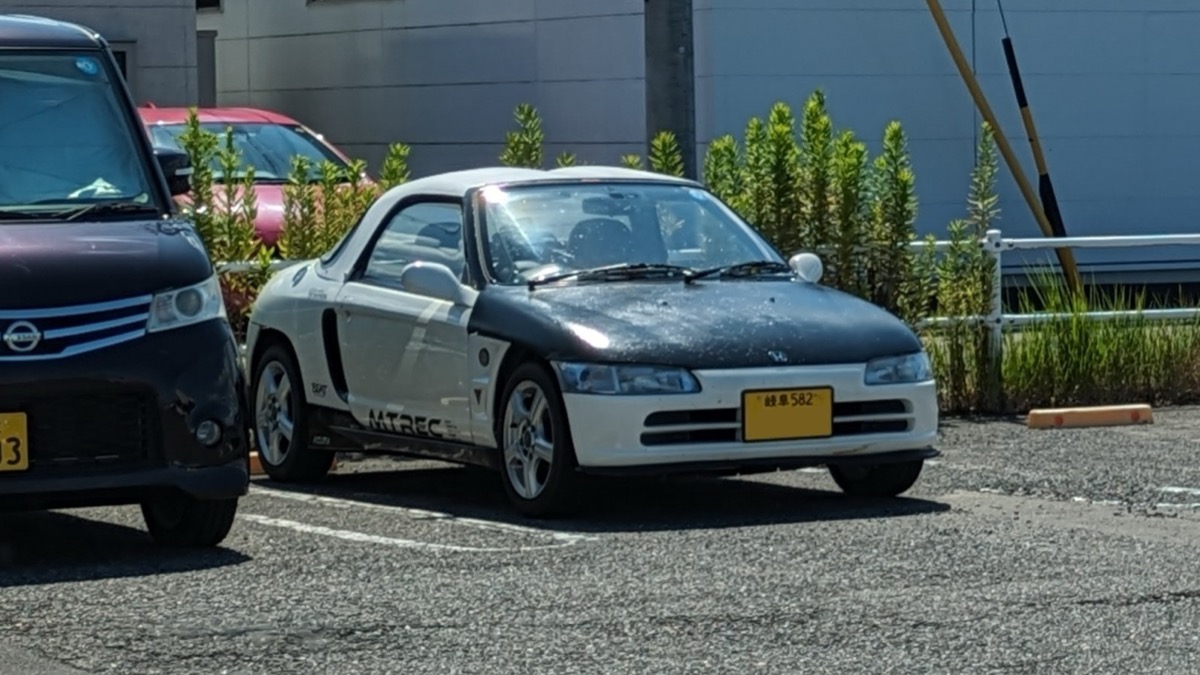
Honda Beat (PP1) for Sale in Japan: Prices & How to Buy (2026)
The Rundown
- Our full count of Goo-net's Honda Beat listings on 5 November 2026 read 136 Beats for sale in Japan. 129 showed a price and 7 were price on request. On 10 November 2026 the same listing showed 135 cars.
- The 129 priced Beats asked a median of ¥1,227,000 (about $7,700 at ¥160 to the dollar), from ¥290,000 to ¥3,139,000, with the middle half between ¥875,000 and ¥1,635,000.
- Honda put the Beat (type code E-PP1) on sale in Japan on 16 May 1991: a two-seat, mid-engined, rear-drive kei convertible with a 656 cc three-cylinder MTREC engine rated at 64 PS at 8,100 rpm and a 5-speed manual only.
- Honda added two limited editions in 1992, the Version F (800 cars, from 18 February) and the Version C (500 cars, from 28 May). Goo-net's catalogue adds the Version Z from September 1993 and lists the Beat from May 1991 to October 1995.
- Every Beat is past the US 25-year line and Canada's 15-year line in November 2026 (rules checked on the official pages on 10 November 2026).
Contents
Honda Beat (PP1) in the Japanese market at a glance
A Honda Beat (PP1) costs a median of ¥1,227,000 (about $7,700) at Japanese dealer retail, as of 5 November 2026. That is the middle of 129 priced Beats in our full count of Goo-net listings that day, which ran from ¥290,000 to ¥3,139,000, with 7 more listed as price on request. It is the dealer’s body price in Japan, before export and shipping costs. Honda’s model history and the US and Canadian import rules below were checked on the official pages on 10 November 2026.
The Beat is a kei car: a Japanese micro-car class with a 660 cc engine limit. Honda built it as a two-seat, mid-engined convertible, and it is the cheapest way into a Honda sports car from Japan in our count. Every one is past the US and Canadian import lines, so the work is in choosing the car, not waiting for a date.
How much is a Honda Beat in Japan right now?
We read every Beat listing on Goo-net, all three pages, on 5 November 2026. 136 Beats were for sale. 129 showed a body price; the other 7 were price on request, so they are not in the numbers. The listed years ran from 1991 to 1995.
| Point in the 129 priced cars | Asking price (body only) | Roughly in US dollars |
|---|---|---|
| Cheapest | ¥290,000 | $1,800 |
| Lower quarter | ¥875,000 | $5,500 |
| Median | ¥1,227,000 | $7,700 |
| Upper quarter | ¥1,635,000 | $10,200 |
| Dearest | ¥3,139,000 | $19,600 |
Dollar figures use ¥160 to the dollar. Most of the cars are listed as 1991, the first year, and the year tells you little about the price. Originality, records and the condition of the top do. A few real listings from the count show the spread:
| Listed year and grade | Asking price | What the listing says |
|---|---|---|
| 1991 base | ¥290,000 | The cheapest priced car. Aftermarket exhaust, wheels, shift knob and steering wheel |
| 1993 base | ¥1,000,000 | Swapped to a rebuilt turbo engine, rebuilt gearbox, bucket seat, boost gauge |
| 1992 Version F | ¥1,980,000 | Aztec Green Pearl, fully stock, 26 dealer service records, garage kept |
| 1992 Version C | ¥2,480,000 | New soft top, new rear screen, new weather strips |
| 1994 Version Z | ¥2,500,000 | The title names the grade and nothing else |
| 1992 base | ¥3,139,000 | The dearest. Timing belt changed, records and warranty book from new |
Grades and details above are what each listing title says. The count is a snapshot: on 10 November 2026 Goo-net showed 135 Beats. One of the newest, listed on 9 November, was a 1993 Version Z at ¥1,350,000 with 186,000 km, whose seller says the engine was fully rebuilt 3,000 km ago with receipts. For a live look, the newest Beats listed in Japan this morning are on our daily listings page, and the month-by-month Beat figures next to the S2000, NSX and Cappuccino are on our iconic JDM car prices page. Our monthly drift-chassis census is in JP Market Check #4.
Retail is the ceiling, not the floor. A dealer’s price includes reconditioning and a margin, and plenty of Beats change hands underneath it at Japan’s trade auctions and in private sales. We do not put a number on “below retail”, because it depends on the car in front of us that week.
Base, Version F, C or Z: what did Honda build?
Honda announced the Beat on 15 May 1991 and put it on sale the next day through its Primo dealers. Its release calls it the first kei car with the engine behind the seats driving the rear wheels, and the first kei car with four-wheel disc brakes. The list price was ¥1,388,000 before tax, with a driver’s airbag ¥80,000 extra.
| Honda Beat (E-PP1) | Honda’s launch figures |
|---|---|
| Engine | E07A, 656 cc, water-cooled inline three, SOHC, 12 valves, fuel injection, no turbo |
| Power and torque (net) | 64 PS at 8,100 rpm, 6.1 kg·m at 7,000 rpm |
| MTREC | Multi Throttle Responsive Engine Control System: a throttle for each cylinder |
| Gearbox | 5-speed manual only |
| Layout | Engine behind the seats, rear drive, 43:57 weight split with one person aboard |
| Size and weight | 3,295 mm long, 1,395 mm wide, 1,175 mm high, 2,280 mm wheelbase, 760 kg |
| Tyres | 155/65R13 front, 165/60R14 rear |
| Roof | Manual soft top that one person can fold |
The named versions are paint and trim, not engines. Every one uses the same E-PP1 car and the same 64 PS engine.
Version F (Feb 1992)
- On sale 18 February 1992, limited to 800 cars
- Aztec Green Pearl paint
- Alloy wheels as standard
- ¥1,448,000 before tax
Version C (May 1992)
- On sale 28 May 1992, limited to 500 cars
- Captiva Blue Pearl paint
- White alloy wheels
- ¥1,448,000 before tax
Version Z (Sep 1993)
- Listed by Goo-net's catalogue from September 1993
- Black three-dial meter panel
- Mudguards, rear spoiler, exhaust finisher
- ¥1,450,000; production total not officially stated
Figures for the Version F and Version C come from Honda’s own 1992 releases; the Version Z details come from Goo-net’s catalogue, since we did not find a Honda release for it. Goo-net’s catalogue lists the Beat from May 1991 to October 1995, and the newest listing year in our count is 1995. Honda’s own end-of-production date is not stated on the pages we read.
Because the special editions are only paint and trim, a repaint can make any Beat look like one. Ask for the colour code on the body plate and the papers before paying a special-edition price.
What should you check on a 30-year-old Beat?
The youngest Beat is about 30 years old and the oldest are 35. The listing titles show what Japanese sellers think buyers worry about:
- The soft top and rear screen. Titles often say the top (幌, horo) is new, replaced or “not torn”, or that the rear screen was changed. On a car this age the top, its seals and the drains are the first thing to look at.
- The timing belt. The E07A is belt-driven, and many titles say the belt was changed (タイミングベルト交換済), some with a date and mileage sticker. Ask for the receipt.
- Stock or modified. Titles run from fully stock (フルノーマル) to coilovers, roll bars, full aero and engine swaps, like the turbo car above. One custom car in the count is even registered as a regular car rather than a kei car (普通車登録). A modified car can look cheap next to a stock one with records.
- Repaints and repair history. Many titles say the car has been fully repainted (全塗装), which can hide a colour change. Goo-net shows a repair-history field (修復歴). A 1992 Version F listed on 6 November 2026 at ¥831,000 shows repair history “yes”, which is not a reason to walk away but is a reason to look underneath.
You cannot judge any of this from listing photos, and you do not have to fly to Japan to do it. We inspect the car on the ground in Japan and send you a video and photo walk-through: the underside, the frame and floors, the engine bay, the soft top and a cold start. You decide after you have seen it. If the car is at auction, our guide to reading a Japanese auction sheet explains the grades and repair marks.
Can you import a Honda Beat to the US or Canada?
Yes, both, on age alone. Honda put the Beat on sale in May 1991 and Goo-net’s catalogue lists it to October 1995.
| Country | Rule (official page, read 10 Nov 2026) | What it means for a Beat |
|---|---|---|
| United States | Vehicles under 25 years old must meet all US safety standards | Every Beat was built more than 25 years ago, so all are past the line in November 2026 |
| Canada | Vehicles over 15 years old are not regulated at import under the Motor Vehicle Safety Act | Every Beat qualifies |
United States. CBP’s importing page says motor vehicles less than 25 years old must comply with all applicable US safety standards, and that the importer files DOT form HS-7 and EPA form 3520-1 at entry. Honda never sold the Beat new in the US, so a Japanese car is the only kind there is. The same CBP page says registration in a state may depend on meeting that state’s requirements, so ask your state’s DMV about a 660 cc right-hand-drive car before you buy. The EPA side is separate: EPA’s page says its provision for vehicles over 21 years old expects an engine identical to the original, meaning the same model and configuration. On a Beat that matters for turbo swaps like the car above, so ask about the engine before the car leaves Japan and contact EPA’s Imports Hotline if anything has changed. The month-by-month rules are in our 25-year rule guide, and the paperwork at the US end is in importing a drift car to the USA.
Canada. Transport Canada says vehicles older than 15 years are not regulated at import under the Motor Vehicle Safety Act, with age set by the month and year of manufacture. The same page warns that some provinces will not license right-hand-drive vehicles, so check with your province first.
For Australia and the UK, see importing a drift car to Australia, the UK and Canada.
How do you buy a Beat from Japan if you live abroad?
The whole route, from deposit to your port, is in our step-by-step import process guide. For a Beat it looks like this:
Step 4 is where a buyer abroad gets stuck. Export deregistration is done in Japan with the owner’s documents, and you cannot finish the Japanese side yourself from overseas; our export deregistration guide explains why. Step 2 has a similar wall: membership of Japan’s dealer auctions needs a Japanese used-vehicle dealer licence, and many Beats change hands there or in private sales that never reach a listing site.
That is the part we take on for you
Have us find a Honda Beat in Japan, film the walk-through and handle the export paperwork. Tell us the version, stock or modified, and the condition you want; we search dealers, auctions and private sellers, send you candidates with underside, soft-top and cold-start footage, and quote one total, actual cost plus our fee, before anything is bought.
Comparing Hondas? Our Honda S2000 buyer’s guide and Honda NSX buyer’s guide use the same count, and is importing a JDM car from Japan still worth it? puts the numbers side by side. If you are coming to Japan anyway, the circuit days we follow are on our drift calendar.
Frequently asked questions
How much does a Honda Beat cost in Japan in 2026?
At Japanese dealer retail, a Honda Beat (PP1) asked a median of ¥1,227,000 (about $7,700 at ¥160 to the dollar) in TSUISO's full count of Goo-net listings on 5 November 2026. That covers 129 priced cars listed as 1991 to 1995, from ¥290,000 to ¥3,139,000, with the middle half between ¥875,000 and ¥1,635,000; another 7 were price on request. These are dealer body prices in Japan, before registration fees, export paperwork and shipping.
Can I import a Honda Beat to the United States?
Yes, on age. US Customs and Border Protection states that motor vehicles less than 25 years old must comply with all applicable US safety standards, and the importer files DOT form HS-7 and EPA form 3520-1. Honda put the Beat on sale in Japan in May 1991 and Goo-net's catalogue lists it to October 1995, so as of 10 November 2026 every Honda Beat is more than 25 years old. Honda never sold the Beat new in the US. CBP also notes that registration in a state may depend on meeting that state's requirements, so check with your state's DMV before you buy.
Can I import a Honda Beat to Canada?
Yes. Transport Canada's page, read on 10 November 2026, says vehicles older than 15 years are not regulated at import under the Motor Vehicle Safety Act, with age set mainly by the month and year of manufacture. Every Honda Beat was built in the 1990s, so all are past 15 years. The same page warns that some provinces will not license right-hand-drive vehicles, and the Japanese-market Beat is right-hand drive, so check with your province before you buy.
What are the Honda Beat Version F, Version C and Version Z?
They are named versions of the Japanese-market Honda Beat (E-PP1). Honda's press releases describe the Version F, on sale from 18 February 1992, as a limited run of 800 cars in Aztec Green Pearl with alloy wheels, and the Version C, on sale from 28 May 1992, as a limited run of 500 cars in Captiva Blue Pearl with white alloy wheels; both listed at ¥1,448,000 before tax. Goo-net's catalogue lists the Version Z from September 1993 at ¥1,450,000, with a black three-dial meter panel, mudguards, a rear spoiler and an exhaust finisher. A Version Z production total is not officially stated on the pages TSUISO read on 10 November 2026.
How powerful is the Honda Beat?
Honda's launch release of 15 May 1991 rates the Beat's 656 cc E07A three-cylinder, 12-valve engine at 64 PS (net) at 8,100 rpm and 6.1 kg·m at 7,000 rpm, without a turbo. Honda's MTREC system gives each cylinder its own throttle. The car weighs 760 kg, has a 5-speed manual only, and puts its engine behind the seats with a 43:57 front-to-rear weight split with one person aboard.
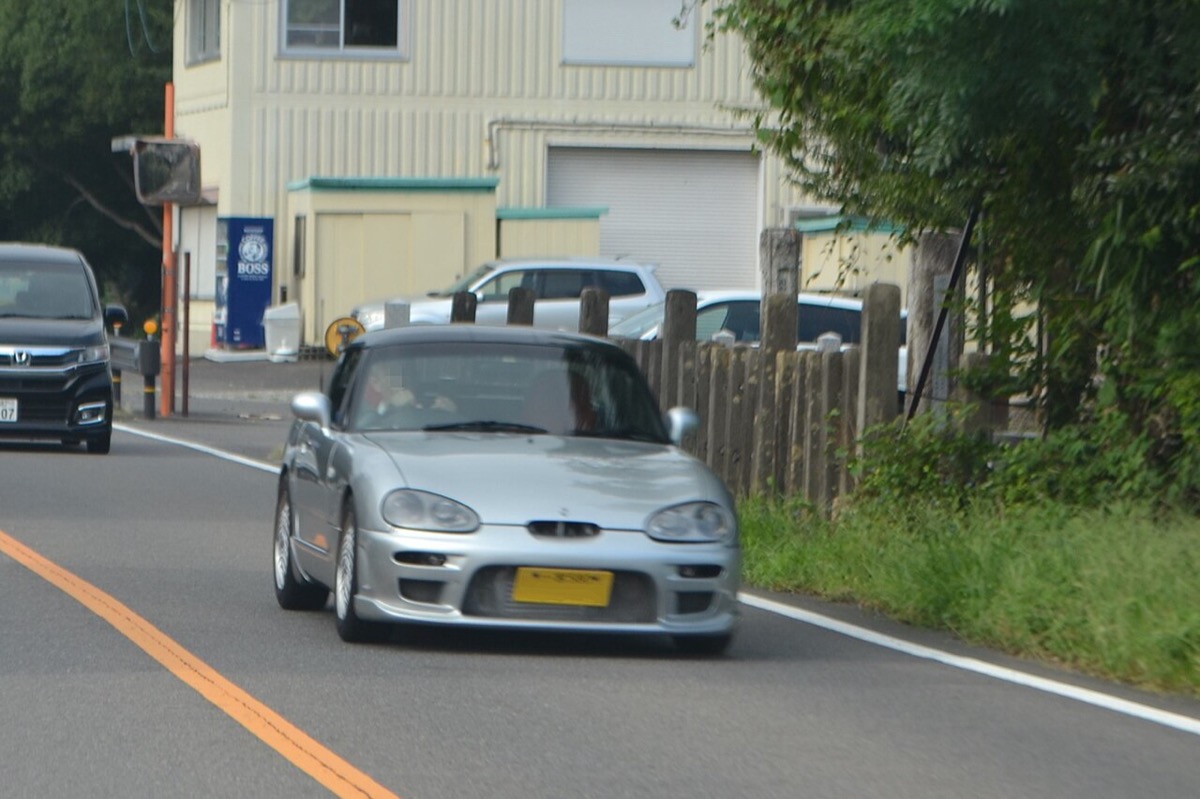 Suzuki Cappuccino (EA11R/EA21R) for Sale in Japan: Prices (2026)
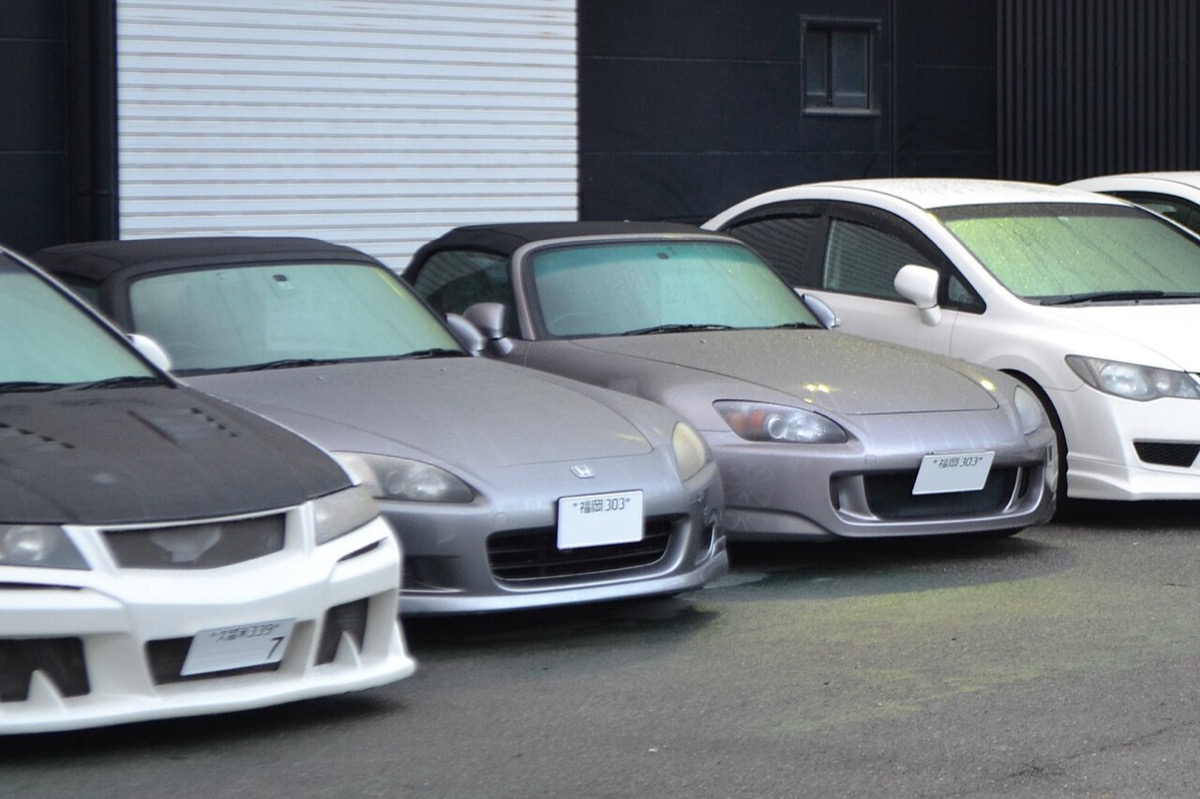 Honda S2000 (AP1/AP2) for Sale in Japan: Prices & How to Buy (2026)
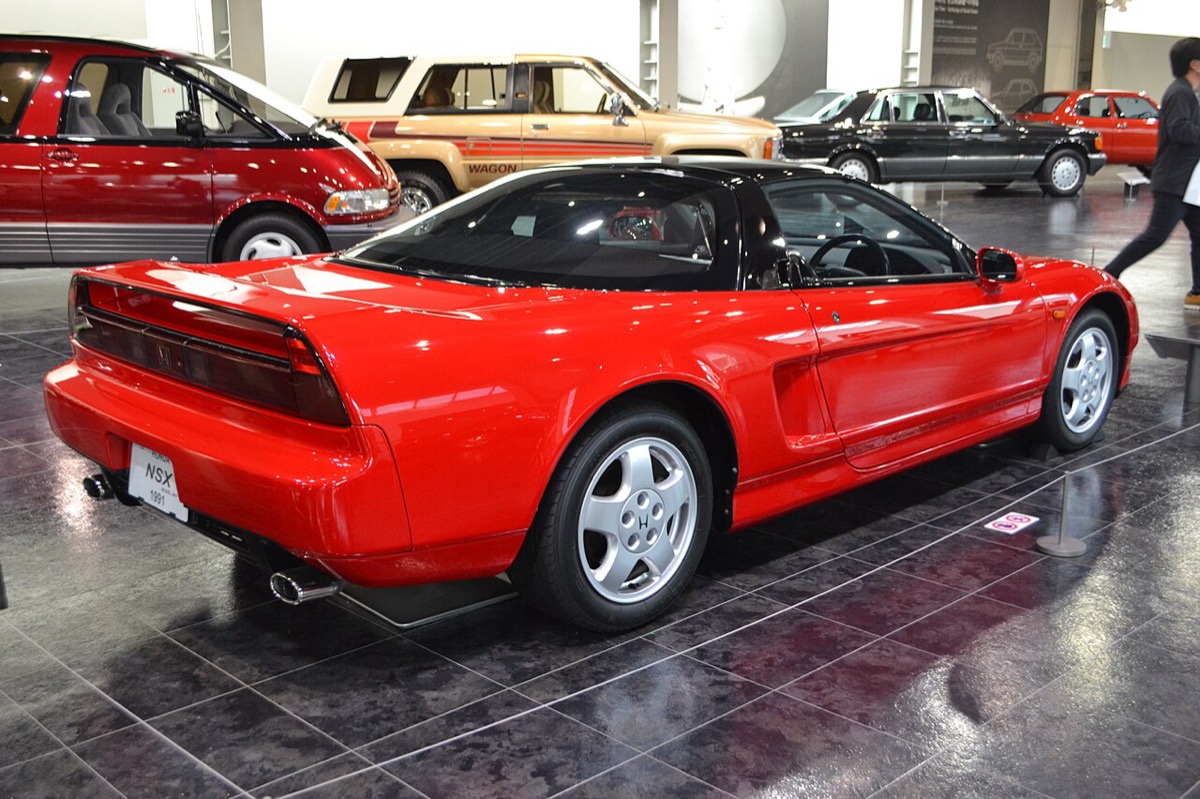 Honda NSX (NA1/NA2) for Sale in Japan: Prices & How to Buy (2026)
 Subaru Impreza WRX STI (GC8/GDB) for Sale in Japan: Prices (2026)