
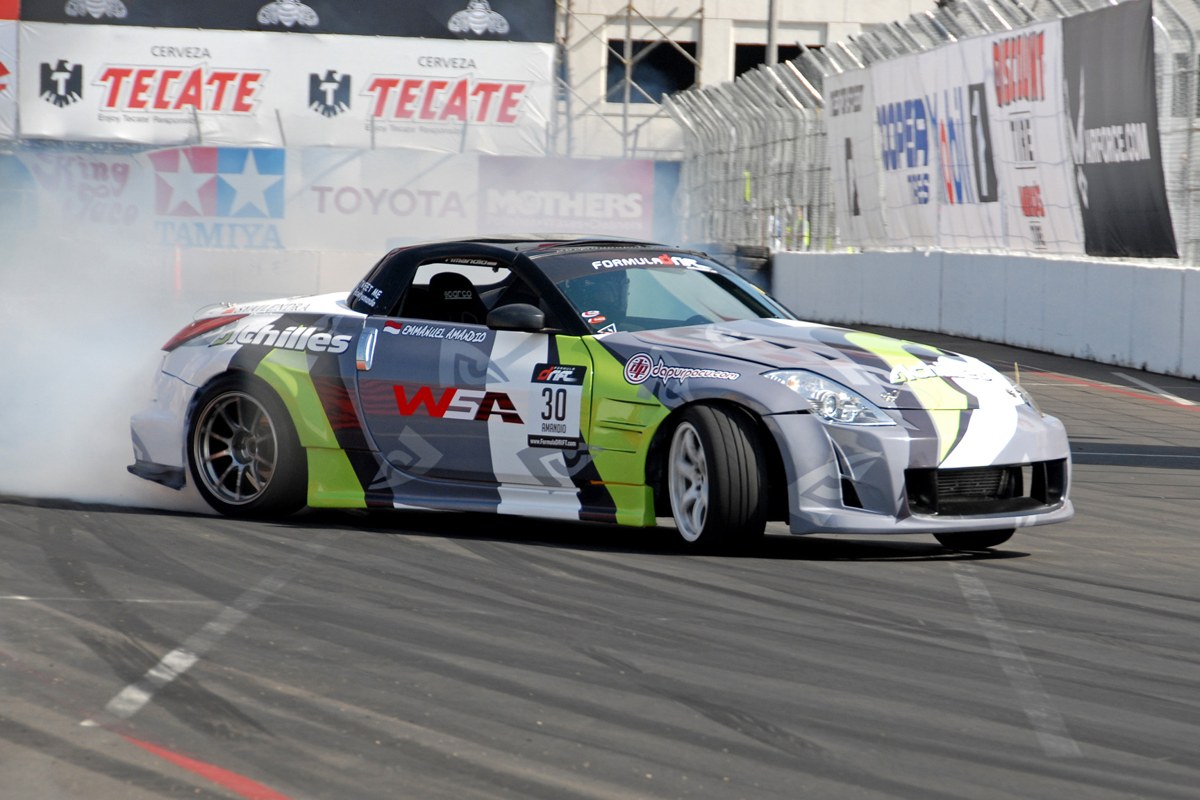
Can You Import a Drift Car Under 25 to the US for Racing? (2026)
The Rundown
- Most US drift chassis no longer need a racing route: in November 2026 every AE86, S13, 180SX, S14, JZX90 and JZX100, and any S15 built in November 2001 or earlier, is 25 years old and can be imported permanently under the 25-year rule.
- A car under 25 can come in for racing: 49 CFR 591.5(j)(1)(v) allows import solely for 'competitive racing events' when the importer has NHTSA's written permission, requested in advance with the VIN and date of manufacture.
- The stay is temporary: up to 3 years from entry under a Temporary Importation Bond (591.7(a)), or up to 5 years if the importer pays duty and NHTSA agrees in writing, with the request in at least 60 days before the 3-year mark (591.7(b)).
- Under 591.7(c) the car cannot be sold, transferred, registered or driven on public roads unless NHTSA authorises it in writing, and proof of export or destruction is due within 30 days after the admitted period ends (591.5(j)(3)).
- EPA is a separate approval: its rule for racing vehicles (40 CFR 85.1511(e)) covers vehicles that meet the 'not a motor vehicle' criteria of 85.1703, and a car clearly intended for highway use is a motor vehicle.
Contents
Yes, conditionally. A drift car under 25 years old can enter the US for racing under 49 CFR 591.5(j)(1)(v) (“competitive racing events”), but only with NHTSA’s written permission obtained before import, for up to 3 years (or 5 with duty paid and NHTSA’s agreement), and it cannot be sold, registered or driven on public roads. We checked the regulation text on eCFR and EPA’s import pages on 18 November 2026.
Before any of that, check whether your car needs this route at all. Most drift chassis people actually bring to the US are already 25. A car built in November 2001 reaches 25 years in November 2026, so every AE86, S13, 180SX, S14, JZX90 and JZX100 is past the line, and so is any S15 Silvia built in November 2001 or earlier. Those cars come in permanently under the 25-year rule (HS-7 Box 1), can be sold and can be titled and registered by the state like any other car. The temporary racing route in this article does not concern them.
The racing route matters only for cars still under 25: an S15 built from December 2001 to the end of production in August 2002, and late R34 GT-R, FD3S RX-7 and JZA80 Supra cars, whose production also ended in August 2002. A late JZX110 Mark II needs the same check. Start with the import eligibility calendar, which gives the month each model turns 25 from Japanese sales records, then read the build month on the exact car.
Which drift cars still need a racing import in 2026?
Only the young ones. Here is where the common chassis stand in November 2026, counted from the model periods in our calendar. The build month on the car decides it, not the model year in the listing.
| Chassis | Japanese production / sales period | Status in Nov 2026 | When the last cars turn 25 |
|---|---|---|---|
| AE86, S13, 180SX, S14, JZX90 | Ended 1987 to 1999 | All 25+ | Already |
| JZX100 Chaser / Cresta | Sep 1996 to Jun 2001 | All 25+ | Already |
| S15 Silvia | Jan 1999 to Aug 2002 | Built Nov 2001 or earlier: 25+ | Aug 2027 |
| R34 GT-R (BNR34) | Jan 1999 to Aug 2002 | Built Nov 2001 or earlier: 25+ | Aug 2027 |
| FD3S RX-7, JZA80 Supra | Production ended Aug 2002 | Built Nov 2001 or earlier: 25+ | Aug 2027 |
So the racing question is really about cars built between December 2001 and August 2002. Each of those reaches 25 at some point between December 2026 and August 2027. Our 25-year rule guide explains how the clock is counted.
What does the racing exemption actually allow?
It is a temporary admission, not an import you keep. The regulation is short, and every condition below comes from its text.
The purpose. 49 CFR 591.5(j)(1) covers a vehicle that does not conform to the US safety and bumper standards but is imported solely for research, investigations, show or display, demonstrations or training, or (v) competitive racing events.
The permission. 591.5(j)(2)(i) requires that the importer has received written permission from NHTSA. Under 591.6(f)(1), the request goes in before the import and must identify the vehicle (make, model, model year or date of manufacture, and VIN), state the specific purpose and the use to be made of the car, and state how and when it will be disposed of afterwards. The permission letter, or its number entered in CBP’s electronic system, goes with the import declaration.
The clock. Under 591.7(a), a vehicle entered under 591.5(j) with a Temporary Importation Bond may not stay longer than 3 years from its date of entry. Under 591.7(b), an importer who intends to pay duty and keep the car longer must ask NHTSA in writing, and the request must arrive at least 60 days before the 3-year date. The ceiling is 5 years from entry unless NHTSA gives further written permission.
The restrictions. 591.7(c) says the importer shall not sell the car, transfer possession of or title to it, license it for use or operate it on public roads, except under terms NHTSA authorises in writing.
The exit. 591.5(j)(3) requires the importer to give NHTSA documentary proof of export or destruction within 30 days after the end of the period the car was admitted for.
This is not a back door to a road car
A racing entry ends in export or destruction. Part 591 contains no step that turns a racing import into a permanent one because the car later turns 25. If the plan is to register, sell or drive the car on the street, the honest route is to wait until that specific car is 25 years old, then import it under Box 1.
How is this different from “Show or Display” and from a real race car?
These are often mixed up online. The “can’t sell it until it is 25” rule people quote belongs to Show or Display, not to racing.
Show or Display is 591.5(j)(1)(iii). Under 591.6(f)(2), the importer must explain why the car is of historical or technological interest, and must state that until the vehicle is at least 25 years old they will not sell it, transfer it, license it or drive it on public roads, except as NHTSA authorises. If NHTSA allows road use, the request must include insurance limiting the car to 2,500 miles in any 12-month period. So Show or Display waits for the 25th birthday. The racing exemption instead runs for a fixed period and then the car leaves.
A purpose-built race car may not be a “motor vehicle” at all. 49 U.S.C. 30102 defines a motor vehicle as one “manufactured primarily for use on public streets, roads, and highways”. A vehicle that was never made for public roads is declared under 591.5(a) as not a motor vehicle, with a statement substantiating that (591.6(a)). A road car converted into a drift car does not qualify: an S15 left the factory as a road car, and a cage, bucket seats and stripped interior do not change how it was manufactured.
| Route | Who it fits | How long it stays | Can it be sold? | Can it be registered? |
|---|---|---|---|---|
| 25-year rule (591.5(i)(1), HS-7 Box 1) | Any car at least 25 years old from its manufacture date | Permanent | Yes | Yes, by the state |
| Competitive racing events (591.5(j)(1)(v)) | A nonconforming car under 25 imported solely for racing, with NHTSA’s written permission | Up to 3 years with a Temporary Importation Bond; up to 5 if duty is paid and NHTSA agrees | No, unless NHTSA authorises it in writing | No, unless NHTSA authorises it in writing |
| Show or Display (591.5(j)(1)(iii), 591.6(f)(2)) | A car of historical or technological interest, with NHTSA’s written permission | Until it is 25 under the importer’s undertaking | Not until the car is 25 | Not until 25, unless NHTSA allows limited road use (2,500 miles a year) |
| Not a motor vehicle (591.5(a)) | A vehicle never manufactured primarily for public roads. Not a converted road car | No NHTSA time limit in Part 591 | Part 591 sets no sale restriction | Not a road vehicle |
What about EPA?
EPA is a second, separate approval. NHTSA’s permission does not cover emissions.
EPA’s own import page, checked on 18 November 2026, lists Competition/Racing among the purposes for which nonconforming vehicles can be imported temporarily with EPA pre-approval, and warns importers to get that pre-approval before shipping. The regulation behind it, 40 CFR 85.1511(e), says racing vehicles may be imported by any person if they meet one or more of the exclusion criteria in 85.1703, and may not be registered, licensed or operated on public roads.
Those criteria are narrow. Under 85.1703, a vehicle is not a motor vehicle if it cannot exceed 25 mph, lacks features customarily associated with safe street use (such as a reverse gear or a differential), or has features making street use unsafe or impractical. 85.1703(b) adds that vehicles clearly intended for operation on highways are motor vehicles. How EPA treats a particular converted road car is EPA’s decision, so ask EPA before the car ships.
EPA also has its own age rule, 21 years with the original engine, which our US import process guide walks through. A car built in 2001 or 2002 is already past 21, but a drift car with a swapped engine may not meet it.
Where do racing imports get stuck?
At the very first box: the date of manufacture. NHTSA’s request needs it, and for a car born in late 2001 or 2002 one month decides whether you need a racing permission at all or can simply wait and import it permanently. Japanese export papers record the first-registration month, which can be later than the build month, and a listing’s model year can be later again. Our guide to Japan’s export deregistration paperwork shows what those documents contain.
The second sticking point is the deadline. The export-or-destroy clock runs from the day of entry, so a car that sits in a port or a workshop for months loses racing time it cannot get back.
Know which route the car is on before you buy it
We inspect the car where it sits in Japan and send you a video walkthrough, including the build plate, the chassis number and the export paperwork, so you know the real manufacture month before you commit. If it is already 25, we handle the export for a permanent import; if not, you have the details NHTSA's request asks for. Have TSUISO check a specific car and handle its export.
The rules in this article are quoted from the regulation text. NHTSA and EPA decide each request, so treat their written answer, not this page, as the final word for your car.
Frequently asked questions
Can I import a 2002 Nissan S15 Silvia to the US for drifting before it turns 25?
Yes, temporarily, if NHTSA gives written permission. As of 18 November 2026, 49 CFR 591.5(j)(1)(v) lets a vehicle that does not meet US safety standards be imported solely for competitive racing events once the importer has NHTSA's written permission, requested in advance with the make, model, date of manufacture, VIN and intended use. The car may stay up to 3 years under a Temporary Importation Bond, or up to 5 years if duty is paid and NHTSA agrees (49 CFR 591.7). It cannot be sold, registered or driven on public roads without NHTSA's written authorisation, and proof of export or destruction is due within 30 days after the period ends. EPA approval is a separate process. An S15 built in August 2002, the end of production, reaches 25 years in August 2027.
Can I sell a drift car I imported to the US for racing once I am done with it?
No, not under the racing entry. As of 18 November 2026, 49 CFR 591.7(c) says an importer who brought a vehicle in under 591.5(j) with NHTSA's written permission shall not sell it, transfer possession of or title to it, license it or operate it on public roads except under terms NHTSA authorises in writing. At the end of the admitted period (3 years, or up to 5 with NHTSA's permission and duty paid) the car has to be exported or destroyed, with documentary proof sent to NHTSA within 30 days (49 CFR 591.5(j)(3)).
Is a road car converted into a drift car still a motor vehicle for US import rules?
Yes. 49 U.S.C. 30102 defines a motor vehicle as one manufactured primarily for use on public streets, roads and highways, so the test is how the car was made, not how it is used now. A Silvia, Skyline or RX-7 built for the road stays a motor vehicle after a cage and seats go in. Only a vehicle never manufactured for public roads can be declared under 49 CFR 591.5(a) as not a motor vehicle. EPA's definition at 40 CFR 85.1703(b) adds that vehicles clearly intended for operation on highways are motor vehicles. Checked on eCFR on 18 November 2026.
 Can I Bring My Own Drift Car to Japan? Temporary Import (2026)
 The 25-Year Rule for Drift Cars: What's Legal in the US (2026)
 Is Importing a JDM Car From Japan Still Worth It? 2026 Numbers
 How to Import a Drift Car from Japan: The Whole Process (2026)