
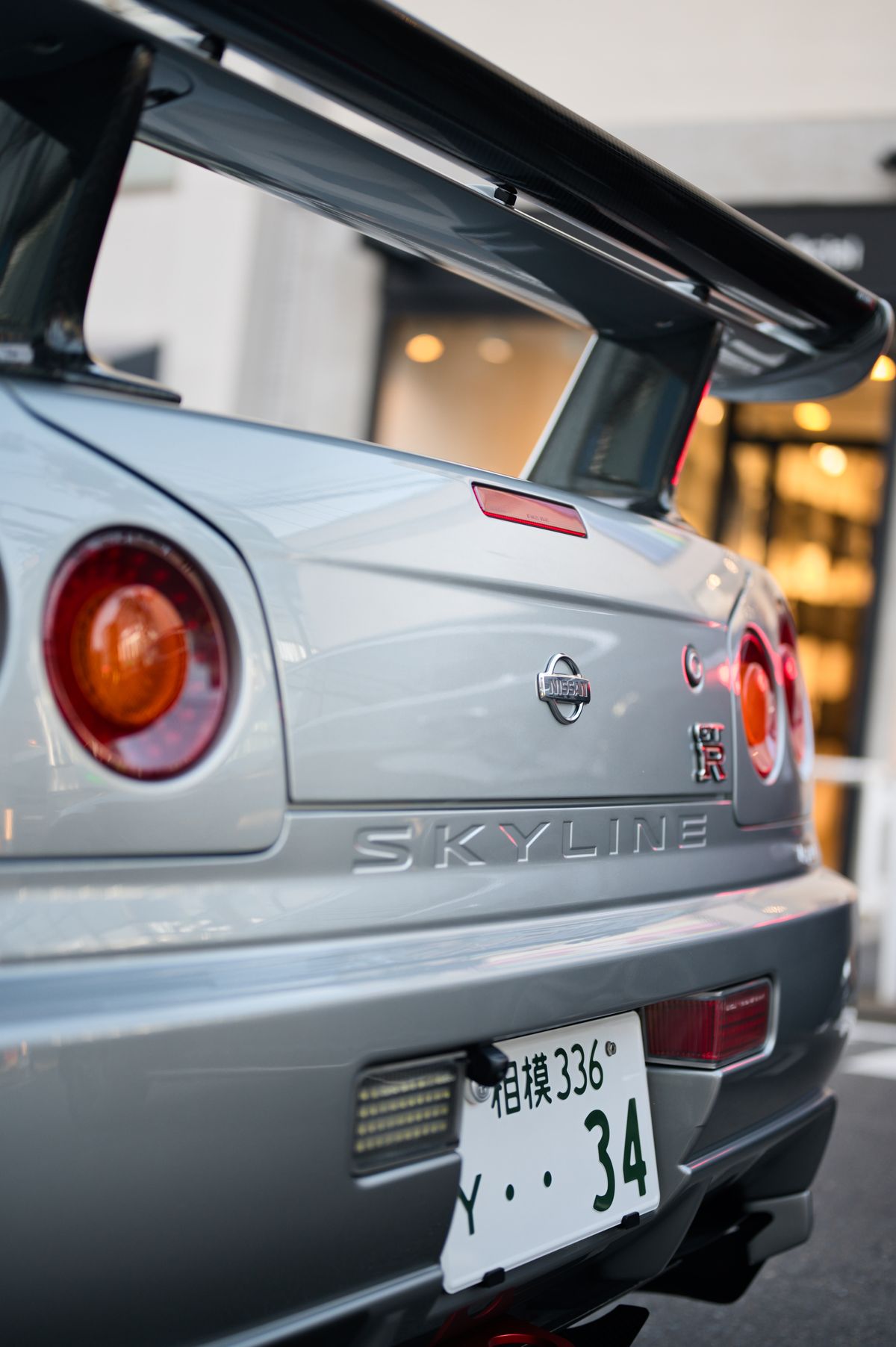
Japan's Drift Media: What to Read & Watch Before Your Trip
The Rundown
- Option magazine (founded 1981) is still in print — its April 2026 issue went on sale February 26, 2026, at 1,200 yen from publisher San-ei. Verified, not assumed.
- Drift Tengoku ('Dori-Ten'), Japan's drift-only magazine, is alive on a bimonthly cycle — 2026 issues confirmed for January, March and May.
- D1 Grand Prix has streamed every round free on YouTube since 2018, with Japanese and English streams.
- Formula Drift Japan streams its rounds live and free — Round 4 at Sportsland Sugo streamed in July 2026.
- For English, Noriyaro (Alexi Smith) has documented Japan's grassroots scene for nearly two decades and is still uploading as of July 2026.
Contents
You can learn more about the Japanese drift scene in the two weeks before your flight than most visitors learn in a year of scrolling — if you know which media actually matter, and which of them are still alive. That second part is the trap: English-language lists of “Japanese drift magazines” are full of titles that quietly stopped printing years ago. Everything below was checked in July 2026. If we couldn’t confirm it exists and is current, it isn’t here.
Print — still alive
- Option (since 1981), ¥1,200 an issue
- Drift Tengoku, bimonthly, drift only
- Japanese only — but the photography needs no translation
Streams — free and official
- D1 Grand Prix on YouTube since 2018
- Japanese and English commentary
- Formula Drift Japan streams live and free
English — one channel above all
- Noriyaro (Alexi Smith), nearly two decades in
- Grassroots scene, not just the pro series
- Still uploading as of July 2026
The print layer: still alive, still worth it
Japan’s drift culture grew up on paper, and — unusually for 2026 — the paper is still coming out.
| Title | What it is | Status (verified July 2026) |
|---|---|---|
| Option (オプション) | The tuning magazine, founded 1981 by Daijiro Inada | In print — April 2026 issue on sale Feb 26, 2026, 144 pages, ¥1,200 |
| Drift Tengoku (ドリフト天国) | “Drift Heaven” — the drift-only magazine, known as Dori-Ten | In print, bimonthly — 2026 issues confirmed Jan 15, Mar 13, May 15 |
Option is the origin point of almost everything in this scene’s media. Founded in 1981 for Japan’s modified-car enthusiasts, it’s the magazine whose founder went on to co-create the D1 Grand Prix, and whose video spin-off (more below) carried drifting to the world. Today it remains a general tuning monthly from publisher San-ei — engine builds, shop features, event coverage. Even if your Japanese is zero, the photography and spec tables are half the value, and working through captions with a translation app is a genuinely good way to build parts vocabulary before a buying trip.
Drift Tengoku — every Japanese drifter says Dori-Ten (ドリ天) — is the specialist title: grassroots event coverage, budget build features, driver interviews. It runs on a bimonthly cycle now, with 2026 issues landing in odd months. If you only buy one magazine to bring home, buy this one; there is no equivalent publication anywhere else on earth.
A word on the DVD culture you may have heard about: through the 90s and 2000s, video magazines — above all Video Option, launched on VHS in 1988 — were how drift footage circulated, traded and re-watched until the tape wore out. That lineage didn’t die; it moved to YouTube, where Video Option continues as a channel. You no longer need a region-free DVD player to see inside the scene. You need a subscription button.
The competition streams: free, official, in English
This is the biggest change from the DVD era, and the best pre-trip resource going.
D1 Grand Prix has streamed every round of the main series and its D1 Lights feeder free on YouTube since 2018 — with separate Japanese and English streams. Full qualifying and battle days, not highlights. Watching two or three rounds teaches you the judging rhythm, the current top drivers, and the circuits themselves; several D1 venues are places you can visit or even drive. If the results still look arbitrary after a round or two, the criteria are public and we have broken them down in how tsuiso battles are judged.
There is no announcement cycle to keep up with, either. On the morning of a competition day the series simply posts where to watch it — this one for Round 8 at Autopolis in October 2025.
"Gran Turismo D1GP Series, Round 8, Autopolis (Sunday). Today's competition will be livestreamed on YouTube."
グランツーリスモD1GPシリーズ第8戦オートポリス(日曜日)。本日の競技はYouTubeで生配信いたします。
View the original post ↗Formula Drift Japan (FDJ) — the Japanese arm of the US-born series — also streams its rounds live and free. This is current, not historical: FDJ’s Round 4 weekend at Sportsland Sugo streamed in July 2026, with qualifying, Top 32 and Top 16-to-final broadcasts, and the streams stay up afterwards. Between D1 and FDJ you can watch essentially all of Japan’s professional drifting from your sofa, legally, at no cost.
If your trip includes a competition weekend, watch that series’ previous round before you fly. You’ll stand at the fence knowing which driver runs which car — which is the difference between watching traffic and watching a sport.
The English layer: one channel above all
Plenty of foreigners have filmed Japan’s drift scene. One has done it consistently, from the inside, for nearly twenty years: Noriyaro, run by Alexi Smith, an Australian based in Japan. The channel covers what the competition streams don’t — grassroots track days, matsuri (festival-style open events), budget dorisha (drift car) builds, and the paddock culture around it all — and it’s still actively uploading as of July 2026, including coverage of current Japanese events.
For a first-time visitor, Noriyaro is arguably the single most useful resource in this article, because it shows the version of the scene you’ll actually participate in. Competition streams show you the top of the pyramid; Noriyaro shows you the base, in English, including the unwritten rules — how people behave in the pits, what a track day actually costs, what breaks and how it gets fixed.
Where to start if you only pick one
Start with a D1 or FDJ stream to learn what a judged run looks like, then watch Noriyaro to see what an ordinary Saturday at a Japanese circuit actually is. The magazines make far more sense once you have both pictures in your head.
How to combine them (a two-week syllabus)
- Week 1: One recent D1GP round (English stream) and one FDJ round. Learn the names.
- Week 2: Three or four Noriyaro grassroots videos — ideally from the circuit you plan to visit. Flip through Option’s latest issue for parts-and-shops literacy.
- On the plane: A copy of Dori-Ten, even untranslated. By wheels-down you’ll recognise half the cars in it.
The scene documents itself more thoroughly than almost any other grassroots motorsport on the planet — in print since 1981, on tape since 1988, and now free on YouTube in your own language. Arrive having used that. The difference shows within an hour of walking into a paddock.
The step the videos cannot do for you is being there on a date that is actually running, which is why our calendar of Japanese drift events lists every round with its fee and the day its entry window shuts.
After the streams, the paddock
Once you have watched a few rounds, the thing that stops the trip is prosaic: the entry forms, the gate and the phone call are Japanese-only, and the good dates fill weeks ahead. Send us your travel dates and whether you want to drive, ride along or watch, and we take that side of it: drift experience in Japan, region by region.
Frequently asked questions
Are Japanese drift magazines really still in print in 2026?
Yes — we checked before writing this. Option's April 2026 issue went on sale February 26, 2026 (144 pages, 1,200 yen), and Drift Tengoku's 2026 issues are listed through May on Fujisan, Japan's magazine subscription service. Plenty of English articles describe both as relics; the print schedule says otherwise.
Do I need Japanese to follow the competition streams?
Not for D1GP — it has offered an English-language stream alongside the Japanese one since it moved to free YouTube coverage in 2018. And drifting is unusually watchable with no commentary at all: line, angle and proximity need no translation.
Where do I buy Option or Drift Tengoku outside Japan?
The reliable route from outside Japan is Fujisan, the Japanese magazine subscription site, which lists both titles: Option at ¥1,200 an issue (the April 2026 issue, 144 pages, went on sale 26 February 2026) and Drift Tengoku on a bimonthly cycle, with 2026 issues confirmed for 15 January, 13 March and 15 May. Inside Japan, any large bookstore's motor corner carries Option; Dori-Ten is thinner on shelves, so a subscription or a stop at a bigger store is the safer bet.
 Touge: Where Drifting Was Actually Born
  When Did Drifting Start in Japan? A Dated Timeline, 1970s to 2026
  Masashi Yokoi: Three-Time D1GP Champion Chasing a Fourth (2026)
  Who Drifts on ORIGIN Labo.? The Maker's 29 Drivers and 2026 Results