
Touge: Where Drifting Was Actually Born
The Rundown
- Touge (峠) means mountain pass. Drifting's core techniques were developed there by street racers — hashiriya — in the 1970s and 80s, an era today's scene treats as history.
- Keiichi Tsuchiya, the Dori-Kin (Drift King), took the style from Nagano's passes to professional racing after his 1977 debut — and nearly lost his racing licence over the 1987 street video Pluspy.
- Option magazine (founded 1981 by Daijiro Inada) and its video spin-offs moved the scene from mountains to circuits through contests like Ikaten.
- The first professional event ran at Ebisu Circuit in October 2000; the series was renamed D1 Grand Prix for its first full season in 2001.
- The tsuiso (chase run) battle format that the whole world now uses is the touge duel, transplanted onto a circuit — which is where it lives today.
Contents
Drifting was developed on Japan’s mountain passes, the touge, by street racers called hashiriya in the 1970s and 80s, and it left the mountains through media: Option magazine from 1981, the Pluspy video in 1987, and Daijiro Inada’s Ikaten circuit contests from 1989. The first professional event ran at Ebisu Circuit (Fukushima) in October 2000, with forty entries and three thousand spectators, and the series was renamed D1 Grand Prix for its first full season in 2001. Those dates were re-checked on 14 September 2026 against the D1 Grand Prix and Keiichi Tsuchiya references listed at the foot of this page.
Every drift game, every anime, every tribute video eventually says the same word: touge. If you’re planning a trip to Japan’s drift scene, it helps to know what that word actually carried — because the history explains almost everything you’ll see at a circuit today, from the tsuiso battle format to why Ebisu built a course shaped like a mountain road. This is that history. The Japanese scene treats it as exactly that — history — and so does this article.
What a touge is
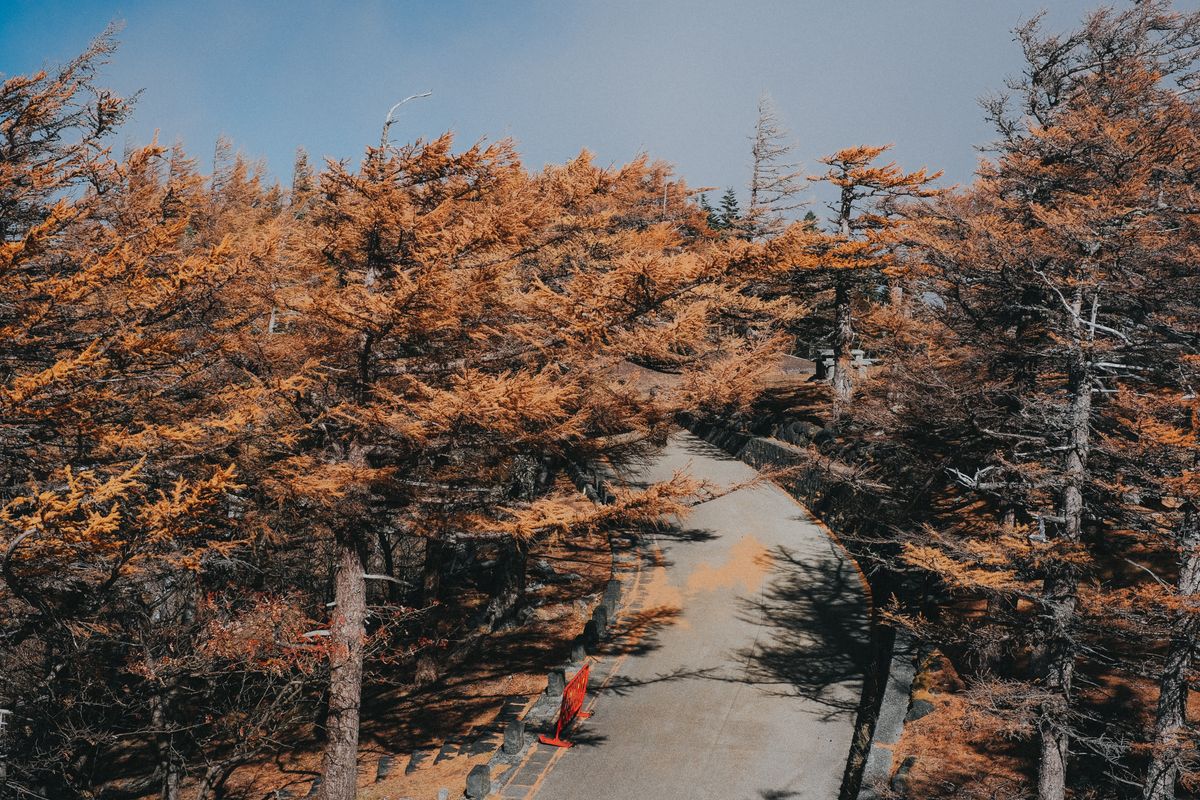
Touge (峠) is simply the Japanese word for a mountain pass — the saddle point where a road crests between valleys. Japan is roughly three-quarters mountains, so its road network is full of them: narrow ribbons of switchbacks and hairpins, often with a rock face on one side and a guardrail on the other. In the 1970s and 80s, before Japan had today’s density of circuits and organised track days, these roads were where young drivers with cheap rear-wheel-drive coupes went at night.
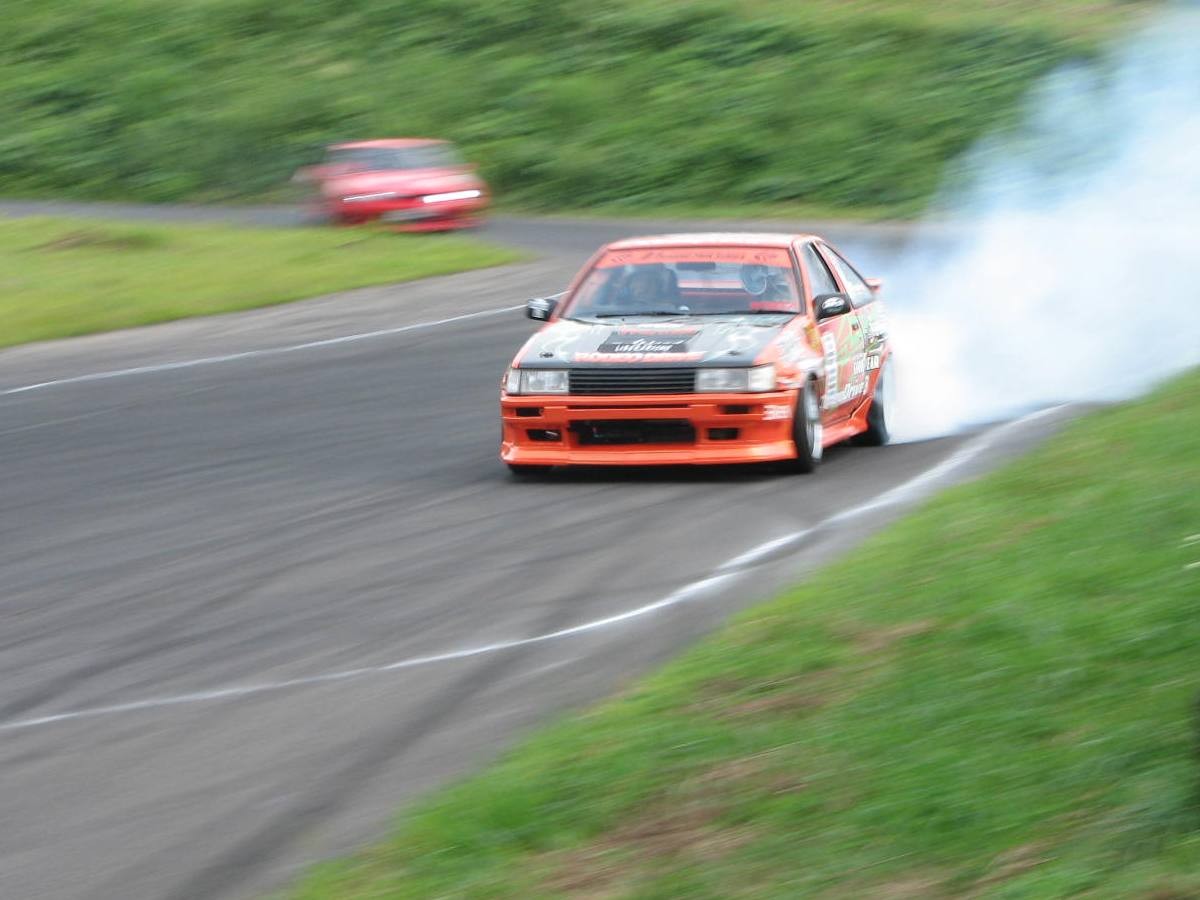
Those drivers were called hashiriya (走り屋) — “runners”, street racers. On a tight pass, outright power mattered less than commitment and car control. Sliding a car — pitching it sideways before the corner and steering it on the throttle — began partly as technique and partly as style. Racing drivers of the era already drove with big slip angles, because the bias-ply tyres of the 1960s–80s actually rewarded it; the street imitated the pros, then pushed the style further than the pros ever needed to.
The man who took it off the mountain
Keiichi Tsuchiya was born in 1956 in Nagano — pass country. He learned car control on touge roads as a teenager, then entered professional racing through the Fuji Freshman series in 1977. What made him famous wasn’t just winning: it was how he drove, using deliberate oversteer in grip races where nobody else did. Japanese fans named him the Dori-Kin (ドリキン) — the Drift King.
In 1987 came the video that turned a regional street style into a national obsession: Pluspy. Daijiro Inada — founder of Option magazine — filmed Tsuchiya drifting his own Toyota AE86 on mountain roads. The footage spread through the tuning underground and made the AE86 an icon it remains today.
It’s worth being honest about what happened next, because it tells you how Japan actually regards street driving: the film nearly cost Tsuchiya his racing licence. Even at the moment of its creation, touge drifting was something the establishment penalised — which is exactly why the energy went looking for a legal home.
Magazines, videotapes and the move to circuits
That legal home was built by media. Option, founded by Inada in 1981 for Japan’s modified-car enthusiasts, gave the scene a national voice — Tsuchiya himself wrote a regular column. Then came the tapes: the Video Option series launched in 1988, putting drift footage into every tuning shop in the country.
The magazines didn’t just report on the scene. They organised it off the street:
| Year | What happened |
|---|---|
| 1981 | Daijiro Inada founds Option magazine |
| 1986 | Carboy magazine hosts one of the first drift contests |
| 1987 | Pluspy films Tsuchiya’s AE86 on the touge |
| 1988 | Video Option launches as a video magazine |
| 1989 | Inada launches Ikaten — circuit drift contests judged by Tsuchiya |
| 1999–2000 | Professional-level contests test the format |
| Oct 2000 | All Japan Professional Drift Championship, Round 1 at Ebisu Circuit |
| 2001 | The series is renamed D1 Grand Prix — first full season |
Ikaten — Inada’s amateur contest series judged by Tsuchiya from 1989 — is the crucial link. For a decade it gave hashiriya a circuit to prove themselves on, and the standard rose so fast that by the late 90s the best amateurs were effectively professionals without a championship. Inada and Tsuchiya gave them one: a professional contest at Ebisu Circuit in October 2000 drew forty entries and three thousand spectators, was counted as Round 1 of the 2001 season, and was renamed the D1 Grand Prix.
The touge’s fingerprint on modern drifting
Here’s the detail most histories skip. D1’s first event judged cars one at a time. From the second round, the series introduced the head-to-head battle — tsuiso (追走), the chase run — precisely because the one-on-one duel was how touge runs had always been settled: one car leads, one chases, then they swap. That format was adopted by drifting series worldwide and is the reason a Formula Drift final in California is settled the same way two Nissans once settled things on a pass in Gunma. It’s also the word this site is named after, and how a tsuiso battle is actually judged still carries the logic of a road with one line on it. Tsuiso, furidashi and the rest of the vocabulary in this chapter are collected in our drift glossary of the words you’ll hear at a Japanese circuit, furidashi and kashikiri included.
Tsuchiya and Inada judged and ran D1 until December 2010, when both resigned. The series continues today, streaming free worldwide — a long way from a VHS tape passed around a parts shop.
The mountain roads are history, not an itinerary
The passes in this story are public roads with traffic, blind crests and no run-off, and street racing on them is illegal. The scene itself moved to circuits decades ago — which is why purpose-built touge courses like Ebisu's exist. Read this chapter as history and drive it on a track.
Where the touge lives now
The passes are still there, and driven legally they’re some of the best touring roads on earth. But the drifting moved. Circuits like Ebisu built dedicated “touge” courses — narrow, cambered, guardrail-lined layouts that recreate the mountain rhythm with runoff and without oncoming traffic. When you visit a Japanese drift event, you’re watching the direct descendants of the hashiriya era operating in the home the scene spent twenty years building for itself. Our Ebisu Circuit guide walks the complex course by course, Touge course included.
The touge rhythm still exists, on a course built for it
Ebisu's Touge course is the closest thing left to the roads in this story, with run-off instead of a drop — and the part that stops visitors is not the driving. It is a Japanese entry form, a paddock nobody explains in English, and a car to run it in. Send us your dates and we will get you onto the Touge course at Ebisu, driving it, riding it or watching from the paddock.
It isn’t only the scene that moved on. Police forces in pass country still run night operations on these roads and publish the results — this from Ibaraki Prefectural Police after a June 2023 patrol on Mount Tsukuba’s passes.
"[Late-night traffic enforcement on Mt. Tsukuba] We carried out traffic enforcement against drift and 'rolling' groups at Kazekaeshi Pass and Asahi Pass on Mt. Tsukuba. The enforcement reduced the late-night noise echoing through the mountains. We will continue to strengthen night-time enforcement."
【筑波山における深夜の交通指導取締り】 筑波山の風返し峠、朝日峠において、ドリフト族やローリング族に対する交通指導取締りを行いました。 取締りにより、深夜の山中に響く騒音の軽減が図られました。 今後も深夜の取締りを強化します!
View the original post ↗Respect the history. Drive the passes like a tourist and drift where the Japanese scene drifts — on track. That’s not an outsider’s compromise; it’s what the scene itself decided, forty years ago, one videotape at a time.
Frequently asked questions
Is touge racing still happening in Japan?
Illegal pass racing still exists in pockets, but it is heavily policed and the drift community itself has moved on. Ibaraki Prefectural Police published the results of a June 2023 night operation against drift and rolling groups on Mount Tsukuba's Kazekaeshi and Asahi passes, and said it would keep strengthening night-time enforcement. The scene you'll meet at circuits treats the touge era of the 1970s and 80s as its origin story, not an instruction manual — turning up wanting to 'run a touge' reads the way asking about moonshine reads at a whiskey distillery.
Can I drive the famous touge roads as a visitor?
Yes — they're public mountain roads, and driven at legal speeds many are spectacular. If you want the touge feeling sideways, purpose-built courses like the Touge course at Ebisu Circuit (Fukushima) recreate the narrow, committed rhythm legally, with run-off instead of a drop. That is the version the Japanese scene itself uses, and it has been for decades: the move off the passes started with Inada's Ikaten contests in 1989 and was complete by the first professional event at Ebisu in October 2000.
Who is the Drift King?
Keiichi Tsuchiya, born 1956 in Nagano. He learned car control on mountain passes, debuted in the Fuji Freshman race series in 1977, and made oversteer a spectator draw in professional racing. He later co-created the D1 Grand Prix with Option magazine founder Daijiro Inada, judging the series until they both left in 2010.
 When Did Drifting Start in Japan? A Dated Timeline, 1970s to 2026
  Japan's Drift Media: What to Read & Watch Before Your Trip
  Masashi Yokoi: Three-Time D1GP Champion Chasing a Fourth (2026)
  Who Drifts on ORIGIN Labo.? The Maker's 29 Drivers and 2026 Results