
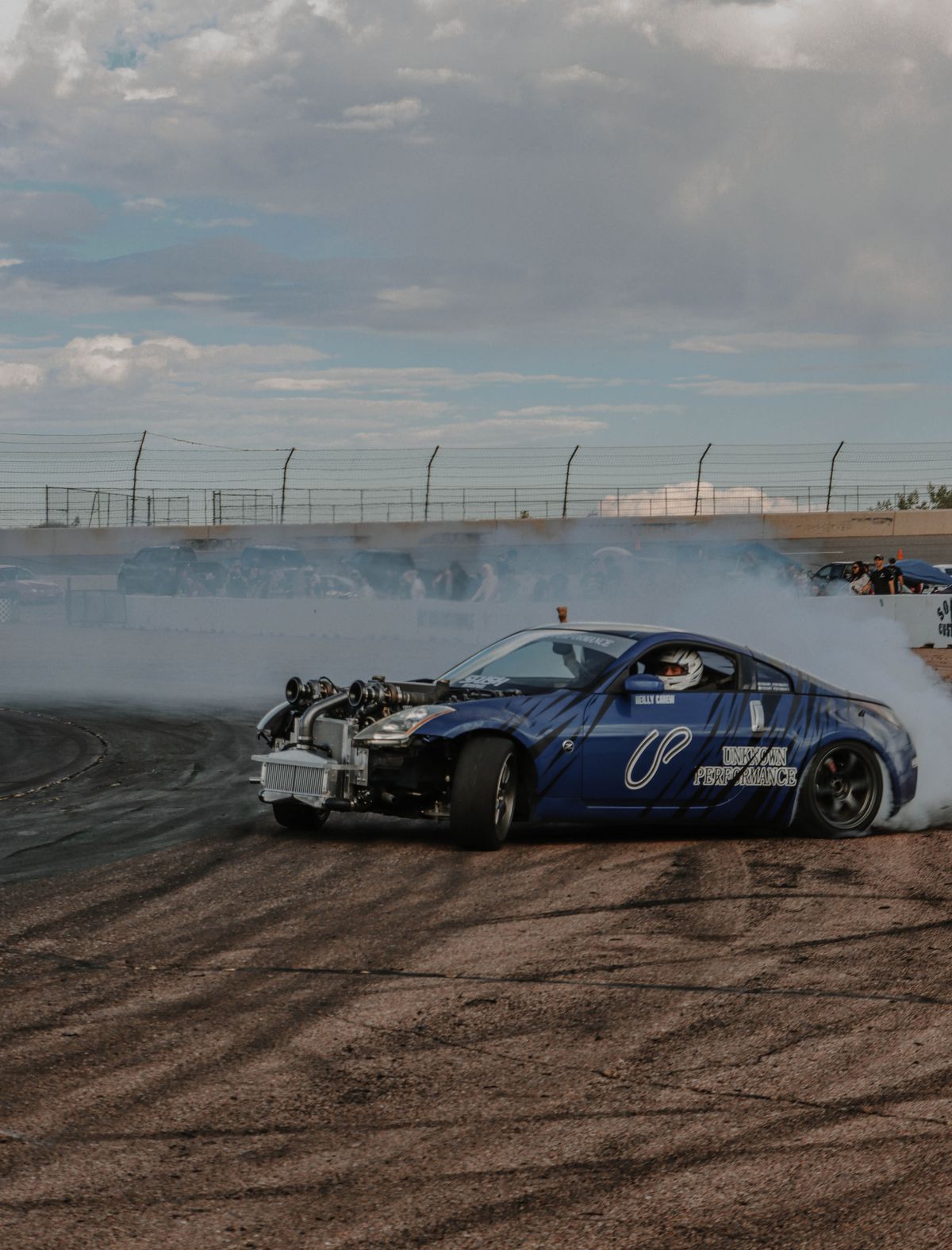
Nikko Circuit: Licence, Fees & Drift Days Explained (2026)
The Rundown
- Nikko has two doors: circuit-run sport sessions need Nikko's own licence (new ¥10,000 / renewal ¥5,000), while most drift days are run by outside organisers like FLUKE and entered through them.
- The new-licence process is a 30-minute briefing held at 9:00 or 13:00 on sport-run days — bring a photo, your driving licence and a hanko (personal seal).
- Strict 105 dB noise limit, measured from the paddock and judges' stand. Loud anti-lag or afterfire can get you parked even if you meter under it.
- General spectating is restricted on normal running days — if you want to watch, come on an event day like Nikko Drift Victory.
- Despite the name, the circuit is in Utsunomiya, not Nikko town — about two hours from Tokyo by car via Route 293.
Contents
Nikko Circuit is one of the most filmed pieces of asphalt in drift history, a tight, technical 1,027-metre, twelve-corner layout in Tochigi that has hosted everything from 1990s videos to D1 regional rounds. It’s also one of the more confusing circuits for a foreign visitor to actually use, because it runs on a members-style licence system, most drift days aren’t run by the circuit at all, and the official information is spread across Japanese-only pages and PDFs.
This guide untangles it: what the licence actually costs and covers, how drift days really work, and the house rules that catch people out. Everything below was checked against the official site in July 2026.
Nikko Circuit at a glance — verified July 2026
First, the geography surprise
Despite the name, Nikko Circuit is not in Nikko town. The address is Takamatsu-cho, Utsunomiya — Tochigi’s prefectural capital — reached via Utsunomiya IC and Route 293, roughly two hours from Tokyo by car. If you build a sightseeing day around Nikko’s famous shrines and expect the circuit next door, you’ll be an hour off. Plan it as an Utsunomiya trip (locals will tell you to get gyoza while you’re there).
The two doors onto the track
Understanding Nikko means understanding that there are two separate ways cars get on this circuit:
Door 1: circuit-run sport sessions. On scheduled sport-run days (roughly six to nine days a month in summer 2026), the circuit runs class-based sessions for four-wheel vehicles. To join these you need Nikko’s own circuit licence. Session fees and timetables are published per class in the official weekday and weekend PDFs, and vary by day type. Check the current PDFs on the official site rather than trusting any fixed number you read elsewhere.
Door 2: organiser drift days. Most of Nikko’s drift running happens on days the circuit hands to outside organisers, above all FLUKE, the Tochigi operation behind the Nikko Drift Victory series, plus others like Nigel and Paradise. You enter these through the organiser, on the organiser’s terms and fees. For a visiting drifter this is usually the practical door, because the licence question belongs to the circuit’s sessions, not necessarily to organiser events — each organiser sets its own entry conditions, so confirm with them directly.
The licence system, decoded
If you do want Door 1 — say you’re staying in Japan for a season and want regular practice — here’s the system, straight from the official licence page:
| Item | Detail (verified July 2026) |
|---|---|
| New licence | ¥10,000 (includes ¥4,000 insurance) |
| Renewal | ¥5,000 (¥1,000 renewal + ¥4,000 insurance) |
| Late renewal | Month after expiry: still ¥5,000. Two months on: back to ¥10,000 |
| Validity | From the month of issue to the same month next year |
| New-licence briefing | About 30 minutes, held at 9:00 and 13:00 on sport-run days (renewals skip it) |
| What to bring | One licence-size photo, your driving licence, and a hanko |
A hanko (also called inkan) is a personal name seal, Japan’s equivalent of a signature stamp, used on official paperwork. Foreign visitors typically won’t own one; cheap self-inking ones are sold in ¥100 shops and stationery stores, but whether the circuit accepts a signature instead is not officially stated. Ask ahead if you’re applying. Minors need additional documents.
The rules that get people parked
Nikko publishes an unusually explicit list of running rules, and enforces them:
- 105 dB noise limit, measured from the paddock and the judges’ stand. Over the limit means no running. Crucially, the circuit adds that afterfire and anti-lag systems judged excessively loud can be stopped even if the meter reads under 105 dB, so a screaming external-gate setup is a gamble.
- No burnouts. Stated flatly on the official site.
- No running with the bonnet removed, and no drink-driving (yes, it’s on the list).
- No photography of participants or cars without consent anywhere on the grounds, relevant if you’re planning content. Ask before you film.
- Drive there legal. The circuit explicitly asks that cars arrive street-legal and warns that temporary registration plates (kari-plates) used outside their proper purpose are illegal. Trailer your track car or keep it compliant.
And the one that surprises visitors most: general spectating is restricted on normal days. The circuit limits walk-in spectator entry, citing accident risk. If you want to stand at the fence and watch drifting, come on an event day.
2026 drift days worth planning around
From the official monthly calendars (checked July 2026). Our calendar of Japanese drift events carries the updates, each round’s fee and the day its entry window shuts:
| Date (2026) | Event | Enter / info via |
|---|---|---|
| Aug 4 | FLUKE weekday drift track day | FLUKE |
| Aug 9 | Nikko Drift Victory Rd.2 | FLUKE |
| Aug 14 | Kanto All-Star Drift GP qualifier + FLUKE track day | FLUKE |
| Aug 15 | Nigel drift & grip track day | Nigel |
| Sep 1 | Paradise grip & drift track day | Paradise |
| Sep 8 | Nikko drift free-run day | Circuit calendar |
| Oct 17 | D1 NEXT Central Rd.4 (entry ¥19,800) | D1 NEXT / Mobara TC entry page |
| Nov–Dec (TBA) | Nikko Drift Victory Rd.3 — 2025 edition ran Dec 14; official calendar currently published through September | FLUKE |
That last row is dated from FLUKE’s own feed rather than the circuit calendar. The organiser posts each round’s result the same evening, which is how we know the 2025 season closed on December 14:
"Quick results from today's Nikko Drift Victory final round. The detailed score tables and so on will follow."
本日の日光ドリフトビクトリー最終戦 結果速報です👍 細かい点数表等は後ほど👍
View the original post ↗Nikko Drift Victory is the house series: grassroots-friendly competition run by FLUKE, and the best single day to see the circuit used properly. The entry fees, the 60-car cap and the November dates are in our guide to Nikko Drift Victory and the Kanto All-Star GP. The layout itself, 1,027 m since the February 2018 renovation widened corner 10 from an 18R to a 32R, with a 138 m main straight and a 250 m back straight feeding tight 15R–45R corners, is what made Nikko a drift filming staple: everything happens close to the fence.
105 dB is enforced, not advisory
The limit is measured from the paddock and the judges’ stand, and loud anti-lag or afterfire can get you parked even if your meter reading passes. General spectating is also restricted on normal running days. If you just want to watch, come on an event day.
Where this one sits — north to south
- EbisuFukushima · 3.5 h drive from Tokyo
- Nikko you are hereTochigi · 2 h drive from Tokyo
- Mobara TwinChiba
- YZ EastGifu
- Meihan SportslandNara
- Bihoku HighlandOkayama
The six circuits that carry Japan's grassroots drift scene, ordered north to south. Full details for every venue — including the ones that don't allow drifting — are in the track directory, and every circuit is pinned on the drift track map.
Nikko with a local beside you
The licence briefing is in Japanese and the good days are organiser-run. Nikko with us: organiser days, ride-alongs, and the Japanese paperwork handled.
The honest verdict
Nikko rewards planning more than spontaneity. Turn up unannounced on a random Tuesday and you may find a grip session you can’t join and a gate you can’t spectate through. But line your trip up with a FLUKE day and it’s one of Kanto’s best drift experiences: a historic, technical layout two hours from Tokyo, with an organiser scene that keeps it busy year-round. Check the event calendar first, email the organiser second, and book the rental car third, in that order.
Frequently asked questions
Do I need the Nikko licence to drift there as a visitor?
Not necessarily. The licence (new ¥10,000) covers the circuit's own sport-run sessions. Drift days at Nikko are mostly run by outside organisers such as FLUKE, and you enter through the organiser under their conditions — confirm directly with them before travelling.
How loud is too loud at Nikko Circuit?
The official limit is 105 dB, measured from the paddock and the judges' stand, and cars over it are excluded from running. The circuit also warns that afterfire and anti-lag judged excessively loud can be stopped even when the meter reads under 105 dB.
Can I just come and watch drifting at Nikko?
Only really on event days. The circuit restricts general spectator entry on normal running days, citing on-site accidents. Competition and organiser event days such as Nikko Drift Victory or D1 NEXT rounds are the reliable way to watch — and note that photography of participants without consent is banned on site.
 Drifting in Kanto (2026): Every Track You Can Reach From Tokyo
  How Do You Get to Nikko Circuit Without a Car? (2026)
  Tsukuruma Circuit Nasu: A Drift Day by Shinkansen (2026)
  Can You Drift in Saitama? Honjo Circuit and Nearest Drift Days (2026)