
Tsukuruma Circuit Nasu: A Drift Day by Shinkansen (2026)
The Rundown
- A drift day is ¥15,000, a half day ¥10,000, and no reservation is needed — but the circuit barely publishes running dates. On 4 August 2026 its public calendar showed sports running on 7, 8 and 11 August and nothing beyond, while private hire was booked out to December.
- No four-wheel running happens without the circuit's own licence: ¥5,000 for the course and registration, valid one year, ¥3,000 to renew. It is a 20-minute video briefing at the reception office and you can take it on the day.
- Whether a foreign licence or an International Driving Permit satisfies that licence is not stated anywhere on the circuit's site. The rule says an ordinary Japanese car licence, with an exception clause for anyone given special permission. Ask before you book.
- The forms want a Japanese address and phone number, and the pledge ends with a box for a hanko — a personal seal. Payment for running is cash, in the circuit's own words.
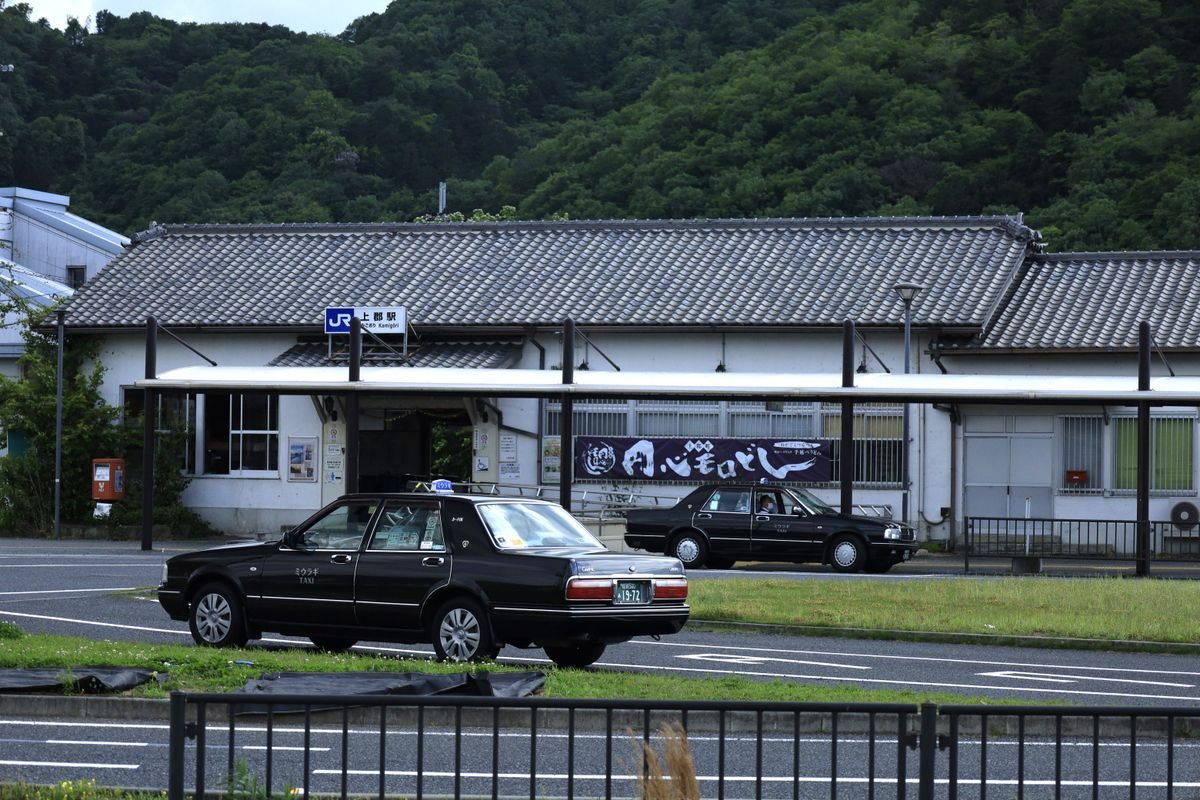
- Nasu-shiobara is a Tohoku Shinkansen stop, but no scheduled bus reaches the circuit. The only public transport into Takabayashi is Yu-Taku, the city's reservation-only demand taxi, ¥200 a ride, booked by phone in Japanese.
Contents
A drift day at Tsukuruma Circuit Nasu (Tochigi) is ¥15,000 and a half day ¥10,000, sports running needs no reservation, and the nearest station is Nasu-shiobara, a Tohoku Shinkansen stop. The catch is what sits in front of that: no four-wheel running happens without the circuit’s own ¥5,000 licence, and on 4 August 2026 the public calendar listed sports running on 7, 8 and 11 August and nothing after, while private hire was booked solidly to 13 December.
Every English list of Japanese drift tracks stops at the same eight or nine names. This tarmac-and-gravel circuit in Nasushiobara is on none of them, and it is closer to Tokyo than most. Formula Drift Japan’s third tier races here. Nobody has written it up in English.
There is a reason. Four separate walls stand between you and the gate, and none of them is the driving. Here is what the official pages and PDFs say, read on 4 August 2026.
Tsukuruma Circuit Nasu at a glance — verified 4 August 2026
What the place actually is
Tsukuruma Circuit Nasu is the former Maruwa Autoland Nasu, a dirt-trial venue, rebuilt by SUNRISE CIRCUIT LLC — the company behind GR Garage Utsunomiya Tsukuruma Kobo. It runs both surfaces, tarmac and gravel, used separately and never combined in one session.
The tarmac layout was drawn by Tetsuya Yamano — three consecutive Super GT titles, 19 All-Japan Gymkhana championships — and the corners carry his names: Sunrise Straight into First Corner, the Driving Magic S, Crescent Outer, Full Moon, Shiobara, Final Corner. Short, technical, wide escape areas on entry. For drift the track is capped at 13 cars at a time.
The four sports-running categories are split by day, not by session: grip (no drifting allowed), gymkhana, drift and dirt. You pick a date already labelled with your category. There is no on-site rental — the circuit’s rental page still reads “in preparation”.
| Category | Full day | Half day (AM 9:00–12:00 / PM 13:00–16:00) |
|---|---|---|
| Drift | ¥15,000 | ¥10,000 |
| Grip | ¥13,000 | ¥7,000 |
| Gymkhana | ¥13,000 | ¥7,000 |
| Dirt trial | ¥8,000 | ¥5,000 |
| Passenger ride (dōjō-sōkō) | ¥500 | ¥500 |
Those figures come off the entry form and article 6 of the running terms. The terms PDF is dated March 2020, the form June 2023, and no 2026-dated price page exists — so confirm by phone. A timing transponder is ¥1,000, but the form states plainly that transponders are not rented for drift. Run outside the session you paid for and the penalty is ¥20,000. The terms also say, in so many words, that sports running is paid in cash, that a morning half-day ticket cannot be upgraded to a full day, and that nothing is refunded if you cancel — a breakdown included.
Wall 1: a licence you cannot check from abroad
Nothing runs on four wheels here without the circuit’s own licence: ¥5,000 for the course and registration, one year, ¥3,000 to renew, and you can take it on the day at the reception office. It is about 20 minutes — a video on circuit rules and manners, the venue’s safety measures, the flags.
The eligibility rule is one line, that you hold an ordinary car licence, followed by an exception clause for anyone granted special permission. Nowhere on the site, in the licence terms or on the application form is a foreign licence or an International Driving Permit mentioned. That is not a yes and it is not a no. Ask it on the phone before you commit a day of your trip; our licence and IDP guide explains why the answer varies by venue in Japan.
Wall 2: the paperwork wants a seal
The licence application asks for your address, your phone number and an emergency contact, and the signature block ends with a small circle marked 印 — the place for a hanko, or inkan, the personal seal that stands in for a signature in Japan. The entry form’s pledge does the same: 参加者署名 ______ ㊞, with a second seal line for a guardian. The age thresholds differ between the documents — under 20 on the entry form, 18 or under for a passenger in the running terms — so if you are near either line, treat which one applies as TBC and ask.
None of this is designed to exclude you. It is written for someone with a Japanese address, a Japanese mobile number and a seal in a drawer.
What you need on the day
- Cash. The running terms state that sports running is paid in cash — that is ¥15,000 plus ¥5,000 for the licence on a first drift day
- Helmet: full face or jet. Half-caps are refused
- Gloves: racing or driving gloves. Work gloves and anything that leaves fingertips exposed are refused
- Long sleeves and long trousers, plus driving or racing shoes. Barefoot and sandals are banned
- The same kit list applies to anyone riding as a passenger for ¥500
- Your driving licence, and the entry and licence forms filled in beforehand if you can
On the car: road-legal vehicles only, and the regulations refuse anything driven in on temporary plates with expired shaken — the statutory vehicle inspection. Note the contrast with Okuibuki, private land that advertises unregistered cars as welcome. The bonnet stays on, the noise limit is 105 dB including afterfire, and tyres worn to the wear indicator or spiked are out. A roll bar is recommended for soft-top and T-bar cars, the roof stays fully closed without one, and an open car run roof-open needs four-point-or-better harnesses. Luggage comes out; cameras are internally mounted only.
Wall 3: you cannot know a week out whether the day will run
This is the one that kills trips. Sports running needs no reservation — but kashikiri, private course hire, outranks it, and hire bookings are taken up to seven days before the date. The circuit’s own terms therefore tell you to check availability inside the last week, by phone or on its calendar.
Now look at what that calendar shows. Read on 4 August 2026, it listed sports running on 7, 8 and 11 August and no dates after that — while the hire side was populated solidly to 13 December: the JMRC Tochigi/Ibaraki gymkhana series on 9 August, Maruwa Cup rounds on 5 September, 24 October and 14 November, a Chibi-kei endurance race on 27 September, TCN Rd.3 on 8 November, the TCN festival on 12 December, and maintenance closures on 7 September, 5 and 26 October, 16 November and 14 December.
Three days of running, four months of bookings
The calendar is real and it is maintained — that is exactly the problem. Hire is planned months ahead; the days you can buy appear about a week out. If you are booking flights three months from now, there is nothing on this calendar to aim at, and the sequence has to run the other way: pick a flexible week, then confirm the date from Japan.
Wall 4: there is no ordinary bus to the gate
The circuit’s access page gives an address, a phone number and a map. No station, no bus, no walking time. So we went to the city’s data instead.
Nasushiobara City publishes its fixed-route Yu-Bus network as a GTFS open-data feed, valid 1 April 2026 to 31 March 2027. Across 219 stops, not one is in Takabayashi — the district the circuit sits in. The nearest scheduled Yu-Bus stop is roughly 6.7 km away. There is no route bus here to miss.
Takabayashi is served instead by Yu-Taku, the city’s reservation-only demand transport, run on the Takabayashi–Kuroiso line by Fuji Kotsu and Nasu Godo Jidosha. ¥200 per adult ride, ¥100 for a child between stops, or a ¥400 adult day pass (¥200 child) bought on board. The ¥900 fare on the city’s table is for zone rides between your door and a stop, not a day pass. You pay the driver. Bookings on 0287-63-0444, reception 08:00 to 18:00. From the timetable revised 1 April 2026:
| Leg | Service |
|---|---|
| Out from the Shinkansen | Nasu-shiobara West Exit dep 07:50 → Takabayashi-jūmonji 08:26 |
| Out from Kuroiso | Kuroiso West Exit dep 07:55 → Takabayashi Kōminkan 08:31 |
| Back to the Shinkansen | Takabayashi-jūmonji 16:57 → Nasu-shiobara West Exit 17:33 |
| Back to Kuroiso | Takabayashi Kōminkan 16:05 → Kuroiso West Exit 16:41, or 17:27 → 18:03 |
| Also inbound, afternoon | Nasu-shiobara 16:21 → Takabayashi-jūmonji 16:57; Nasu-shiobara 17:38 → 18:14 |
Read the first and third rows together and the day works. You reach Takabayashi around 08:20, inside the 8:00–11:00 entry window and in time for the licence briefing. Running ends at 16:00. Your ride out leaves at 16:57. A 57-minute margin to settle up and pack — that is the whole trip in one line.
The booking rules matter as much as the times. Afternoon services — everything from 16:00 onward — can be booked from a week ahead up to one hour before departure. Everything earlier must be booked from a week ahead and no later than the day before. On the call you give the line name, the service number, your boarding and alighting points and the passenger count, and the operator takes your name, address and phone number, in Japanese. A zone mode also exists, with hourly time bands instead of a timetable: outbound 08:40 to 15:40, inbound 09:10 to 16:20.
The Yu-Taku stops sit outside every open-data feed and carry no published coordinates, so no walking time from stop to gate exists to quote. Do not improvise that last leg. A taxi closes it — the Yu-Taku operators are ordinary taxi firms, and Kuroiso Kanko Taxi is on 0287-62-1526 — but metered fares from the station are not published. TBC.
Every one of these ends in a Japanese phone call
Confirming the running date inside the last seven days, booking the Yu-Taku with a name, address and phone number, asking whether your licence counts, and the forms that end in a seal — none of it exists in English, and the circuit's number is a mobile. That is the half we take on: send us your dates and we will make those calls, get the paperwork straight before you travel, and run you out from the Shinkansen and back.
Watching instead: FDJ3, 1 November 2026
Formula Drift Japan’s 2026 schedule, published on 17 December 2025, puts FDJ3 Round 6 here on Sunday 1 November 2026 — the third-tier finale. The PDF carries its own note that dates may change without notice, and on 4 August 2026 the circuit’s hire calendar did not yet show 1 November. Treat it as TBC and confirm nearer the time.
If it holds, spectating is the easiest thing about this venue. When FDJ3 raced here in 2025, tickets were same-day at the gate only, no advance sale: ¥2,000 admission and ¥1,000 parking, tax included, with anyone of junior-high age and above needing a ticket. For an overseas fan that is good news — no convenience-store terminal, no Japanese payment account, just cash at the gate. Those are the 2025 figures; the 2026 ones are not published. Our D1GP versus Formula Drift Japan comparison explains where FDJ3 sits in the ladder.
Is it worth a day of your trip?
If you want guaranteed seat time on a fixed date, no — go to Ebisu, or stay in Tochigi and look at Nikko Circuit. If you have two weeks in Japan with one loose week in them, ¥20,000 buys a full drift day plus a licence on a Yamano-designed course a Shinkansen ride from Tokyo, at a venue essentially no overseas driver has run. Check what else falls near your dates in our event and track calendar.
One last thing, because it saves a wasted day: Honjo Circuit in Saitama, chased by overseas fans who have seen old footage, banned drifting from the 2020 financial year. It says so in its own running regulations.
Frequently asked questions
Can I just turn up at Tsukuruma Circuit Nasu and drift?
Sports running needs no reservation — the circuit says so plainly — but two things stand in the way. You need the circuit's own licence first, which is a ¥5,000 course and registration you can take on the day at the reception office. And private course hire outranks sports running and is accepted up to seven days before the date, so a day that looks open can close. The circuit's own rules tell you to confirm inside the last week, by phone on 080-7823-6773 or on its schedule calendar. When we looked on 4 August 2026, the only sports running days published were 7, 8 and 11 August.
Will an International Driving Permit get me a Tsukuruma circuit licence?
Not stated, as of the licence terms and application form read on 4 August 2026. They require that you hold an ordinary car licence and add an exception clause for anyone granted special permission, but nothing on the site, in the terms or on the form addresses foreign licences or International Driving Permits. The licence itself is ¥5,000 for the course and registration, valid one year and ¥3,000 to renew, taken on the day as a 20-minute video briefing at the reception office — so the question is worth settling by phone before you commit a day of your trip, not after you arrive. Do not read the silence as a yes or a no. Our guide to driving licences and IDPs in Japan covers what the permit does and does not do at Japanese circuits generally.
How do I get to Tsukuruma Circuit Nasu without a car?
Nasu-shiobara Station is on the Tohoku Shinkansen and the Tohoku Main Line, and Kuroiso is on the Tohoku Main Line, but neither has an ordinary bus to the circuit. Nasushiobara City's own GTFS open-data feed for the fixed-route Yu-Bus, valid 1 April 2026 to 31 March 2027, contains no stop in Takabayashi at all. Takabayashi is served only by Yu-Taku, the city's reservation-only demand transport: ¥200 per adult ride between stops and ¥400 for a one-day ticket (city fare table from 1 April 2026), booked on 0287-63-0444 between 08:00 and 18:00. The workable pair is the 07:50 out of Nasu-shiobara West Exit and the 16:57 back from Takabayashi-jūmonji.
 Drifting in Kanto (2026): Every Track You Can Reach From Tokyo
  Okuibuki Motor Park: Can Tourists Drift There? (2026 Guide)
  Suzuka Twin Circuit: Mie's Drift-Only D Course (2026)
  Nikko Circuit: Licence, Fees & Drift Days Explained (2026)