
Japan's Famous Touge Passes: Can a Tourist Drive Them? (2026)
The Rundown
- All four famous passes, Mount Akagi and Mount Haruna (Gunma), the Iroha-zaka (Nikko, Tochigi) and the Hakone passes (Kanagawa), are public roads in 3 prefectures. A tourist with a licence valid in Japan may drive them as normal traffic; drifting or racing on them is a criminal offence.
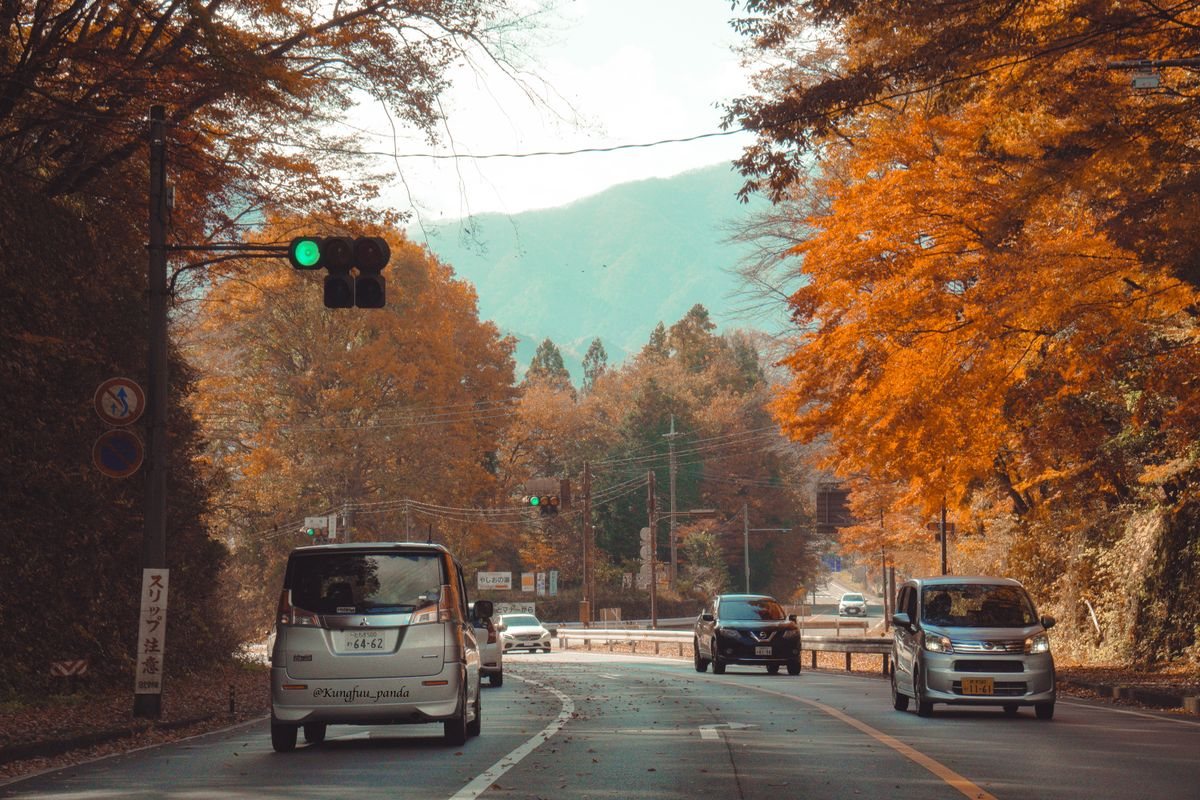
- The Iroha-zaka is two one-way roads with 48 bends: No. 2 climbs 9.5 km and No. 1 descends 6.5 km, and since 1 October 2019 the whole climb from Umagaeshi has been one-way, according to Tochigi Prefecture.
- Ashinoko Skyline in Hakone charges ¥1,000 for a car and ¥500 for a motorcycle, cash only, opens 7:00 to 19:00, has a 40 km/h limit and lists drift driving as prohibited on its own rules page.
- Gunma's latest published winter list (2025 to 2026) closed two side roads on Akagi: 9.1 km of the Ogo-Akagi line from 16 December to 6 April and 11.1 km of the Numata-Akagi line from 5 January to 19 March. No section on Haruna was listed.
- Buses reach the top of three of the four: Kan-etsu Kotsu from Maebashi Station to Akagi (¥1,800), Gunma Bus to Lake Haruna, and Tobu Bus from Nikko Station to Chuzenji Onsen (¥1,250). Checked on 13 October 2026.
Contents
Japan's famous touge passes at a glance
Mount Akagi and Mount Haruna (Gunma), the Iroha-zaka (Nikko, Tochigi) and the Hakone passes (Kanagawa) are public roads, and a tourist with a licence valid in Japan may drive them at the speed limit like any other traffic. The only paid one we could confirm is Ashinoko Skyline in Hakone, at ¥1,000 for a car, and its own rules list drift driving as prohibited. We checked every rule, fee and bus below on the official pages on 13 October 2026.
A touge (峠) is simply a mountain pass. These four are famous because drifting grew up on roads like them, and because the manga and anime Initial D is set there: its fictional Mount Akina is modelled on Haruna, and Akagi and the Iroha-zaka appear by name. None of that changes what the roads are today: working routes with buses, tourists and local traffic.
What is legal on these passes, and what is not?
Driving through is legal. Sliding the car is not. Two or more cars running together on a public road is joint dangerous conduct under article 68 of the Road Traffic Act, which carries up to 2 years’ imprisonment or a ¥500,000 fine and 25 demerit points. Since 21 July 2026, deliberately sliding the tyres can also be charged as dangerous driving if someone is hurt. A foreign visitor is not outside that system. Our guide to whether drifting is legal in Japan sets out the law in full.
Don't get caught out
Ashinoko Skyline's rules page names three prohibited acts: exceeding the 40 km/h limit, revving to make unnecessary noise, and drift driving or anything else that endangers other cars. Breaking them on a public road is also a matter for the police, not just the operator.
Where are the passes, and what are the rules on each?
| Pass | Prefecture | Bus from | Bus to the top? | Toll or fee | Seasonal or night limits | Checked |
|---|---|---|---|---|---|---|
| Mount Akagi | Gunma | Maebashi Station | Yes, Kan-etsu Kotsu, ¥1,800 | None listed | Two side roads closed in winter (2025 to 2026 list); night limits not officially stated | 13 Oct 2026 |
| Mount Haruna | Gunma | Takasaki Station or Ikaho Onsen | Yes, Gunma Bus to Lake Haruna | None listed | Not on Gunma’s winter closure list; night limits not officially stated | 13 Oct 2026 |
| Iroha-zaka | Tochigi | JR or Tobu Nikko Station | Yes, Tobu Bus to Chuzenji Onsen, ¥1,250 | None listed | One-way roads; no closure published; chain rules not officially stated | 13 Oct 2026 |
| Ashinoko Skyline (Hakone) | Kanagawa | Hakone-Yumoto (by car) | No, motor vehicles only | ¥1,000 car, ¥500 motorcycle, cash | Main line closed 19:00 to 7:00; under 125 cc banned; winter rules not officially stated | 13 Oct 2026 |
| Hakone Turnpike | Kanagawa | Not checked | Not checked | Not stated: operator page did not load | Not officially stated | 13 Oct 2026 |
Iroha-zaka. This is National Route 120 between Nikko town and Lake Chuzenji. The Japan Tourism Agency describes it as two one-way roads climbing 440 m from Umagaeshi to the lake: the Second Iroha-zaka goes up (9.5 km) and the First comes down (6.5 km), with 48 bends between them. Since 1 October 2019, Tochigi Prefecture has run the whole climb as one-way, from Umagaeshi to the junction just short of the Futarabashi crossing by the lake. Once you pass the Akechidaira ropeway car park, you cannot turn back.
Ashinoko Skyline. A 10.7 km toll road along the western rim of Hakone, open 7:00 to 19:00. Outside those hours the main line is closed and only the short Kojiri line is free. Cards, e-money and QR payments are not accepted.
Akagi and Haruna. No toll is listed for either mountain on any official page we read. Its winter list is the main official rule, covered below.
Can you reach the passes without a car?
Partly. Buses climb three of the four, but a bus only gets you to the top as a passenger.
- Akagi: Kan-etsu Kotsu runs from Maebashi Station via Fujimi Onsen to Snow Peak Land Station Akagi, its new terminus since 19 September 2026. The summer timetable runs to 30 November 2026, and the adult fare from Maebashi Station is ¥1,800. A direct Akagi bus also runs on weekends and holidays.
- Haruna: Gunma Bus lists Takasaki Station to Lake Haruna via Haruna Shrine, and Ikaho Onsen to Lake Haruna over Yaseone Pass. The timetable files it links carry 2016 dates, so treat the times as TBC.
- Iroha-zaka: Tobu Bus runs from JR and Tobu Nikko stations to Chuzenji Onsen at the top for ¥1,250, on a summer timetable to 30 November 2026.
- Ashinoko Skyline: the operator calls it a motor-vehicle-only road. Pedestrians and bicycles are banned, and its access page gives car routes only.
So driving any of these passes yourself means a rental car and a licence Japan accepts, which for most visitors is a 1949 Geneva Convention International Driving Permit. Our licence and IDP guide covers who needs what. And the moment you want to slide the car rather than tour it, a public road is out entirely. You need a circuit, and circuits are booked in Japanese, by phone or form, often days ahead.
The part we take on
If what you actually want is to drift a mountain-style course, legally, we handle the Japanese booking and getting you to the circuit for your dates. Send us your travel dates and we will line up a legal drift day at a circuit near your route.
When are the passes closed?
Gunma Prefecture’s latest published winter list covers 2025 to 2026, updated on 17 October 2025. On Akagi it closed two side approaches. The Ogo-Akagi line was shut for 9.1 km, from the Akagi Onsen entrance to Konuma, from 16 December 2025 to 6 April 2026. The Numata-Akagi line was shut for 11.1 km from 5 January to 19 March 2026. The bus road up from Maebashi via Fujimi Onsen is not on the list, and nothing on Haruna is. Gunma asks drivers at altitude to fit winter tyres and carry chains from October, and it may close roads early if they are unsafe. The 2026 to 2027 list had not been published when we checked.
In Tochigi, the Nikko road office reports that the Iroha-zaka, with slopes of over 11 percent, sees frequent winter accidents on snow and ice. In winter it is the only road between Lake Chuzenji and Nikko town, because the Konsei Road over to Gunma closes. Gunma’s list shut that road from 25 December 2025 to 24 April 2026. No official night closure is published for Akagi, Haruna or the Iroha-zaka.
Where can you slide a car on a mountain-style course?
On private land. Japan has courses built to feel like a pass, with run-off instead of a drop. Ebisu Circuit’s Touge course in Fukushima and Gunma Cycle Sports Center’s 6 km hill road are the two best known. Our guide to legal touge drift courses in Japan compares what each sells and when. To match a drift day to your trip, start with the drift event and track calendar.
If you want the history of how the scene moved off these roads, read where drifting was born, or our short answer on whether street touge is still a thing.
Frequently asked questions
Can a tourist legally drive the Akagi, Haruna, Iroha-zaka and Hakone touge roads?
Yes, as ordinary traffic. Mount Akagi and Mount Haruna in Gunma, the Iroha-zaka in Nikko (Tochigi) and the Hakone passes in Kanagawa are public roads, so a visitor with a driving licence valid in Japan (for most visitors a 1949 Geneva Convention International Driving Permit) may drive them at the posted speed limit. What is not legal is drifting or racing on them: two or more cars running together is joint dangerous conduct under article 68 of the Road Traffic Act, punishable by up to 2 years' imprisonment or a ¥500,000 fine plus 25 demerit points. Ashinoko Skyline in Hakone also lists drift driving as prohibited in its own rules. Checked on the official pages on 13 October 2026.
How much does it cost to drive the Hakone passes?
As of 13 October 2026, Ashinoko Skyline (10.7 km along the western rim of Hakone) charges ¥1,000 for a car or kei car and ¥500 for a motorcycle on the main line, or ¥200 for the short Kojiri line only. It is cash only, open 7:00 to 19:00, closed to all traffic on the main line outside those hours, limited to 40 km/h, and closed to mopeds of 125 cc and under, bicycles and pedestrians. We could not load the Hakone Turnpike operator's own fee page on 13 October 2026, so its toll is not stated here. The Akagi, Haruna and Iroha-zaka roads have no toll listed on any official page we read.
Can I get to the top of Mount Akagi or Mount Haruna without a car?
Yes, by route bus. As of 13 October 2026, Kan-etsu Kotsu runs its Maebashi Akagi-san line from Maebashi Station via Fujimi Onsen to a new terminus, Snow Peak Land Station Akagi, from 19 September 2026, on a summer timetable that runs to 30 November 2026; the adult fare from Maebashi Station to the terminus is ¥1,800. For Mount Haruna, Gunma Bus lists a route from Takasaki Station via Haruna Shrine to Lake Haruna and one from Ikaho Onsen bus terminal over Yaseone Pass to the lake, but the timetable files it links are dated 2016, so check times locally. A bus gets you to the lake, not behind the wheel: driving the pass still needs a rental car and a licence valid in Japan.
Are the touge roads around Akagi, Haruna and Nikko closed in winter?
Partly. Gunma Prefecture's latest published winter closure list, for 2025 to 2026, closed 9.1 km of the Ogo-Akagi line (from the Akagi Onsen entrance to Konuma) from 16 December 2025 to 6 April 2026 and 11.1 km of the Numata-Akagi line from 5 January to 19 March 2026; no section on Mount Haruna was on the list, and Gunma asks drivers at altitude to fit winter tyres and carry chains from October. The Iroha-zaka in Nikko has no published winter closure, but Tochigi's Nikko road office reports frequent winter accidents on its slopes of over 11 percent. The 2026 to 2027 lists had not been published when we checked on 13 October 2026.
 Can You Drift at Gunsai? Every Car Day You Can Enter (2026)
  Drifting in Kanto (2026): Every Track You Can Reach From Tokyo
  Touge Without the Police: Japan's Legal Mountain Courses (2026)
  Can You Drift at Mobility Resort Motegi? Rules and Fees (2026)