
JDM Drift Parts Arrived Damaged or Lost: Who Files the Claim? (2026)
The Rundown
- Japan Post's own FAQ states that for registered, insured, parcel and EMS items delivered on or after 1 January 2014, the right to claim indemnity belongs to the sender (差出人), not the recipient. Before 31 December 2013 it was the recipient.
- EMS carries ¥20,000 of cover when no value was declared at posting. Declaring a value raises the ceiling to a maximum of ¥2,000,000, priced at ¥50 for each ¥20,000 band.
- An uninsured international parcel is capped by weight alone: ¥11,160 up to 5 kg, rising in bands to ¥31,230 for 25–30 kg. Registered mail pays ¥6,000.
- The investigation request that has to come before any payout is submitted on paper at the post office the item was posted from, within 6 months of the day after posting for parcels and registered mail. Japan Post states telephone requests are not accepted.
- DHL requires all claims in writing within 30 days of the date it accepted the shipment, and caps liability by air at 26 SDR per kilogram, roughly US$35 per kilogram, unless a value was declared and insured.
Contents
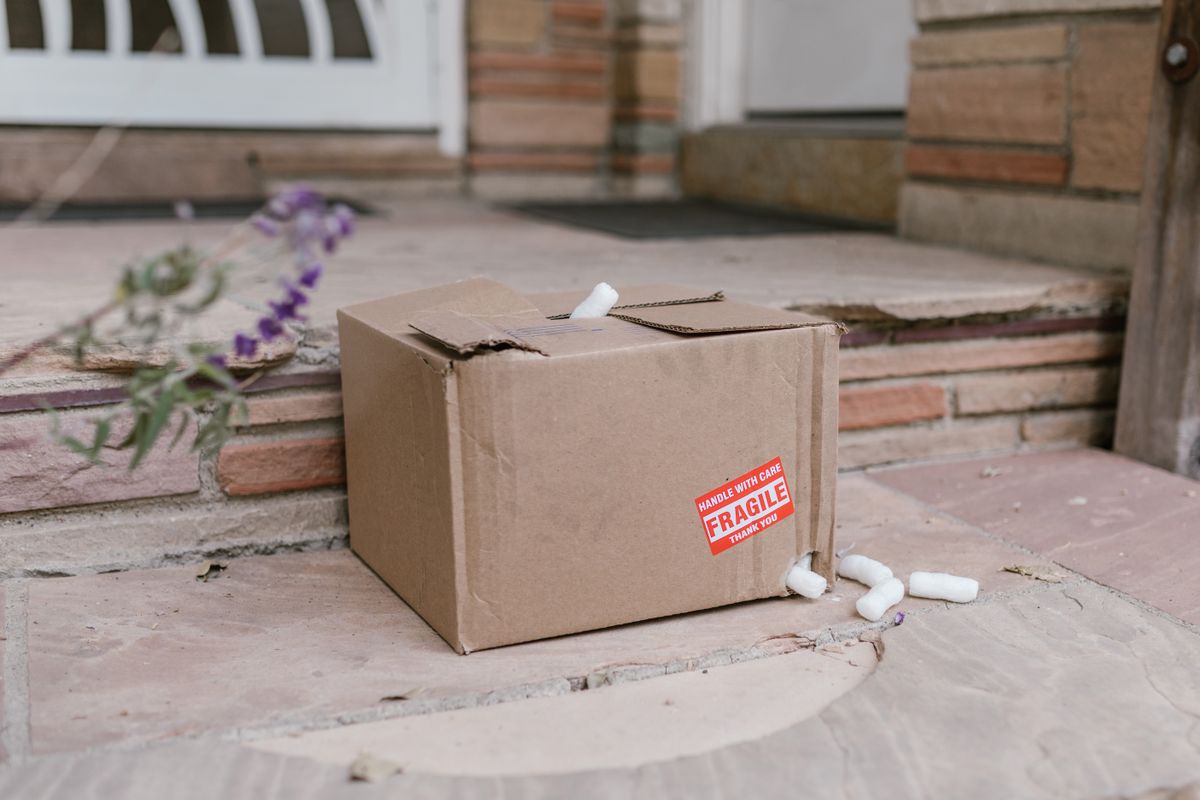
If a part you bought in Japan turns up smashed, or turns up as the wrong part, or never turns up at all, the person entitled to claim the money back is the sender in Japan, not you. Japan Post’s FAQ on damaged deliveries states that for registered, insured, parcel and EMS items the claimant changed with a Universal Postal Union convention revision: recipient for anything delivered up to 31 December 2013, sender from 1 January 2014 onwards. Your part in it is narrower and has a clock on it, which is to keep the parcel exactly as it was delivered, keep the outer box as well as the contents, and report the damage to your own local post office. Every figure and rule below was checked on the official pages on 15 September 2026.
It is the unglamorous half of importing. Everyone will tell you which proxy to use and what a bumper costs to post, and almost nobody tells you that the recourse system was built around a Japanese sender standing at a Japanese counter with a paper form.
Who is allowed to file the claim, and where does it get filed?
Japan Post’s answer is one sentence long: 「郵便物の損害賠償の請求は、郵便物の差出人が行うことができます」, indemnity for a postal item is claimed by the sender. Before any payout there has to be an investigation request, the 調査請求 (chousa seikyuu), and the download page for the form says where it goes. Items sent abroad are investigated on request from the post office they were posted at, with the form, photo ID, and the EMS or parcel receipt plus the sender’s copy. Telephone requests cannot be accepted.
There is an online version now, and it is worth reading for who it excludes. Japan Post’s 調査請求Web受付 is in trial, accepts only items posted in Kanagawa and Yamanashi prefectures, and requires 「本邦に所在する差出人ご本人さまからの請求」, a request from the sender in person, located in Japan. Requests from an agent and requests from abroad are stated to be outside the service.
| Route | Who holds the right to claim | Where it is filed | Deadline |
|---|---|---|---|
| Japan Post: registered, insured, parcel, air packet | The sender | On paper at the posting post office; no telephone requests | 6 months from the day after posting (1 year for parcels to South Africa) |
| Japan Post: EMS | The sender | Same counter, same form | Varies by destination; no single figure published, see the country conditions table |
| DHL Express | The Shipper | In writing to DHL, one claim per shipment | 30 days from the date DHL accepted the shipment, “failing which DHL shall have no liability whatsoever” |
| Yamato International TA-Q-BIN | Not stated on the FAQ page we could read | TBC | TBC |
| FedEx | TBC | TBC | FedEx’s Japan terms page returned a permission error on 15 September 2026 |
| Buyee (proxy) | The account holder, so you | [email protected] with photographs | 14 days from the package’s arrival date, paid plans only |
Don't get caught out
The recipient still has a job, and it is the one most people fail. Japan Post's FAQ on receiving a broken item asks you to report it immediately to the post office that delivered it, and states that for the indemnity procedure the condition of the outer packaging (封披・箱等) is needed as well as the contents, so keep the box. A parcel that has already been unpacked, flattened and put out with the recycling has no evidence attached to it.
How much does the post office actually pay?
Actual loss, up to a ceiling, and the ceiling is usually set by a box nobody ticked. Japan Post pays 実損額 (jisson-gaku, the real loss) but never more than the figure below.
| What it was posted as | Ceiling with nothing declared | Ceiling with a value declared at the counter |
|---|---|---|
| EMS | ¥20,000 | Up to ¥2,000,000, at ¥50 per ¥20,000 band |
| International parcel (国際小包), uninsured | ¥11,160 to 5 kg; ¥15,170 to 10 kg; ¥19,190 to 15 kg; ¥23,200 to 20 kg; ¥27,220 to 25 kg; ¥31,230 to 30 kg | The declared 損害要償額 on an insured parcel |
| Registered mail (書留) | ¥6,000 | Not applicable |
Read the EMS row again with a parts invoice in your hand. A set of coilovers at ¥140,000 posted with no declared value is insured for ¥20,000, and raising that ceiling to ¥140,000 would have cost ¥300 at the counter. The whole decision happens in Japan, at posting, in a language you are not standing in.
Couriers are not more generous, only differently shaped. DHL’s terms limit liability by air to the lower of current market or declared value and 26 Special Drawing Rights per kilogram, roughly US$35 per kilogram, and to 8.33 SDR per kilogram, roughly US$11, for cross-border road legs. Yamato’s FAQ puts International TA-Q-BIN at ¥200,000 per piece, falling back to 26 SDR per kilogram where no item value was written on the waybill. Weight-based cover is brutal on drift parts, because the things worth the most tend to weigh the least. Our comparison of EMS, courier and sea routes covers which carriers your box can legally use in the first place.
Can I return a used part to a Japanese seller?
As a rule, no, and the proxies say so in their own words rather than hiding it. Buyee’s Cart return policy states that because it purchases on the customer’s behalf after the order request, orders cannot as a general rule be cancelled once requested, that “returns, exchanges, or cancellations due to reasons related to the purchaser’s discretion are not accepted”, and that “Buyee does not provide warranties for items sold in shops”. Its plan pages add that it does not exchange products, will not replace a damaged item or prepare the same item again after a total loss, and as a general rule will not instruct you to return the product.
What exists instead is a refund, and only if you bought a paid plan before the item shipped:
| Buyee plan | Fee per order | What a refund covers |
|---|---|---|
| Lite | ¥0 / US$0 | Nothing. “Packages which are not insured through our Buyee service cannot be compensated” |
| Inspection | ¥300 / US$3 | Wrong item, colour, size or quantity; obvious tears or stains found at inspection |
| Insured Delivery | ¥500 / US$5 | Damage or loss caused by an accident during delivery |
| Standard | ¥500 / US$5, listed as reduced from ¥800 / US$8 | Both of the above |
The exclusions matter more than the inclusions for our kind of shopping. Buyee states it does not check whether machines work, so a malfunctioning electronic part is covered by no plan; it does not verify authenticity of branded goods; and defects already visible in the listing photos are excluded. A second-hand ECU, a boost controller or a used gauge cluster is bought as-is on every plan. Our guide to the proxies and exporters goes through who suits which part.
The day a damaged box lands, in order
- Do not unpack past the damage. Japan Post wants it kept 現状のまま, as it arrived.
- Photograph the outer box, then the packing, then the part. Buyee asks for 2–3 photos of the packing and outer box, and 2–3 of the defect.
- Report it to your local post office the same day, and keep the reference.
- Tell whoever posted it, immediately. Only they can open the claim, and DHL's window is 30 days from acceptance.
- Keep the box until the claim closes. A reply from the destination country can take over a month.
Why does marketplace buyer protection stop before the part reaches you?
Because it is measured against a delivery inside Japan. Yahoo!かんたん決済 holds the winning bid with Yahoo! JAPAN until the buyer confirms receipt, and Yahoo’s page states the refund application can be made only between 8 and 12 days after the payment completes, with money going to the seller 14 days after payment unless extended to noon on day 29. The 商品満足サポート goodwill scheme pays the winning amount in PayPay points, once a year, capped at ¥10,000, subject to screening.
Every one of those clocks starts when the seller posts to a Japanese address. Mercari’s official 海外取引サポート page makes the structure explicit, describing overseas residents as customers who cannot use Mercari and stating the seller’s delivery address is a designated address inside Japan, with export and customs handled by the cross-border operator. Your part is usually still sitting in a proxy’s warehouse in Japan when the 12-day refund window shuts. The money side before all this is in our guide to paying a Japanese seller from overseas, and if you are coming over for a round of the 2026 season there are parts you can simply collect.
So the trap is not a rule about foreigners. It is geographic. The claim has to be opened by the sender, at the Japanese post office the box left from, on a paper form, in Japanese, inside a deadline, while somebody keeps the original packing at a Japanese address for the weeks it takes an answer to come back from your country.
That whole chain is what we hold
When we buy for you, we are the sender on the label, so we are the party who can declare a value at the counter, file the 調査請求 at the office we posted from, and keep the packing until it is settled. Before any of that we check the part in Japan and send you photographs and a video walkthrough of what actually arrived, so a wrong or tired part gets caught here rather than after an ocean crossing. Have the Parts Desk buy the part, check it in Japan and post it with us as the sender, on our costs plus a handling fee, agreed as one total before anything is bought.
Frequently asked questions
What happens if my JDM part arrives from Japan broken?
Two things run in parallel, and only one of them is yours. As the recipient you must keep the parcel exactly as delivered, keep the outer box and packing as well as the contents, and report the shortage or damage to your own local post office. Japan Post's FAQ on receiving a damaged item states the outer packaging is needed for the indemnity procedure, not only the contents. The claim itself is then filed in Japan by the sender: for EMS the ceiling is ¥20,000 if no value was declared at posting and up to ¥2,000,000 if one was, paid as actual loss up to that cap. As of 15 September 2026 there is no route for an overseas recipient to open the claim directly with Japan Post.
Who files the claim if a package from Japan is lost or damaged?
The sender. Japan Post states that indemnity for a postal item is claimed by the 差出人 (sashidashinin, the sender), and its FAQ on damaged deliveries records that this changed with a Universal Postal Union convention revision: for registered, insured, parcel and EMS items delivered up to 31 December 2013 the claimant was the recipient, and from 1 January 2014 onwards it is the sender. An investigation request (調査請求) has to be submitted first, on paper at the post office the item was posted from, within 6 months of the day after posting for parcels and registered mail. Japan Post states telephone requests are not accepted. Couriers work the same way: DHL's terms of carriage put claims with the Shipper, in writing, within 30 days of the date DHL accepted the shipment. All checked 15 September 2026.
Can I return a used part to a Japanese seller?
As a rule, no. Buyee's Cart return policy, checked on 15 September 2026, states that because it purchases on the customer's behalf after the order request, orders cannot as a general rule be cancelled once requested, that returns and exchanges at the purchaser's request are not possible, and that it does not provide warranties for items sold in shops. Its plan pages add that it does not exchange products and will not replace a damaged item or supply the same item again after a total loss. What exists instead is a refund under a paid plan: Inspection at ¥300 / US$3 per order for wrong colour, size or quantity, Insured Delivery at ¥500 / US$5 for damage or loss in transit, and the Standard Plan combining both at ¥500 / US$5. Applications close 14 days after the package arrives.
Does Yahoo! Auctions or Mercari buyer protection cover me overseas?
Not on the leg that goes to your country. Yahoo!かんたん決済 holds the winning bid until the buyer confirms receipt, and Yahoo's own page states a refund application can only be made between 8 and 12 days after the payment completes, with money released to the seller 14 days after payment unless extended to noon on day 29. The 商品満足サポート goodwill scheme pays the winning bid in PayPay points once a year, up to ¥10,000, subject to screening. All of that attaches to the Yahoo! JAPAN ID that placed the bid, which for an overseas buyer is the proxy's, and all of it is measured against a delivery to a Japanese address. Mercari's official 海外取引サポート page, checked 15 September 2026, describes overseas residents as customers who cannot use Mercari and states the seller ships to a Japanese address specified by the cross-border operator.
How much does a courier actually pay for a destroyed part?
Less than the part is worth, unless somebody declared a value and paid for insurance. DHL's terms and conditions of carriage, checked on 15 September 2026, limit liability by air to the lower of current market or declared value and 26 Special Drawing Rights per kilogram, about US$35 per kilogram, and for cross-border road transport to 8.33 SDR per kilogram, about US$11 per kilogram. Yamato's FAQ puts International TA-Q-BIN cover at ¥200,000 per piece, or 26 SDR per kilogram where the item value is not written on the waybill. A 9 kg bumper at 26 SDR per kilogram is roughly US$315 whatever you paid for it.
 Shipping Drift Parts from Japan: EMS vs Courier vs Sea (2026)
  What ジャンク Means on Yahoo! Auctions: Drift Parts Listing Terms (2026)
  Parts Japan Can't Post: Airbags, Fuel Tanks & Gas Shocks (2026)
  Buying a JDM Front Clip (Half-Cut) From Japan (2026)