
Pickup-Only JDM Drift Parts in Japan: The Unbuyable Tier (2026)
The Rundown
- The cheapest drift hardware in Japan is listed 引き取り限定 (hikitori gentei — collection only): full aero kits, cages, a spare shell's worth of panels, complete wheel-and-tyre sets, spare engines. It is cheap because the seller has priced in never touching a courier.
- Proxies cannot reach it, and not because of a ban. Buyee's own fee page defines the domestic leg as the cost of items being shipped 'from the seller/store to the Buyee warehouse in Japan' (¥150–1,500), and says it requires trackable methods. A seller who will not ship has nothing to hand a proxy.
- The platform rules differ and they matter. Yahoo! Auctions lets a seller set 手渡し (tewatashi — hand-to-hand) as a delivery method but tells you to pay through Yahoo!かんたん決済. Mercari bans 現金手渡しでの決済 outright. Jmty is the opposite: cash at the meet is the default and bank transfer is prohibited.
- Collection has published prices. Yamato's 家財おまかせ便 moves a C-rank item Tokyo→Kanagawa for ¥7,740 and an E-rank one Tokyo→Fukuoka for ¥29,040, but stops at 150 kg and ¥500,000 of declared value. A HiAce van is ¥14,850 for 24 hours.
- The item price is the smallest line in the total. Landed cost is item + domestic collection + export repack + freight — insist on all four as one number before you commit.
Contents
You have seen the listing. A complete front end — bumper, skirts, both over-fenders — photographed on a garage floor in Ibaraki at a price that reads like a typo. Four 18s on usable tyres for less than the tyres cost new (new is ¥12,650 to ¥17,450 per D1-registered rear, per our drift tyre directory). A cage out of a retired dorisha (ドリ車 — drift car) going for what a set of pads costs. Then you scroll to the shipping line and it says 引き取り限定 — hikitori gentei, collection only. Or 直接引取, direct pickup. And your proxy account has nowhere to put it.
This is the cheapest tier of the entire Japanese drift parts market, and it is invisible from overseas — not because anyone banned it, but because every tool built for foreign buyers begins with a delivery address. Every rule and figure below was read off the official pages on 31 July 2026.
Why this tier is cheap
Collection-only is not a category of item. It is a category of seller decision. Somebody is clearing a garage, breaking a shell, closing a shop, or moving house, and they have decided in advance that they are not going to weigh anything, box anything, or wait for a driver. The discount you are looking at is the price of that decision.
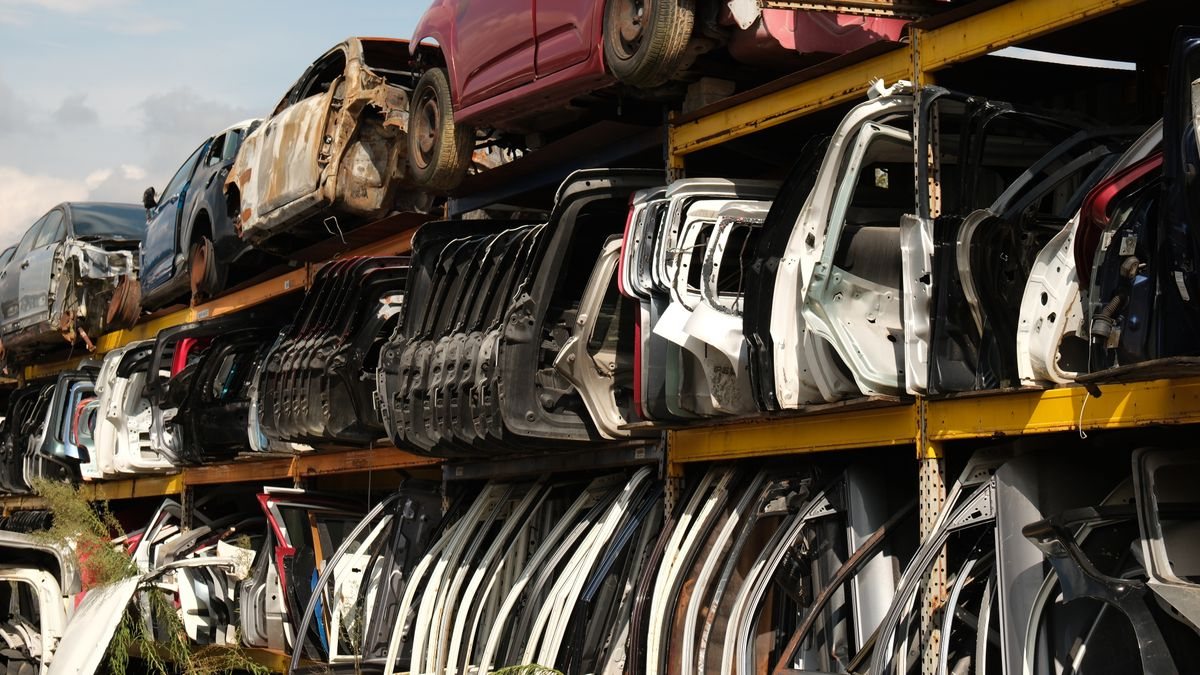
Which is why the tier is full of exactly the things drifters want and couriers hate: full aero kits, a spare shell’s worth of panels, roll cages, complete wheel-and-tyre sets, seats in threes and fours, spare engines and gearboxes, and the occasional whole-garage haul sold as one lot. Nothing here is small. Nothing here is packed.
Yahoo! Auctions is unusually honest about that last part. Its help page on setting delivery methods tells sellers that if there are conditions attached to a handover they should spell them out in the description, and the first example it gives is 「梱包の有無」 — whether the item is packed at all. That is the platform itself telling you that a collection-only item may be handed over as a bare part, in the state it came off the car.
Three platforms, three completely different rules
The mistake is treating “pickup” as one thing. The money moves differently on each site, and getting it wrong is the fastest way to have an account closed while your part sits in someone’s carport.
| Yahoo! JAPAN Auctions | Mercari | Jmty (ジモティー) | |
|---|---|---|---|
| Handover in person | Seller can set 手渡し (tewatashi — hand-to-hand) as a delivery method via the free-input field | Allowed by agreement; forcing it without the buyer’s consent is a listed prohibited act | The default. “Meet locally, hand over the item, pay in cash” |
| How the money moves | 「商品代金の支払いはYahoo!かんたん決済で行ってください」 — pay through Yahoo’s own escrow (かんたん決済), then collect | Through Mercari only. 現金手渡しでの決済 (cash at handover) is a listed prohibited payment method | Cash at the meet, or Jmty’s own online payment |
| Bank transfer / outside payment | Not the documented route | Prohibited (銀行口座への直接振り込み, 代金引換 both listed) | Prohibited outright “to prevent fraud” |
| Platform fee on a handover | Standard auction fees | Standard | None on a cash handover; 5% on Jmty’s online payment |
| Still tracked after handover | Yes — 「手渡しの場合も取引ナビ上で発送連絡や受け取り連絡を行ってください」 | Yes, inside the Mercari transaction | Buyer marks the handover complete |
Two things fall out of that table. First, 現地払い (genchi barai, paying on the spot) is the folk-wisdom answer and it is wrong on two of the three platforms. Second, none of this can be done by an account holder sitting overseas, because all three flows end with a human, a vehicle and a loading job.
What actually goes wrong
The item is not packed and was never going to be — Yahoo's own help lists 「梱包の有無」 as a condition the seller should declare, which means silence is not a promise. Paying cash at the meet is a listed prohibited payment method on Mercari and takes you outside the platform's protection entirely. And a seller with a booked collection slot and no answer from you will simply cancel and relist to the next local buyer, because that was always the easier sale.
Why no proxy service reaches this tier
It is worth being precise here, because the internet is full of people assuming a ban exists.
There is no ban. Buyee’s published prohibited-items list does not name collection-only listings at all. What stops the purchase is structural, and it is written into the fee page: Buyee’s domestic shipping fee is defined as the cost incurred “when items are shipped from the seller/store to the Buyee warehouse in Japan”, generally ¥150–1,500, and the same page states that in principle it requires sellers and stores to use trackable shipping methods so packages do not go missing. A seller whose entire position is I am not shipping this has nothing to hand that system. The ¥500 flat purchase fee never gets a chance to apply.
Buyee is explicit about the general principle elsewhere: for items it has determined it cannot handle, you cannot buy them through the service even if you only want them sent to a Japanese address. So the workaround of “have it delivered inside Japan and deal with it later” closes too.
Forwarders have the same shape of problem one step further down the chain — a forwarding address is still an address, and the seller still has to post something to it. Our proxy and exporter comparison covers what those services do well and what they charge; this is simply the region of the map they were never built for.
The blocked step, named plainly
Strip everything else away and one link in the chain has no remote substitute: somebody has to turn up at that address in Japan, on the seller’s day, with a vehicle big enough, pay through the platform, load the part by hand, and then re-pack it into something that can survive an export leg.
Not one of those five actions can be performed from Sydney or Seattle. It is not a customs problem, a legal problem or a language problem. It is a nobody-on-site problem.
That is the step we take on
We buy the listing domestically on a Japanese address so the seller is dealing with a Japanese buyer on Japanese payment rails, then collect it in person on their date — van, trolley, straps, two people if the item needs two people. Before it moves we photograph and video it where it stands: mounting faces and tabs, the back of every panel, crack repairs and previous bodywork, wheel faces and barrels, date codes and stamped part numbers, so you decide on evidence rather than on a garage-floor photo taken at dusk. Then we re-pack it properly for export — crated if it is FRP, palletised if it is heavy — and quote purchase price, domestic collection, packing and freight as one total up front, actual cost plus our handling fee, agreed before anything is bought. Send us the listing URL and your destination port or city.
Two tiers, honestly priced
Tier one — everything you can do alone. Buy only listings that ship. Accept the ceiling: you never see the collection-only inventory, and you pay retail-ish for parts that do fit a courier. The cost stack is small and knowable — item, Buyee’s ¥500 flat purchase fee, ¥150–1,500 domestic, then international freight. For coilovers, knuckles, gauges and a steering wheel this is genuinely the right answer and you should use it.
Tier two — the collection-only tier. The item is cheaper. The total is not automatically higher, but it has four lines instead of two, and the published anchors look like this:
| Cost line | Real published figures | Notes |
|---|---|---|
| The item | Typically well below equivalent shipped listings | The discount is the seller’s refusal to post, nothing more |
| Domestic collection — booked crew | Yamato’s 家財おまかせ便 (kazai omakase-bin — the bulky-goods collection service): ¥7,740 Tokyo→Kanagawa, ¥9,400 →Osaka, ¥13,030 →Fukuoka (C-rank, 55×55×95 cm); ¥17,070 / ¥20,930 / ¥29,040 for an E-rank 97×211×25 cm item | Two staff attend and pack on site. Caps: 3-side total 450 cm, longest side 250 cm, 150 kg, ¥500,000 declared value. +¥11,000–44,000 over 100 kg. No Okinawa or remote islands |
| Domestic collection — flat-rate lane | たのメル便 (tanomeru-bin — Mercari’s bulky-item lane): ¥1,700 at 80 size, ¥12,000 at 300, ¥33,000 at 450 — same price nationwide | Mercari listings only; up to 450 cm and 150 kg |
| Domestic collection — do it yourself | Toyota Rent a Car: HiAce van ¥14,850 / 24 h (¥9,900 for 6 h), TownAce ¥11,660 / 24 h, 2 t truck ¥16,060 / 24 h | Plus fuel, tolls, a licence valid in Japan and a person to drive it |
| Export repack | Crate or pallet, sized to the part | See the oversized parts guide for why FRP without a crate arrives cracked |
| Export freight | Quoted per shipment | Any flat number online is TBC until it is a quote for your box to your port |
Where a line genuinely depends on the job — collection distance, crate size, freight lane — the correct answer is not a percentage or a guess. It is actual cost plus a handling fee, quoted as one total before you commit, so the number you agree to is the number you pay.
Get this from the seller before you bid
- Dimensions of the largest single piece, and the total number of pieces in the lot
- Weight, or at least "can two people lift it" — the 150 kg and 450 cm ceilings decide the whole route
- Whether it is packed, part-packed or bare (Yahoo's help expects the seller to state this)
- Photos of the mounting faces, tabs and the reverse side, not just the pretty side
- For anything with fluid in it: has it been drained? See the drivetrain guide for why that answer changes everything
- The collection window — dates, hours, and whether a booked crew is acceptable instead of the buyer in person
- Ground floor or upstairs, and whether a van can get to the door
What the completed transaction looks like
The short version
Collection-only listings are the cheapest drift hardware in Japan and the one tier the workaround industry cannot serve, because every proxy and forwarder flow begins with a seller posting a parcel and these sellers have decided not to. The rules are all published: Yahoo lets you arrange a handover but wants the money on its own rails, Mercari bans cash at the meet, Jmty runs on cash and bans transfers. The collection step has real prices — ¥7,740 to ¥29,040 through a booked crew, ¥14,850 for a van and a day of your own time — and hard ceilings at 450 cm, 150 kg and ¥500,000.
None of that is the hard part. The hard part is that all of it happens in a carport in Ibaraki on a Sunday morning, and you are not there.
Frequently asked questions
Why can't Buyee or a forwarder buy a pickup-only listing for me?
Because the whole model starts with the seller posting the item. Buyee's published fee page describes the domestic shipping fee as the cost incurred 'when items are shipped from the seller/store to the Buyee warehouse in Japan', generally ¥150–1,500, and states that in principle it requires sellers to use trackable shipping methods. A collection-only seller does not ship at all, so there is nothing to track and nothing to receive. Buyee's prohibited-items list never names these listings — it does not need to, because they never get as far as the list. Buyee does separately state that for items it has determined it cannot handle, you cannot buy them through the service even for domestic delivery.
Is meeting the seller and taking the part in person actually allowed?
It depends on the platform, and the money is the part people get wrong. Yahoo! Auctions' own help tells sellers they can add 手渡し as a delivery method by typing it into the free-input field, and in the same breath says 「商品代金の支払いはYahoo!かんたん決済で行ってください」 — pay through the platform, then collect. Mercari prohibits forcing a direct handover without the buyer's consent, and lists 現金手渡しでの決済 (cash paid at handover) among the payment methods it bans. Jmty is built the other way round: it says you can meet locally, hand over the item and pay in cash, and it prohibits bank transfer and outside payment methods to prevent fraud — a cash handover there carries no platform fee, while its own online payment takes 5%. All three platforms' rules were read off their official help pages on 31 July 2026.
How much does it cost to collect a large part inside Japan?
It depends on size, weight and route, but there are published anchors. Yamato's 家財おまかせ便 sends two staff to the address, packs the item there and moves it: ¥7,740 Tokyo→Kanagawa for a C-rank item, ¥29,040 Tokyo→Fukuoka for an E-rank one, with a hard stop at 150 kg actual weight and ¥500,000 of declared value per item, and extra handling of ¥11,000–44,000 once you pass 100 kg. Mercari's たのメル便 is a flat national scale on the same kind of freight, ¥1,700 at 80 size up to ¥33,000 at 450 size. Renting a HiAce van from Toyota Rent a Car is ¥14,850 for 24 hours. Past those ceilings it becomes chartered freight, quoted per job — treat it as TBC until someone has quoted your actual item.
 Buying a GT Wing From Japan: Prices and How a 1.7 m Wing Ships (2026)
  What ジャンク Means on Yahoo! Auctions: Drift Parts Listing Terms (2026)
  Shipping Aero, Seats & Wheels from Japan: The Oversized Problem (2026)
  How Do You Pay a Japanese Parts Seller From Overseas? (2026)