
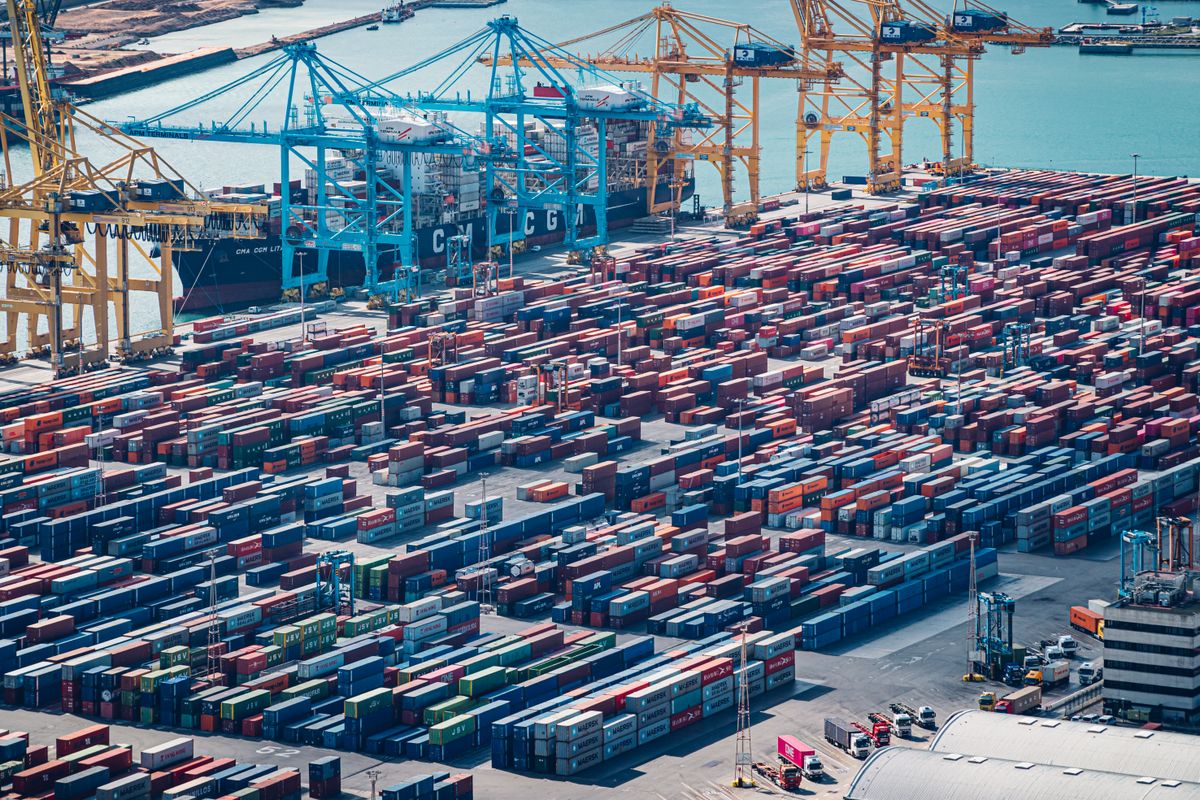
Shipping Aero, Seats & Wheels from Japan: The Oversized Problem (2026)
The Rundown
- Couriers bill the higher of actual and volumetric weight: length × width × height in cm ÷ 5,000 (DHL Express's standard divisor). A 12 kg bucket seat can bill as 60+ kg.
- Buyee's courier lineup caps at 70 kg per package, with UPS limiting length to 2.74 m and length-plus-girth to 4.0 m — a bumper in a box breaks these limits before it breaks a sweat.
- Proxies pack and consolidate for free but won't repack to a target size or disassemble parts — ZenMarket charges ¥1,000–4,000 to cancel and rebuild a parcel, and offers ¥1,000/box reinforcement.
- UP GARAGE ships big used parts exactly as pictured — no disassembly — and can't take the order at all if no online shipping price exists for your country.
- FRP aero doesn't survive as loose freight. It survives in a rigid crate — or it arrives with cracked mounting tabs and spider-cracked gelcoat.
Contents
Our proxy and exporter guide ends where the real pain begins: the moment your part stops fitting in a normal box. Coilovers and knuckles ship from Japan without drama, and a gearbox or diff fails on weight and residual oil instead. A Vertex side-skirt set, a pair of buckets, a square set of 18s — that’s a different sport, with its own physics, its own fee traps, and its own graveyard of cracked bumpers. Here’s how the oversized game actually works. Every ceiling and fee below is a published company figure rather than an estimate: DHL’s divisor, Buyee’s per-package cap, ZenMarket’s fee page and UP GARAGE’s FAQ, each linked at the foot of this page and confirmed against them on 21 July 2026.
Oversized freight — the limits that bite
The tax on air: volumetric weight
International couriers don’t bill what your parcel weighs. They bill whichever is higher: actual weight, or volumetric weight — length × width × height in centimetres, divided by a divisor. DHL Express typically uses 5,000, and the other majors play the same game with similar numbers.
None of this is a JDM quirk — it’s the first rule anyone shipping out of Japan is taught. A Japanese export-shipping support account states it about as plainly as it can be stated:
"With international shipping, it isn't only actual weight that counts — volumetric weight is calculated too. With couriers, whichever is heavier, actual weight or volumetric weight, becomes the chargeable weight. (Depending on the service, actual weight alone may apply.)"
国際発送では 「実重量」 だけでなく 「容積重量」 も計算対象! クーリエでは 「実重量」と「容積重量」 の 重い方 が請求重量になります💡 (※サービスによっては実重量が適用される場合もあります)
View the original post ↗Drift parts are close to the worst cargo in the world under this formula, because our stuff is light and huge. Run the math on some illustrative boxes and you can see the problem instantly:
| Part | Example packed box (cm) | Volumetric @ ÷5,000 | Reality check |
|---|---|---|---|
| Coilover set | 60 × 40 × 35 | 16.8 kg | Actual weight is higher — billed as-is. Fine. |
| Bucket seat | 75 × 65 × 65 | 63.4 kg | A ~12 kg seat bills like five seats |
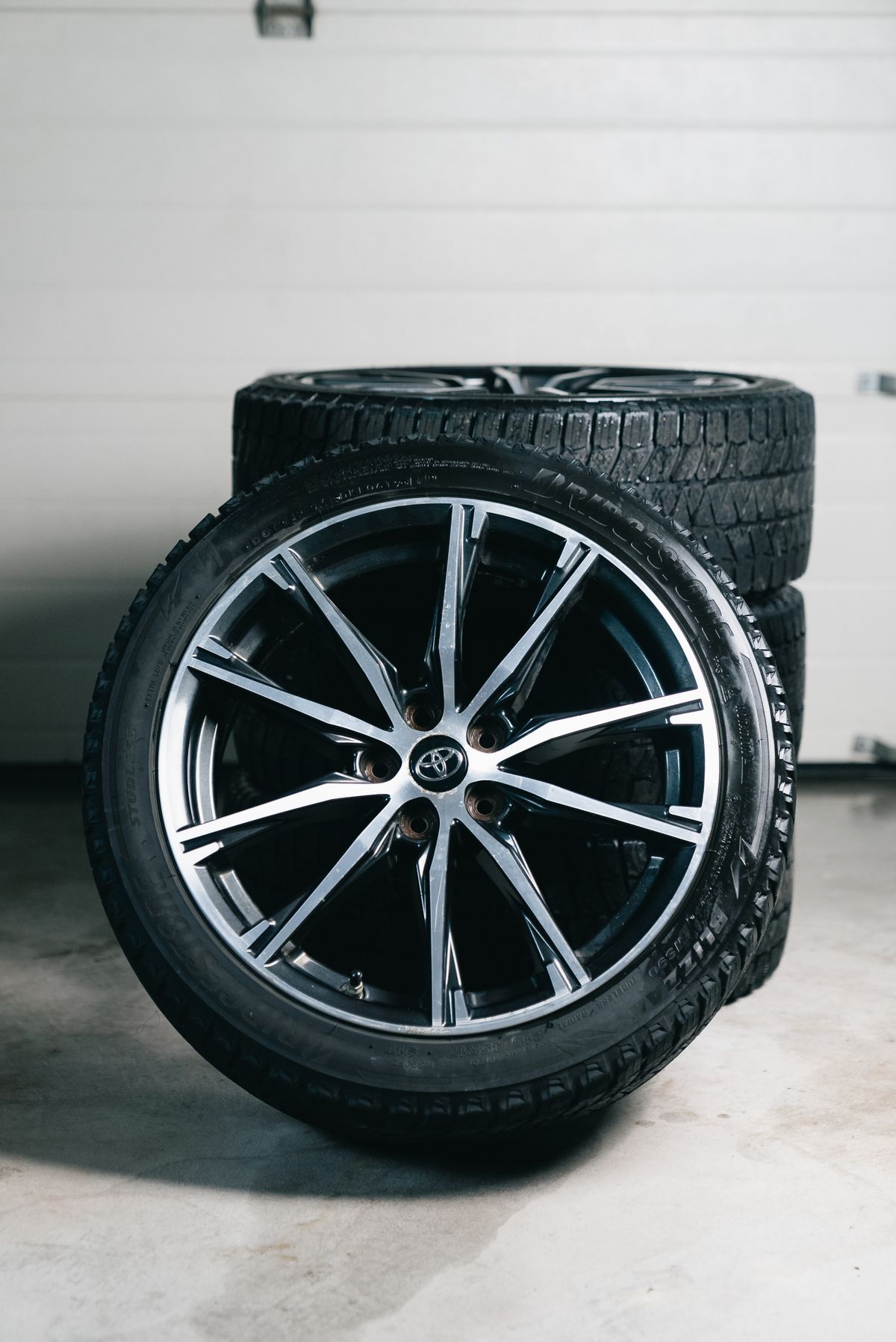
| Pair of 18” wheels + tyres | 68 × 68 × 52 | 48.1 kg | Vol and actual land close — tolerable |
| Rear bumper, boxed | 170 × 70 × 60 | 142.8 kg | Over every courier cap. Different lane needed |
(Box sizes are illustrative — measure your actual item. The formula is the point.)
This is why a ¥15,000 seat can carry a shipping quote several times its price, and why “shipping shock” kills more oversized purchases than customs ever does. The part was never the cost. The air around it was.
Where the standard tools stop
The proxy system is genuinely good — and it has hard, published edges.
Buyee hands parcels to the big couriers, and the couriers set the ceiling: 70 kg maximum per package on DHL and UPS, with UPS additionally capping length at 2.74 m and length-plus-girth at 4.0 m. Its shipping estimator won’t even take inputs beyond 70 kg / 150 cm per side. A bumper box at 170 cm has left the standard flow before pricing even starts.
ZenMarket consolidates and packs for free, and offers a reinforcement service at ¥1,000 per box (mandatory for certain fragile categories). But there’s no custom repacking to hit a size target: if you want your parcel rebuilt differently, that’s a cancel-and-recreate with a ¥1,000–4,000 fee depending on weight, and staff won’t disassemble anything. You get 60 days of free warehouse storage to figure it out — after that, ¥50 per item per day.
UP GARAGE, the used-parts goldmine, is refreshingly blunt in its FAQ. Large parts are “packed and shipped in the condition shown in the pictures” — staff cannot disassemble a bumper or strip brackets to shrink the box. And if the site can’t show an online shipping price to your country for that item, the order simply can’t be processed. Which means the biggest, weirdest, most desirable used parts are often visible to you and unbuyable through the standard flow — the listing exists, the checkout doesn’t.
None of this is the services being difficult. Warehouse staff repacking one-off FRP parts to custom dimensions would be a liability festival. They’ve drawn their lines sensibly — the lines just happen to run straight through the middle of drift shopping. Aero, seat and wheel-set jobs that fall the wrong side of those lines are exactly the ones we crate and ship ourselves, quoted as one total before anything is bought.
Why aero arrives broken
Fibreglass-reinforced plastic is stiff in the shape it was moulded and helpless everywhere else. Long unsupported spans, thin sections, moulded-in mounting tabs — every one is a stress riser waiting for freight handling. The classic failure patterns are boringly consistent:
- Strap crush. A cardboard-boxed bumper gets ratchet-strapped in a van or under other freight. The strap load lands mid-span; the gelcoat spider-cracks or the panel folds.
- Corner strikes. Boxes get dropped on corners. Bumper corners and splitter edges are the thinnest sections on the part.
- Tab snap. Mounting tabs carry the part’s whole weight when a box is stood on end — which handlers do, because the box is huge. Tabs crack at the root and the part becomes wall art.
- Stacking. “Fragile” and “do not stack” stickers are a hope, not a contract. Anything soft-packed will eventually have 40 kg of someone else’s cargo on top of it.
The fix is a century old: a crate. A rigid timber frame takes every external load, the part touches the structure only at its moulded strong points, and foam standoffs keep every span floating. A proper crate makes the package heavier and bigger — you pay more volumetric weight to buy survival — but it converts fragile freight into cargo that can be stacked, strapped and dropped without consequence. For anything FRP worth more than the wood, it’s not optional.
FRP aero does not survive loose freight
A bumper or wing shipped as a plain parcel arrives with cracked mounting tabs and spider-cracked gelcoat. Budget for a rigid crate from the start rather than discovering the cost after the damage.
Past the courier wall: sea freight
Once a shipment is over 70 kg or beyond courier dimensions, the lane changes to ocean freight: LCL (less-than-container-load — your crate shares a container) or, the drift-community classic, riding along in the container of a car you’re already importing, declared properly on the paperwork. Sea pricing depends on route, port and season, and quotes are per-shipment — treat any flat figure you read online as TBC and get one for your actual port. What’s universally true: sea freight stops punishing volume the way couriers do, which is exactly what aero needs.
The catch is that sea freight assumes someone in Japan can receive the part, build the crate, book the forwarder and handle export docs. That’s the gap in the whole oversized game — the tools above are self-serve right up until the part gets big, and then every path needs hands on the ground. Whether those hands belong to a friend, a forum contact or a service like ours, line them up before you win the auction, not after the warehouse asks you what to do with a bumper it cannot ship.
What they sell for in Japan right now
The parts that make the oversized problem worth solving, priced from completed Japanese sales. Front bumpers are by chassis; the maker rows cover every Origin Labo, BN Sports, D-MAX and Vertex item that sold, not only bumpers.
| Part | Sold (120 days) | Median | Middle half (Q1–Q3) |
|---|---|---|---|
| S13 Silvia front bumper (aftermarket) | 28 | ¥36,000 ($225) | ¥17,291 – ¥39,550 |
| S14 Silvia front bumper | 20 | ¥23,500 ($147) | ¥8,500 – ¥29,625 |
| S15 Silvia front bumper | 29 | ¥15,000 ($94) | ¥9,250 – ¥35,000 |
| 180SX front bumper | 46 | ¥35,000 ($219) | ¥10,000 – ¥42,125 |
| JZX100 Chaser front bumper | 48 | ¥28,750 ($180) | ¥12,885 – ¥55,750 |
| Origin Labo front aero (Nissan) | 24 | ¥13,500 ($84) | ¥7,188 – ¥19,750 |
| BN Sports aero parts | 11 | ¥34,000 ($212) | ¥21,500 – ¥66,000 |
| D-MAX aero parts | 6 | ¥31,750 ($198) | ¥24,125 – ¥56,500 |
| Vertex (T&E) aero parts | 8 | ¥32,500 ($203) | ¥18,450 – ¥62,625 |
| Roll cage for S13–S15 | 5 | ¥65,000 ($406) | ¥54,050 – ¥83,000 |
Completed Yahoo! Auctions sales in the 120 days to 24 September 2026, the part only, before collection, crating and freight; dollars at ¥160 to $1. The live table, refreshed on the 1st of every month, is the JDM drift parts price index; what is listed this morning is on drift parts for sale today, and each chassis has its own page: S13, 180SX, S14, S15, AE86, JZX100.
Frequently asked questions
What is volumetric weight and why does it matter for JDM parts?
Couriers charge by whichever is greater: the parcel's real weight or its volumetric weight, calculated as length × width × height in centimetres divided by a divisor — DHL Express typically uses 5,000. Drift parts are the worst case: aero, seats and wheels are light but enormous, so you pay for the air in the box.
Can I ship a full aero kit through Buyee or ZenMarket?
Usually not in one piece. Buyee's courier options top out at 70 kg per package and UPS caps length at 2.74 m; a bumper or side-skirt set in a protective box exceeds the length limits fast. ZenMarket won't repack to a target size or disassemble items. Big aero generally needs a freight solution outside the standard proxy flow.
How do I stop FRP aero from cracking in transit?
Crate it. Fibreglass fails at point loads — straps, corner knocks, stacked boxes — so the fix is a rigid frame that takes the load instead of the part: contact only at moulded strong points, foam standoffs everywhere else, and enough structure that stacking another box on top doesn't matter. A crate adds weight and cost; it's still cheaper than a second bumper. Budget for it before you bid: a boxed rear bumper at 170 × 70 × 60 cm already bills as 142.8 kg volumetric on the ÷5,000 divisor, which is past the 70 kg per-package cap the couriers set, so the crate and the freight lane are one decision rather than two.
Is sea freight worth it for parts?
Past courier limits means past 70 kg per package, or past the 2.74 m length and 4.0 m length-plus-girth ceilings UPS sets, and at that point sea is the realistic lane — as LCL (shared-container) cargo or tucked into a container with a car you're already importing, properly declared. Pricing and minimums vary by route and country, so treat any flat number you see online as TBC and get a real quote for your port.
 Parts Japan Can't Post: Airbags, Fuel Tanks & Gas Shocks (2026)
  Buying Used JDM Wheels & Tyres from Japan (2026)
  Pickup-Only JDM Drift Parts in Japan: The Unbuyable Tier (2026)
  JDM Drift Parts from Japan: What Proxies Can & Can't Do (2026)