
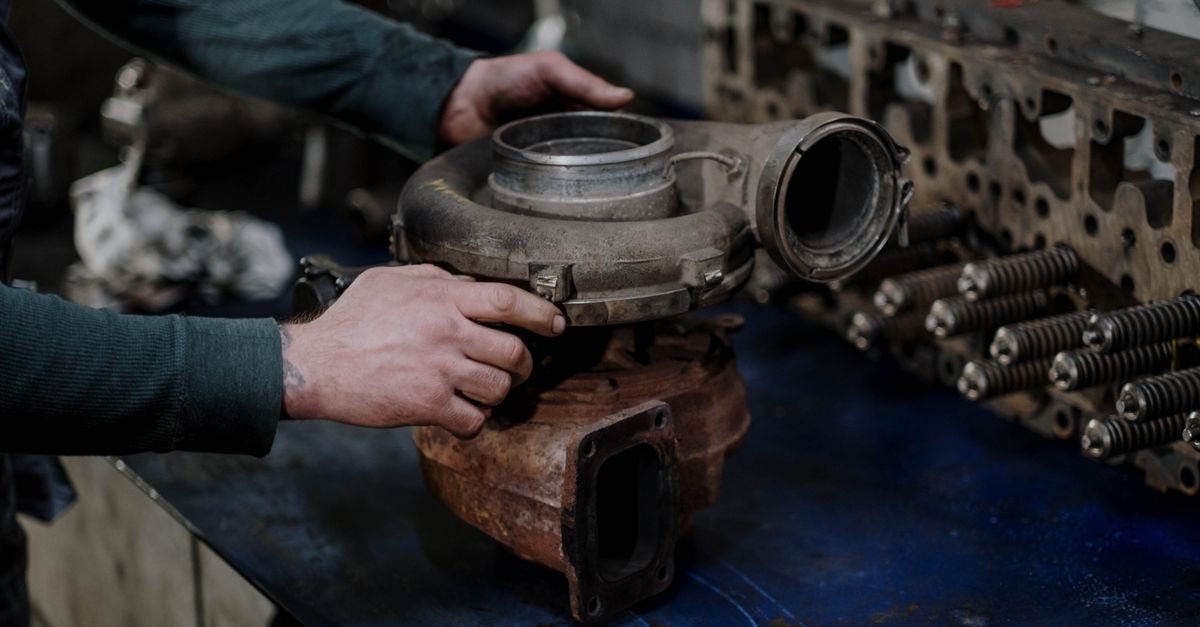
Buying a Used Turbo from Japan: Prices, Checks and Shipping (2026)
The Rundown
- HKS GT turbos and kits for the SR20 sold on Yahoo! Auctions for a median ¥76,800 (about $480) across 31 sales in the roughly 120 days to 24 Sep 2026, with the middle half between ¥40,500 and ¥150,000.
- TRUST/GReddy TD06 turbines and kits sold for a median ¥71,000 (about $444) across 15 sales; 1JZ turbo listings sold for a median ¥40,000 (about $250) across 51 sales, most of them rebuilt or high-flow stock replacements.
- Japan Post's dangerous-goods search lists ターボチャージャー (過給機)/Turbo charger as accepted for international mail, checked 27 Sep 2026. Motor oil is conditional, so a turbo should travel drained and bagged.
- EMS takes parcels up to 1.5 m long and 30 kg to most countries. A bare turbo is well under both; for a kit with its manifold, get the packed weight first.
- Japan's own tariff schedule files exhaust gas turbochargers for motor vehicles under heading 8414.59 (statistical code 010), not 8414.80. Your own customs makes the final call on duty.
Contents
A used turbo is one of the easier big parts to buy from Japan. HKS GT turbos and kits for the SR20 sold on Yahoo! Auctions for a median ¥76,800 (about $480) in the roughly 120 days to 24 Sep 2026, and a turbocharger is on Japan Post’s accepted list for international mail, checked on the official pages on 27 Sep 2026. The real risk is not the post office. It is buying a turbo with worn bearings from a seller who will not answer questions.
Dollar figures here use ¥160 to $1. Prices come from the TSUISO parts price index, which reads sold Yahoo! Auctions results every month.
What does a used turbo cost in Japan?
These are sold prices, part only, for the three turbo lines the index tracks. The window is about 120 days to 24 Sep 2026.
| Turbo line | Sales | Median | Middle half | Low to high |
|---|---|---|---|---|
| HKS GT turbo or kit for the SR20 | 31 | ¥76,800 ($480) | ¥40,500 to ¥150,000 | ¥15,100 to ¥220,000 |
| TRUST/GReddy TD06 turbine or kit | 15 | ¥71,000 ($444) | ¥50,000 to ¥150,000 | ¥15,000 to ¥398,000 |
| 1JZ turbo listings | 51 | ¥40,000 ($250) | ¥29,500 to ¥60,000 | ¥21,900 to ¥330,000 |
Read the ranges before the medians. The HKS line mixes bare turbines with complete タービンキット (turbo kits), from GT-SS to GT3RS. The top of the TD06 range was an unused kit. Most 1JZ sales were rebuilt or high-flow stock replacements, and full HKS single-turbo kits sat near the ¥330,000 top. So always ask what comes in the box.
For scale, a complete SR20DET engine sold for a median ¥321,500 (about $2,009) and a 1JZ-GTE for ¥500,000 (about $3,125) on the same index. A turbo is a fraction of that and ships far more easily, which is the next point.
Can a used turbo be shipped from Japan?
Yes, by post. Japan Post runs an official dangerous-goods search, 航空危険物等品名検索, that grades items by name. The entry ターボチャージャー (過給機)/Turbo charger is marked accepted on all three lines: domestic mail, domestic air and international mail. Compare that with an engine, which the same database refuses outright (see our used engine shipping guide).
EMS then takes a parcel up to 1.5 m long and 30 kg to most countries. A bare turbo is well under both limits. For a full kit with its manifold, ask the seller for the packed weight. The route comparison is in EMS vs courier vs sea.
The big proxies’ lists point the same way. Buyee’s prohibited list names engines and internal-combustion engines, and tenso.com names “Engine”. Neither names a turbocharger, and neither does ZenMarket.
The oil is the problem, not the turbo
Japan Post lists motor oil separately, as accepted internationally only with protective packing. ZenMarket's rules say flammable liquids, oil included, cannot go by airmail. Residual oil is the part of a used turbo these rules catch, so it should travel drained, wiped, with the oil ports capped and the unit sealed in a bag.
What should you check on a used turbo before you pay?
Photos of a clean compressor cover tell you little. These are the checks that decide whether a turbo is a part or a core:
Ask for these before you bid
- Shaft play: a short video of the shaft pushed in and out (axial) and moved side to side (radial)
- Oil in the compressor housing or the intake side, a common sign of worn seals
- Compressor and turbine wheels: no chipped, bent or rubbed fins
- Wheels touching the housing when turned by hand
- Wastegate actuator: rod moves, and it is included if the listing says kit
- What is in the box: manifold, wastegate, oil and water lines, gaskets
A little radial movement is normal on a journal-bearing turbo. Wheels that touch the housing, or oil pooled in the compressor side, are not. Ask for the part number too, so you can match the maker’s spec yourself.
What do the Japanese listing words mean?
Turbo listings lean on a few phrases. Know them before you translate the rest:
- 軸ガタなし / 軸ガタあり (jiku-gata): no shaft play / shaft play present
- ジャンク (junk): sold as possibly not working, priced as a core
- 現状渡し (genjō watashi): sold as it stands
- ノークレーム・ノーリターン: the seller will take no complaints and no returns
- 引き取り限定: pickup only, no shipping at all
- リビルト / オーバーホール済: rebuilt / overhauled, ask by whom and when
ノークレーム・ノーリターン is a seller convention, not a Yahoo! Auctions rule. The full decoder is in what ジャンク means on Yahoo! Auctions.
How do the two buying routes compare?
| Route | What you pay | Who checks the turbo |
|---|---|---|
| Cheapest DIY lane: buy via a proxy yourself | Sold price (for example the ¥76,800 HKS SR20 median) + the proxy’s own fees + the seller’s domestic shipping + EMS | You, when the parcel reaches your door |
| Package/full-service lane | Actual cost plus our fee, with the total quoted before you pay | We ask the seller, check the turbo and send photo and video first |
Duty is separate. Japan’s own tariff schedule files exhaust gas turbochargers for motor vehicles under 8414.59, statistical code 010. That is Japan’s import schedule, so check the import duty guide for your country. If a turbo arrives damaged, the claim runs from Japan: see damaged or lost parts.
Where do buyers get stuck?
Here is the step that breaks most turbo buys. The seller writes 軸ガタ少しあり, ジャンク or ノークレーム・ノーリターン, and does not answer questions in English. Buying through a proxy, you first see the turbo when it reaches your door. So nobody checks shaft play before you pay, and the as-is terms mean you cannot send it back.
We ask the seller, then show you the shaft
We write to the seller in Japanese and get straight answers on shaft play, oil and what is included. We can also receive the turbo in Japan first and send you photo and video of the shaft play and both housings before you commit. You get one total, cost plus a fee, quoted before anything is paid. Send us the turbo listing and your city for a checked, quoted buy.
A used turbo from Japan makes sense when the answers come before the money. Prices move month to month, so check the parts price index for the latest medians before you set a budget.
Frequently asked questions
How much does a used turbo cost in Japan?
On Yahoo! Auctions Japan, in the roughly 120 days to 24 September 2026, HKS GT turbos and kits for the SR20 sold for a median ¥76,800 (about $480 at ¥160 to $1) across 31 sales, TRUST/GReddy TD06 turbines and kits for a median ¥71,000 (about $444) across 15 sales, and 1JZ turbo listings for a median ¥40,000 (about $250) across 51 sales. Those are sold prices for the part only, before the proxy fee, domestic shipping and international postage. The live figures are on the TSUISO parts price index, as of 27 September 2026.
Can a used turbocharger be shipped from Japan by EMS?
Yes. As of 27 September 2026, Japan Post's official dangerous-goods search lists ターボチャージャー (過給機)/Turbo charger as accepted for domestic mail, domestic air and international mail. Motor oil is a different entry and is only accepted internationally with protective packing, and ZenMarket's rules say flammable liquids including oil cannot go by airmail. So a used turbo should be drained, wiped and bagged with its oil ports capped. EMS takes parcels up to 1.5 m and 30 kg to most countries.
What does 軸ガタ mean on a Japanese turbo listing?
軸ガタ (jiku-gata) means shaft play: the turbo's shaft moves more than it should in its bearings. Sellers write 軸ガタなし (no shaft play) or 軸ガタあり (shaft play present), and a listing with 軸ガタあり or ジャンク (junk, sold as possibly not working) is usually priced as a core for rebuilding. On Yahoo! Auctions, as of 27 September 2026, ノークレーム・ノーリターン (no claims, no returns) is a seller convention rather than a platform rule, so get a photo or video of the shaft before you pay.
Is there import duty on a turbocharger from Japan?
It depends on your country. Japan's own tariff schedule (edition of 8 August 2026) files exhaust gas turbochargers for motor vehicles under heading 8414.59, statistical code 010, and parts of them under 8414.90. That is Japan's import schedule, so your own customs decides the code and rate for your import. As of 27 September 2026, the TSUISO import duty guide covers the rules for the US, UK, Australia, New Zealand and Canada.
 Buying a Used Z33 350Z 6-Speed Gearbox from Japan: Prices (2026)
  Buying a Used R154 Gearbox from Japan: Prices & Shipping (2026)
  Buying a Used Intercooler or Radiator from Japan (2026)
  What ジャンク Means on Yahoo! Auctions: Drift Parts Listing Terms (2026)