
2-Way vs 1.5-Way LSD for Drifting: What Japan Actually Runs (2026)
The Rundown
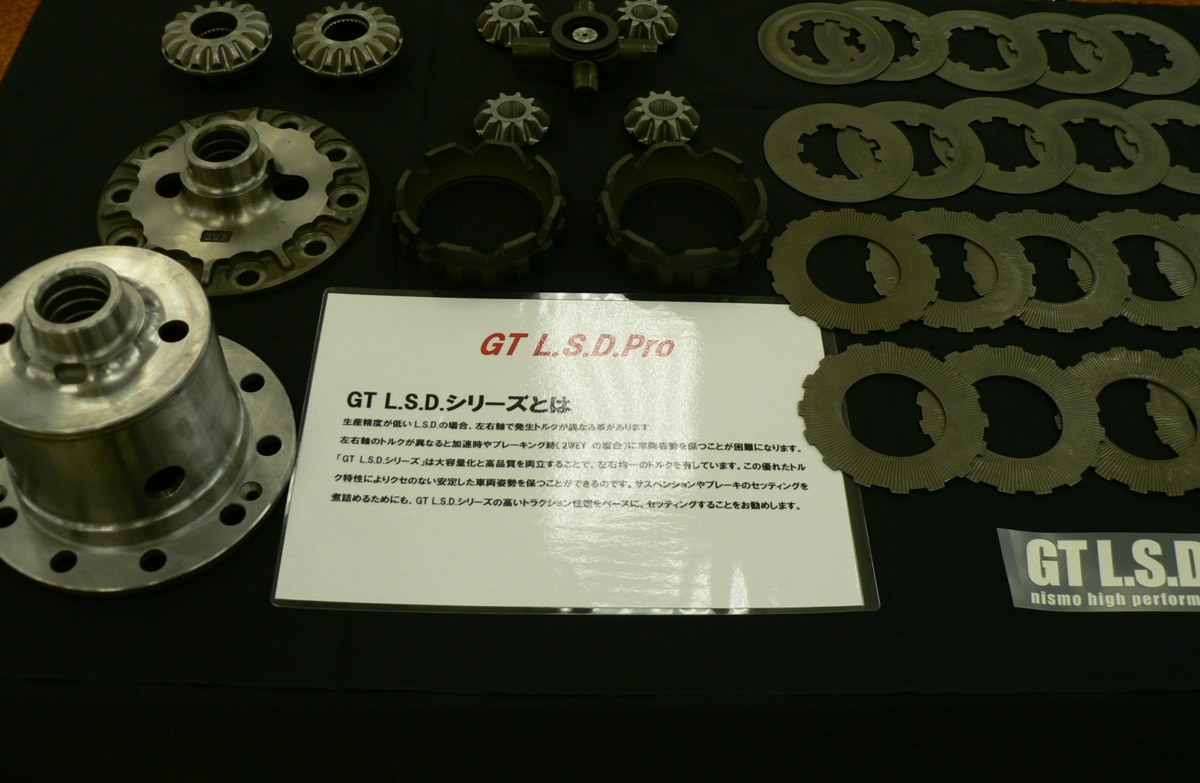
- The Japanese drift default is a clutch-type 2-way LSD — Kaaz officially recommends 2-way for drift, and Nismo's catalogue tells you to run its MIDDLE initial-torque setting when drifting.
- Official list prices as of 9 September 2026: Nismo GT LSD Pro ¥137,500, Cusco type-RS/MZ ¥143,000, Kaaz 2WAY ¥148,500, OS Giken Spec-S ¥184,800 for SR20DET S-chassis.
- A 1.5-way is a comfort choice, not a drift upgrade: owners pick it for street manners or NA power, while 2-way keeps the diff locked off-throttle on entry.
- There is no magic final drive: documented owners chose 4.6 to hold 3rd gear at Nikko, and one NA S15 kept the stock 4.1 after calculating the 90 km/h 2nd-gear entry.
- Fitment kills used-parts deals: S13/S14 NA cars run R180 while turbos run R200, and ABS versus non-ABS diffs differ by about 20 mm in length with different propshafts.
Contents
Drift LSDs in Japan — the numbers
If you strip Japanese drift builds down to one non-negotiable part, it is a clutch-type 2-way LSD: Kaaz’s own catalogue recommends the 2-way for drifting, Nismo’s GT LSD Pro ships with a drift-designated MIDDLE torque setting, and new units for an SR20DET S-chassis cost ¥137,500–¥184,800 at official list as of 9 September 2026. The reasoning, the brand pecking order and the fitment traps below come from the makers’ official pages — checked on 9 September 2026 — and from hundreds of owner reviews on Minkara, Japan’s biggest car-owner review site.
Why does every Japanese drift car run a clutch-type LSD?
Because nothing else holds a slide. Stock S-chassis diffs are open or viscous depending on grade, and Japanese owners describe the viscous units as too weak to keep both rears lit — the phrase that recurs in reviews is that a helical or torsen “can drift, but won’t carry distance”. Owner after owner on Minkara files the mechanical LSD under required equipment for drift, not tuning.
What about the famous welded diff? It exists in Japan, but as a corner-cutting method, not the standard: tuning shops like KUHL publicly advise against welding an open diff, and the used market is so deep — owner reviews report Yahoo Auctions buys at roughly ¥48,000–¥74,000 — that a proper clutch-type is within almost any budget. A used Kaaz at ¥58,000 is the classic first dorisha (drift car) diff.
2-way or 1.5-way — which should you run?
The numbers describe when the diff locks. A 1-way locks only on throttle. A 1.5-way locks hard on throttle and gently off it. A 2-way locks the same in both directions — and that deceleration lock is the whole argument. Drift entries happen off-throttle: you brake, lift, flick. With a 2-way the rear axle behaves identically whether you are on the power or off it, which is why Kaaz states plainly that drifting needs the 2-way’s near-full “analogue” lock, and Cusco’s catalogue credits the 2-way with making the rear controllable on braking for drift and rally. Nismo splits the difference by settings instead: its GT LSD Pro switches between three initial-torque levels without disassembly, and the catalogue assigns LOW to street and circuit, MIDDLE to drift.
Owners tell the same story from the seat. An S14 driver who moved from a Kaaz 1.5-way to a Nismo 2-way describes the lock as baki-baki (バキバキ — the Japanese onomatopoeia for a hard-chattering diff) strong. The people who deliberately choose 1.5-way have street reasons, not drift reasons: one NA Silvia owner picked it because, in his words, the elders taught that a 2-way eats an NA engine’s limited power, and Chiebukuro threads cite passengers’ comfort in town. Both are legitimate — neither is a drift-performance argument.
Which brands do Japanese drifters actually buy?
| Brand / model | Character in owner reviews | Official price (Sep 2026) |
|---|---|---|
| Nismo GT LSD Pro | 3-step initial torque, long-life; one owner logged 20 years / 80,000 km with no overhaul | ¥137,500 |
| Cusco type-RS / type-MZ | RS locks instantly, MZ modulates with throttle; 401 Minkara reviews, 4.45/5 | ¥143,000 |
| Kaaz Standard 2WAY | ”cheap and it works”; the loud one; deep used market | ¥148,500 (Super Q ¥167,200) |
| OS Giken Super Lock Spec-S | quietest of the clutch-types, full lock; Spec-X takes custom cam/torque specs | ¥184,800 (Spec-X +¥11,000) |
| ATS Carbon / Metal | carbon = linear and quiet; metal locks early and hard | no public list price |
Two nuances the table can’t carry. First, character differences are real: a Japanese gymkhana blogger’s much-cited comparison describes Cusco’s type-RS as snapping to lock while the type-MZ lets you feather the lock with the throttle — pick by driving style, not price. Second, no diff is universally loved. One Silvia owner calls his OS Giken conversion his worst purchase — on his grip setup the 2-way behaved like a 1-way and cost him a second a lap, and he reverted within a month — while another owner had OS build his Spec-X with initial torque raised from 8 to 12 kgf·m and loves it. The lesson Japanese buyers draw: the spec sheet matters less than matching the diff to the car’s job.
What final drive ratio do you need?
Japanese owners almost always change the final drive when the LSD is out — reviews casually mention going to 4.1, 4.3 or 4.6 in the same sentence as the diff install. But there is no track-to-ratio chart, and we won’t invent one. The documented logic works backwards from entry speed. One NA S15 owner published the arithmetic: Nikko Circuit’s first-corner entry is roughly 90 km/h, his 2nd gear at 7,000 rpm covered exactly that on the stock 4.083 final, so he kept it. A Chiebukuro thread runs the same numbers the other way — going to 4.6 let a Silvia hold 3rd gear through Nikko and Honjo instead of banging off the 2nd-gear limiter. Ultra-short 4.9–5.1 finals show up mainly on NA builds that need every mechanical advantage. Know your target track’s entry speeds — our track directory lists the venues — and gear so your working gear sits in the powerband there.
Which diff fits your car? The R180/R200 traps
This is where overseas buyers lose money, because the traps are invisible in auction photos and the answers live in Japanese owner forums.
Three fitment traps from owner logs
S13/S14 Silvias split by engine: NA cars carry the smaller R180 axle, turbos the R200 — two Minkara owners record discovering this only after buying. S15s run R200 across the range, with the Spec-R 6MT carrying a stock helical (owner consensus; grades differ). And ABS changes the hardware: one Kaaz buyer found the ABS-car diff about 20 mm shorter, needing the matching shorter propshaft.
A used third member is also a lottery inside: clutch-plate wear, a previous owner’s cam settings, even whether it is genuinely the LSD model the listing claims — none of it visible from photos, and auction sellers answer questions in Japanese only. That verification step is exactly where a Japan-side buyer earns their keep.
The fitment check is the step we take on
We confirm R180/R200 and ABS fitment against your actual chassis code, put the questions to the seller in Japanese, open and photograph the unit where the seller allows it, and quote purchase, handling and shipping as one total before you commit. Send us the auction listing or your chassis code and we'll verify the diff fits before you bid.
Shipping is the easy part by comparison — a bare diff clears the 30 kg postal ceiling once the oil is drained, and we mapped that route in shipping a used gearbox or diff from Japan.
Living with a 2-way: chatter, break-in, oil
The chatter is the toll. Owners describe town driving on a fresh 2-way as a chorus of baki-baki and gori-gori, unpopular with non-car friends — and then, almost universally, report that oil choice and break-in tame it. Cusco officially points chatter sufferers to dedicated LSD oil; owners report the diff’s whole personality changing with oil brand, one Kaaz user finding an aggressive oil made his diff lock savagely and loudly at once. Nismo’s catalogue even builds break-in into the spec: initial torque is listed as settling from 6.5–14.0 kgf·m when new to about 5.0–13.0 after running in, so a diff that loosens slightly in the first weeks is working as designed, not wearing out.
Durability, done right, is a non-story: the standout Minkara log is a Nismo GT Pro run 20 years and 80,000 km — circuit abuse included — with no overhaul. Buy the right type for the job, feed it the right oil, and the 2-way is the one drift part you may never replace. For what the finished car should feel like on a Japanese circuit, start with our S15 buyer’s guide and the grade-by-grade diff notes above.
Frequently asked questions
Is a 2-way LSD better than a 1.5-way for drifting?
For drifting, yes — 2-way is the Japanese default because it keeps locking on deceleration, so the rear stays predictable when you lift or brake into a corner. Kaaz officially recommends 2-way for drift and Cusco's catalogue says the same for drift and rally. A 1.5-way is what Japanese owners choose when street comfort or NA power matters more; as of September 2026 both types cost the same ¥137,500–¥184,800 new.
How much does a drift LSD cost in Japan?
Official list prices read on 9 September 2026: Nismo GT LSD Pro ¥137,500 (S13/S14/S15/180SX), Cusco type-RS or type-MZ ¥143,000, Kaaz Standard 2WAY ¥148,500 (¥167,200 with the WPC-treated Super Q plates), and OS Giken Super Lock Spec-S ¥184,800 with custom-spec Spec-X at ¥11,000 more. Owner reviews report used units on Yahoo Auctions changing hands for roughly ¥48,000–¥74,000.
Can you drift with a welded diff?
It locks the axle, but in Japan it is not the scene's answer: tuning shops such as KUHL publicly advise against welding an open diff, and the drift community treats a clutch-type 2-way as the standard part — every major Japanese maker (Kaaz, Cusco, OS Giken, Nismo, ATS) sells one for the S-chassis at ¥137,500–¥184,800 as of 2026. Stock viscous units are widely described by owners as too weak to hold a slide.
What final drive ratio should I run for drifting?
Work backwards from the track, not from a chart. Japanese owners commonly pair an LSD install with a 4.1, 4.3 or 4.6 final: one documented driver went 4.6 so his Silvia could hold 3rd gear through Nikko Circuit (Tochigi), while an NA S15 owner kept the stock 4.083 after calculating that Nikko's roughly 90 km/h 2nd-gear entry speed already sat at 7,000 rpm. Ratios of 4.9–5.1 appear mainly on low-torque NA builds.
 Steering Angle Kits and Knuckles: How Japan Adds Drift Lock (2026)
  Best Clutch for Drifting: What Japanese Drifters Run (2026)
  Shipping a Used Gearbox, Diff or Engine Out of Japan (2026)
  Discontinued OEM Parts for Drift Cars: What's Still Made (2026)