
Can You Ship a Roll Cage from Japan? Sizes, Rules & Costs (2026)
The Rundown
- Japan Post is the first wall. EMS allows a maximum length of 1.5 m to the USA, UK, New Zealand and France, but only 1.05 m to Australia, Germany, Spain, Denmark and the UAE. International Parcel Post runs on two standards: A is 1.5 m long and 3 m length-plus-girth, B is 1.05 m and 2 m, and 30 kg is the ceiling either way.
- Inside Japan the cage has to reach a warehouse first. Yamato's Takkyubin tops out at 200 cm for length plus width plus height, 170 cm on any single side, and 30 kg.
- Yamato Home Convenience's Kazai Omakase Bin takes a longest side up to 250 cm and 450 cm across three sides, refuses anything over 150 kg, and prices every item by an on-site assessment rather than a published table.
- Real 2026 prices: Saito Roll Cage lists an S15 6-point at JPY 99,000 in steel and JPY 104,500 in chromoly, tax included, made to order with a lead time of about 12 working days.
- Okuyama states plainly that roll bar orders are accepted only to a company address or held at a depot, and that it does not ship them to a private home — checked 13 September 2026.
Contents
You can buy a roll cage in Japan easily; getting it to your door is the hard part, and the number that decides it is length. Japan Post’s EMS allows a maximum length of 1.5 m to the USA, UK, New Zealand and France but only 1.05 m to Australia, Germany, Spain, Denmark and the UAE, and inside Japan a Yamato Takkyubin parcel may not exceed 170 cm on any single side. Meanwhile the cage itself is cheap by overseas standards — Saito Roll Cage lists an S15 6-point at JPY 99,000 in steel, tax included, made to order. Every limit and price below was checked on the official pages on 13 September 2026.
So the cage is not a price problem. It is a length problem, and it has three completely different answers depending on which tier you are buying in.
Can a roll cage go by post from Japan?
Only if every tube in the set fits your destination’s length limit, which for a multi-point cage is unlikely. Japan Post publishes two separate rulebooks, and the country column is the one that matters.
| Service | Max length | Length + girth | Max weight |
|---|---|---|---|
| EMS — USA | 1.5 m | 2.75 m | 30 kg |
| EMS — UK, France, New Zealand, Canada | 1.5 m | 3 m | 30 kg |
| EMS — Australia | 1.05 m | 3 m | 20 kg |
| EMS — Germany, Spain, Denmark, UAE | 1.05 m | 2 m | 30 kg (20 kg to Denmark) |
| International Parcel — standard A | 1.5 m | 3 m | 30 kg |
| International Parcel — standard B | 1.05 m | 2 m | 30 kg |
Japan Post defines girth as (height × 2) + (width × 2) and says each country uses standard A or B for parcels. Note what that does to an Australian or German buyer: a tube a US buyer can post is 45 cm too long for you. No carrier publishes a packed carton length for a cage — that stays TBC until the maker quotes your order — so treat 1.05 m as the ceiling in those markets and 1.5 m everywhere else.
How does the cage even reach a forwarder inside Japan?
This is the step overseas buyers never budget for. Before anything crosses a border, a Japanese courier has to carry the set from the maker to a warehouse, and the domestic limits are tighter than the international ones.
| Domestic option | Size ceiling | Weight | How it is priced |
|---|---|---|---|
| Yamato 宅急便 (Takkyubin) | 200 cm total of L+W+H, 170 cm on one side | 30 kg | Published size-band table |
| Yamato Home Convenience 家財おまかせ便 | 450 cm across three sides, longest side 250 cm | Refused over 150 kg | Assessed and quoted on collection |
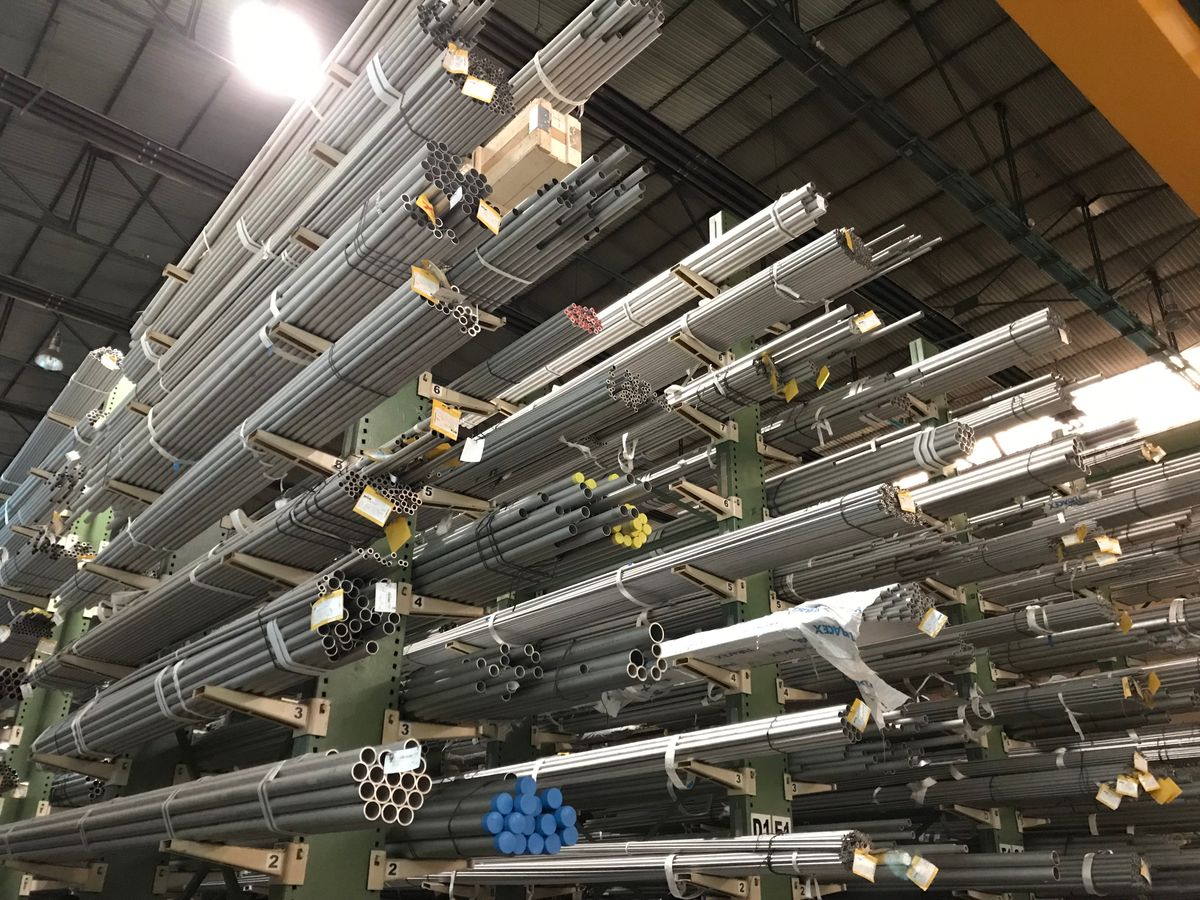
Yamato Home Convenience adds two details written for this exact job: it assesses car parts as a set for symmetrical items up to 200 cm, and anything over 350 cm total or 180 cm on the longest side takes longer than normal delivery. Saito Roll Cage’s own pipe counter points the same way — it sells tube by the metre, ships up to 4 m, and states that 2 m and over is treated as long goods at a higher shipping rate.
Don't get caught out
Consumer proxy services are built around the Takkyubin envelope. The moment one tube goes past 170 cm, your parcel is no longer a parcel to anyone in the chain — not the maker's carrier, not the proxy's inbound desk, not Japan Post. That is normally where the refusal email arrives, and it arrives after you have paid the seller.
What does a roll cage actually cost from a Japanese maker?
Less than the freight, in several cases. These are the makers’ own published figures.
| Maker | Product | Point count | Price (tax incl.) | Material |
|---|---|---|---|---|
| Saito Roll Cage | S15 cage | 4-point | JPY 71,500 | Steel |
| Saito Roll Cage | S15 cage | 6-point | JPY 99,000 | Steel |
| Saito Roll Cage | S15 cage | 6-point | JPY 104,500 | Chromoly |
| Saito Roll Cage | S15 cage | 6-point | JPY 258,500 | Aluminium |
| Cusco | SAFETY21 | 4-point | JPY 69,300 | φ40 steel (STKM13C-SC) |
| Cusco | SAFETY21 | 6-point | JPY 104,500 | φ40 steel |
| Cusco | SAFETY21 | 8-point | JPY 134,200 | φ40 steel |
| Cusco | CUSCO D1 | 4-point | JPY 82,500 | φ40 chromoly, 1.6 mm wall |
| Cusco | CUSCO D1 | 8-point | JPY 160,600 | φ40 chromoly, 1.6 mm wall |
Cusco writes it plainly on its own page — 価格設定は、車種・タイプに関わりなく点数別価格設定です, pricing is set by point count regardless of car and type — and the catalogue bears that out: the same five figures repeat across an Alto Works, a Cappuccino and three generations of Swift Sport. So read the ladder, not the model. CUSCO D1 is the same φ40 in chromoly with a 1.6 mm wall, which Cusco says is around a third lighter than steel and which it notes cannot be used in some competitions. Okuyama’s roll bars are STKM13 carbon steel at φ40 with a 2.0 mm wall, powder-coated black. Whether any of them is accepted by the series you run in is set by that series’ own rulebook, which we do not read for you.
Why does the order stall before it ever ships?
Two published conditions, both easy to miss on a Japanese product page.
Okuyama states outright that roll bar orders are accepted only to a corporate address or held at a carrier depot, and that it does not ship to a private home. Most consumer forwarder addresses are residential. And Saito marks its cages 受注生産 — made to order — with a lead time of about 12 working days for steel and chromoly and 18 for aluminium, so on the day your money leaves, the cage does not exist yet and nobody can measure the carton.
That is the step we take on
We are a Japanese business address, so the maker's carrier will deliver to us, and we can hold a made-to-order set for the weeks it takes to build. Because it lands in our hands, you see the actual item before you commit: we photograph and video the whole set laid out on the floor in Japan — tube ends, welds as they are, any dents or scuffs, the bracket plates — and send you that walkthrough. Then we measure the real longest tube, tell you which of the routes below your set qualifies for, and come back with purchase, handling, crating and freight as one total, landed cost plus a fee, before anything moves. Send us the maker, the car and the point count and we will price the whole route.
What actually moves a cage overseas?
Three tiers, and the price gap between them is enormous.
The three routes, in order of cost
- Bolt-in 4-point, short pieces — the only tier with a real chance of going by EMS or International Parcel, if the longest piece clears 1.5 m (or 1.05 m to Australia, Germany, Spain, Denmark or the UAE) and the set stays under 30 kg. Confirm the packed length with the maker before you pay.
- Loose tubes as sea freight — a crate on an LCL or shared container. There is no published rate to quote here: LCL is priced per cubic metre on the actual booking, and a long, light crate is charged on volume, not weight. Get the total before you commit, the same way we do for any oversized JDM part.
- Fitted to a car you are already exporting — if a shell or a complete drift car is going in the same direction, the cage rides inside it and the marginal freight cost is close to zero. This is why so many caged cars leave Japan and so few bare cages do.
The pattern is the one that governs a used gearbox or diff: the item is cheap, the format is the expense. Duty and tax at the other end are a separate bill — our duty and tax guide covers what your customs will want — and the track directory shows where the cars wearing these cages actually run.
Buy the cage last, not first. Price the route, then price the tubes.
Frequently asked questions
Can I buy a roll cage in Japan and have it shipped to me overseas?
Not by ordinary post, in most cases. As of 13 September 2026, Japan Post's EMS limits allow a maximum length of 1.5 m to the United States, the United Kingdom, New Zealand and France, and only 1.05 m to Australia, Germany, Spain, Denmark and the UAE, with a 30 kg weight ceiling; International Parcel Post uses standard A (1.5 m long, 3 m length plus girth) or standard B (1.05 m, 2 m) depending on the destination country. A welded-in multi-point cage is a set of long tubes, so unless every single tube fits inside your country's length figure, it moves as freight rather than as mail. A bolt-in 4-point with short pieces is the tier that sometimes still fits.
How much does a Japanese roll cage cost in 2026?
Published prices exist and they are lower than most people expect. Saito Roll Cage lists, for the Nissan Silvia S15, a 4-point at JPY 71,500 in steel, JPY 77,000 in chromoly and JPY 181,500 in aluminium, and a 6-point at JPY 99,000 steel, JPY 104,500 chromoly and JPY 258,500 aluminium, all tax included and checked on 13 September 2026. Cusco states that its SAFETY21 pricing is set by point count regardless of the car, and the catalogue ladder we read runs JPY 69,300 tax included for a 4-point up to JPY 134,200 for an 8-point. None of those figures include shipping, which for a long item is quoted separately.
Does a Japanese roll cage maker ship direct to a proxy forwarder?
Often not, and this is where overseas orders stall. Okuyama's roll bar page states that orders are accepted only to a corporate address or for collection at a carrier depot and that it does not ship to a private home, which rules out most consumer forwarder addresses. Saito Roll Cage marks its cages as 受注生産, made to order, with a lead time of roughly 12 working days for steel and chromoly and 18 working days for aluminium, so the part does not even exist on the day you pay. Both statements were checked on the official pages on 13 September 2026.
Is a Japanese cage legal for my racing series back home?
That is decided by your series, not by the maker. Japanese makers publish their own claims only — Cusco, for example, notes on its CUSCO D1 page that chromoly roll bars cannot be used in some competitions — and as of 13 September 2026 we do not read or interpret any overseas rulebook for you. Take the maker's published material, tube diameter and wall thickness (Cusco SAFETY21 is φ40 steel, CUSCO D1 is φ40 with a 1.6 mm wall in chromoly, Okuyama is STKM13 φ40 at 2.0 mm) to your own series' scrutineer before you buy.
 Parts Japan Can't Post: Airbags, Fuel Tanks & Gas Shocks (2026)
  Shipping Drift Parts from Japan: EMS vs Courier vs Sea (2026)
  2-Way vs 1.5-Way LSD for Drifting: What Japan Actually Runs (2026)
  Import Duty on JDM Drift Parts from Japan: US, UK, AU, NZ, CA (2026)