
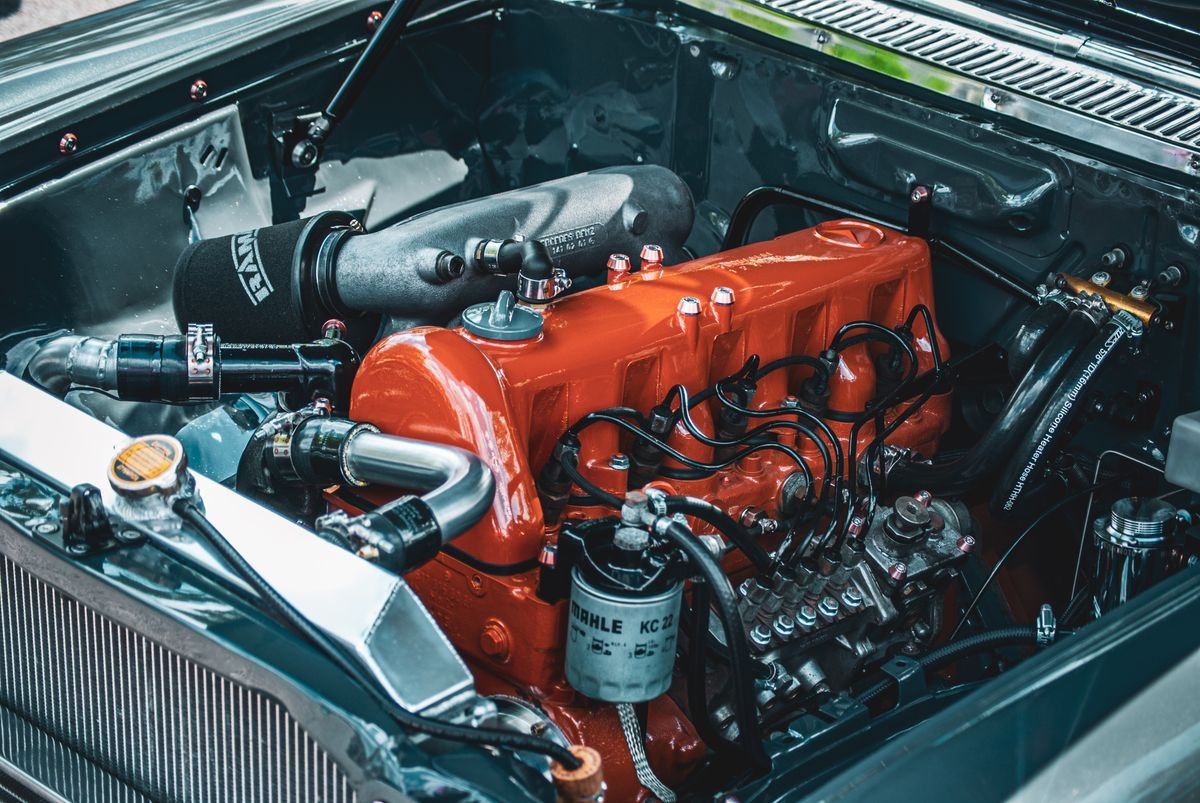
Discontinued OEM Parts for Drift Cars: What's Still Made (2026)
The Rundown
- Four manufacturers run official reproduction programmes for discontinued genuine parts — and between them they cover eight Toyotas, three GT-Rs, two Mazdas and the first-generation NSX. That's the whole list.
- No reproduction programme has been announced for the S13, S14 or S15 Silvia, the 180SX, or the JZX90/JZX100 Chaser and Mark II. The most-driven drift chassis on earth have no factory lifeline as of July 2026.
- NISMO Heritage Parts (R32/R33/R34 GT-R) states its content is aimed at Japan-spec cars and domestic use, and that overseas use falls entirely outside its coverage — including warranty.
- 'Haiban' describes a part number, not a verdict. Superseded numbers, old stock still in the dealer network, and last-call lists like Mazda's all sit ahead of the used market.
- On a 25–35-year-old S-chassis the killers aren't mechanical. Trim, interior plastics, glass, lamp units and outer panels are the categories that stall projects.
Contents
As of July 2026, 4 manufacturers run official reproduction programmes for discontinued genuine parts, and between them they cover 8 Toyotas, 3 Skyline GT-Rs, 2 Mazdas and the first-generation NSX. Nothing has been announced for the S13, S14 or S15 Silvia, the 180SX, or the JZX90 and JZX100 Chaser and Mark II, so the most-driven drift chassis on earth have no factory lifeline. Everything below was read off the manufacturers’ own pages in July 2026.
You asked for a part and the answer came back haiban (廃番) or haishi (廃止) — that part number is discontinued, the factory doesn’t make it, the dealer can’t order it. It sounds like the end of the conversation. For a handful of Japanese chassis it genuinely isn’t: the manufacturer has restarted production of specific parts and you can buy them new. For most drift cars, including the ones most of us actually drive, it is. Which situation you’re in depends entirely on what’s in your garage, and five minutes of checking saves three weeks of emailing the wrong people.
”Discontinued” describes a part number, not your car
At a Japanese parts counter, haiban means one narrow thing: that specific number is no longer produced or held by the manufacturer. Four things it does not mean.
It doesn’t mean the part was never superseded — numbers get replaced, and a dealer searching the current number often finds a live one. It doesn’t mean the shelves are empty; genuine stock sits in dealer and distributor networks for years after production stops, and it’s found by part number, not by asking “do you have anything for an S15”. It doesn’t mean the manufacturer has walked away — some have restarted production, which is the whole subject of this article. And it certainly doesn’t mean the part doesn’t exist in Japan. It means it doesn’t exist new, from the factory, today.
Two more words worth knowing before you start: chuko (中古) is used, and NOS — new old stock — is unused original stock that never got sold, the best outcome short of a reissue.
A reissue is not charity, and it is not nostalgia either — the manufacturers that do it say plainly why. Toyota puts it like this:
"We want to answer the customer who says: I want to keep driving the car my memories are in. That is the thinking behind TOYOTA GAZOO Racing's GR Heritage Parts Project — reissuing parts for older cars."
「思い出の詰まった愛車に乗り続けたい」というお客様の想いに応えたい。このような思いでTOYOTA GAZOO Racingは、旧車用部品の復刻、「GRヘリテージパーツプロジェクト」に取り組んでいます。
View the original post ↗Keep that sentence in mind while you read the next table. It explains both who is covered — and who isn’t.
Which chassis have an official reproduction programme
Here’s the honest map, read off the manufacturers’ own pages in July 2026.
| Chassis | Official reproduction programme? | Programme |
|---|---|---|
| AE86 Corolla Levin / Sprinter Trueno | Yes | Toyota GR Heritage Parts |
| A70 Supra | Yes | Toyota GR Heritage Parts |
| A80 Supra | Yes | Toyota GR Heritage Parts |
| R32 / R33 / R34 Skyline GT-R | Yes | NISMO Heritage Parts (Japan-domestic scope) |
| FC3S / FD3S RX-7 | Yes | CLASSIC MAZDA reproduction parts |
| NA Roadster | Yes | CLASSIC MAZDA (restore service + parts) |
| NA1 / NA2 NSX | Yes, from April 2026 | Honda Heritage Works |
| S13 Silvia / 180SX | No | none announced |
| S14 Silvia | No | none announced |
| S15 Silvia | No | none announced |
| JZX90 / JZX100 Chaser, Cresta, Mark II | No | none announced |
| S2000, Z32, NB Roadster | No | none announced |
Toyota’s is the deepest. GR Heritage Parts currently reproduces parts for eight models — the 2000GT, A70 and A80 Supra, the AE86, and Land Cruiser 40/60/70/80 — with a searchable list by model and category, an English site, and a reproduction-request form that feeds into what gets made next. It is also genuinely alive: in September 2025 Toyota announced reproduction of the 4A-GE cylinder head sub-assembly and cylinder block sub-assembly for the AE86, with preorders opened at Fuji Speedway and sales planned for around May 2026. In March 2026 it announced a reproduced A80 Supra instrument panel for release around autumn 2026. A manufacturer casting new blocks for a 1983 engine is not a marketing exercise. (If you’re weighing an AE86 purchase, our Trueno vs Levin price gap piece covers the other half of that decision.)
NISMO Heritage Parts covers the R32, R33 and R34 Skyline GT-R, and the programme states it will keep expanding reproduction items for those three. It splits into pure restoration parts — discontinued Nissan genuine parts remade by the original suppliers, in the original packaging — and NISMO replacement parts, made new by NISMO from the discontinued OEM drawings, where materials and methods may differ. Sales run through Nissan dealers nationwide, NISMO Performance Centers, NISMO Omori Factory and NISMO retailers, and you order by NISMO part number. NISMO is also unusually honest about fragility: it warns that ageing tooling and material sourcing mean delays, order suspensions and outright discontinuation happen more often than with normal products.
CLASSIC MAZDA covers the NA Roadster and the FC/FD RX-7, and it does something the others don’t: it publishes a final procurement list — genuine parts still supplied, but whose supply is ending, orderable through Mazda dealers and parts companies until the cutoff. That’s a last-call list, and it’s the single most actionable document in this entire article for anyone with an FD. Honda Heritage Works started 1 April 2026 with the first-generation NSX, combining reissued and compatible genuine parts with a restoration service; Honda says it plans to widen the programme to other older sports models, but has named none.
Now the part nobody wants to print. There is no reproduction programme for the S-chassis. None for the S13, S14 or S15 Silvia, none for the 180SX, and none for the JZX90/JZX100 Chaser, Cresta or Mark II. The chassis that fill every grid at Ebisu are the ones with no factory route back.
Model lines covered by each official reproduction programme, counted off the manufacturers' own pages in July 2026. Hover a bar for the models. The bottom row is the one most drift builds are standing on.
A heritage programme covers a car, not a brand
Nissan supporting the R34 GT-R tells you nothing about your S15, and Toyota casting AE86 engine blocks tells you nothing about your JZX100. These programmes are model-by-model, and most drift chassis are outside all of them. Check your exact chassis before you assume a factory route exists.
What to do when there’s no programme
The routes still work. They just run in a specific order, and most people start at step four.
Steps one to three are the ones overseas buyers skip, and they’re the cheapest. Steps four and five are where the proxy and exporter services come in — and where their limits start to show, because those services move parcels rather than judge parts.
The S-chassis parts that actually stop projects
Mechanical wear items are the easy half. Bearings, bushes, seals, clutches, brake components, cooling — the aftermarket covers them well, often better than the original, because demand is constant and the parts are simple enough to copy accurately.
The hard half is everything that was moulded, pressed, glazed or grained once and never again: interior plastics and trim, glass, lamp units and lenses, badges, mouldings, weatherstrip and outer body panels. Nobody tools up to reproduce a dashboard for a chassis with no factory programme behind it, and 25 to 35 years of Japanese summers are hard on exactly that category. This is a general truth about cars of this age rather than a specific availability forecast — but it’s why a running S15 with a cracked dash and hazed lamps is a harder project than one with a tired engine. Our S15 buyer’s guide goes deeper on what to check when you’re buying the whole car rather than the part.
Condition, decided on evidence
Which brings you to the real problem with route four. A used genuine part is the right answer for most S-chassis needs, and it is also a photograph of unknown honesty taken by someone with an incentive. “Small crack” can mean a hairline in the gelcoat or half the mounting tabs missing. A “genuine” bumper can be a copy. A knuckle with a clean casting can still be bent.
That’s the gap we work in. We can put hands on the part here in Japan and send you a walkthrough in photos and video before any money moves — the mounting tabs and their root radii, corrosion at the fixings, thread condition, cracks around bolt holes, whether the stamped part number matches what the listing claims, and whether the plastics have gone brittle. It turns a guess into a decision you make from evidence, which is the only way this works from ten thousand kilometres away. Big items then have their own problem, which is getting them out of the country intact.
Have this ready before you chase a used OEM part
- The genuine part number — from a parts diagram, not the model name. Searches by number find listings that searches by "S14 Silvia" never surface.
- Your chassis code and build month — off the plate. Mid-production variants are the most common reason a "correct" part doesn't fit.
- Left- or right-hand-drive spec — plenty of interior, lighting and pedal-box parts differ, and export-market equivalents aren't always interchangeable.
- Photos of the ugly side — mounting faces, tabs, bolt holes and threads. Sellers photograph the pretty side by default.
- A shipping plan for anything large — the freight decision for a bumper or dash belongs at the start, not after you've won it.
The summary is short. Four manufacturers reissue discontinued parts, they cover a narrow and specific list of cars, and if you drive an S-chassis or a JZX you are not on it. That isn’t a reason to give up on the car — Japan’s used and specialist market has kept these things running for two decades without any factory help and will keep doing it. It just means your sourcing strategy has to be built around finding and verifying real parts rather than waiting for new ones.
Frequently asked questions
Is a part my Japanese dealer calls discontinued gone forever?
Not necessarily, and 'discontinued' (haiban / haishi) refers to a specific part number rather than the whole car. Ask 3 questions: whether the number was superseded by a newer one, whether any stock remains in the dealer network, and whether your chassis is covered by a reproduction programme. As of July 2026 there are 4 official reproduction programmes, between them covering 8 Toyotas, 3 Skyline GT-Rs, 2 Mazdas and the first-generation NSX. Only once all 3 answers are 'no' are you into the used and aftermarket world, which is where most S-chassis parts have lived for years anyway.
Is there a Nissan or NISMO heritage parts programme for the Silvia?
No. As of July 2026, NISMO Heritage Parts covers the R32, R33 and R34 Skyline GT-R only, and the programme states it plans to expand reproduction items within those same three chassis. No official reproduction programme has been announced for the S13, S14, S15 or 180SX. NISMO does sell tuning parts listed under Silvia and 180SX in its normal catalogue, but that's aftermarket product, not reissued OEM.
Can I buy NISMO Heritage Parts if I live overseas?
The parts are sold through Nissan dealers nationwide in Japan, NISMO Performance Centers, NISMO Omori Factory and NISMO retailers, and you order by NISMO part number. The programme's own notes state its content targets Japan-spec vehicles and domestic use, that overseas use falls entirely outside its scope, and that parts meeting Japan's safety standards may not meet the rules where you live. That's a statement about coverage and compliance, not a ban on the parts leaving Japan — but it does mean the warranty and the regulatory risk are yours once the box crosses a border. As of July 2026 the programme covers 3 chassis, the R32, R33 and R34 Skyline GT-R, and no Silvia, 180SX or JZX is on it.
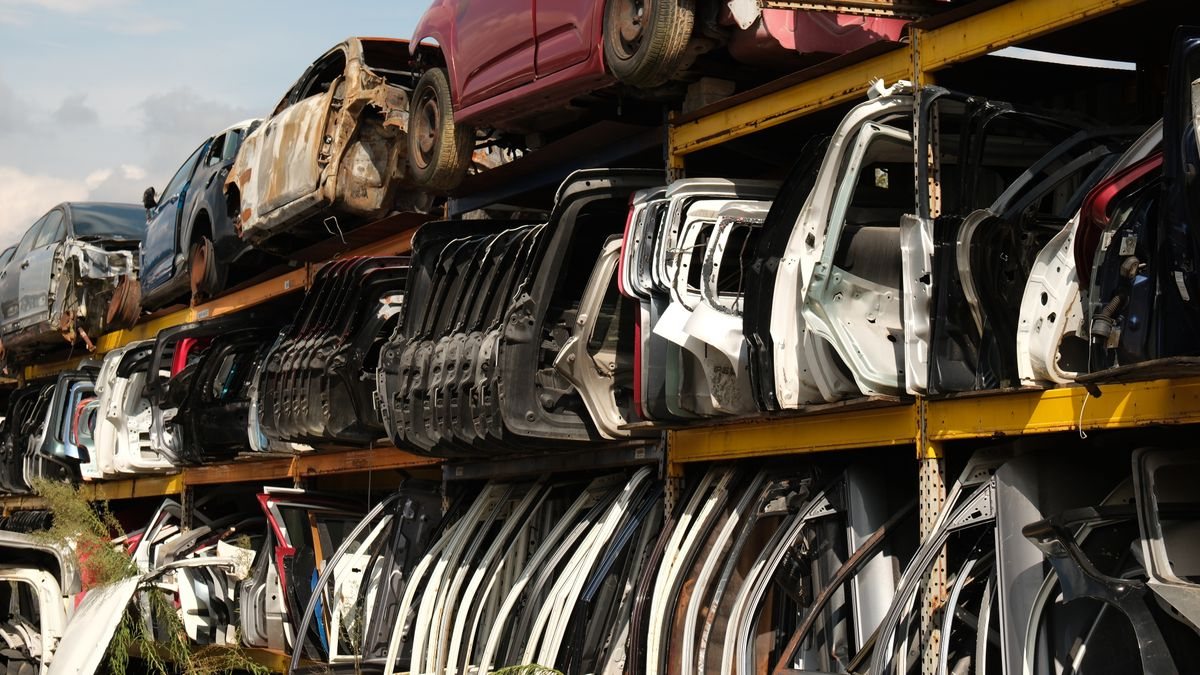 Used S13, S14 and S15 Doors and Body Panels From Japan (2026)
 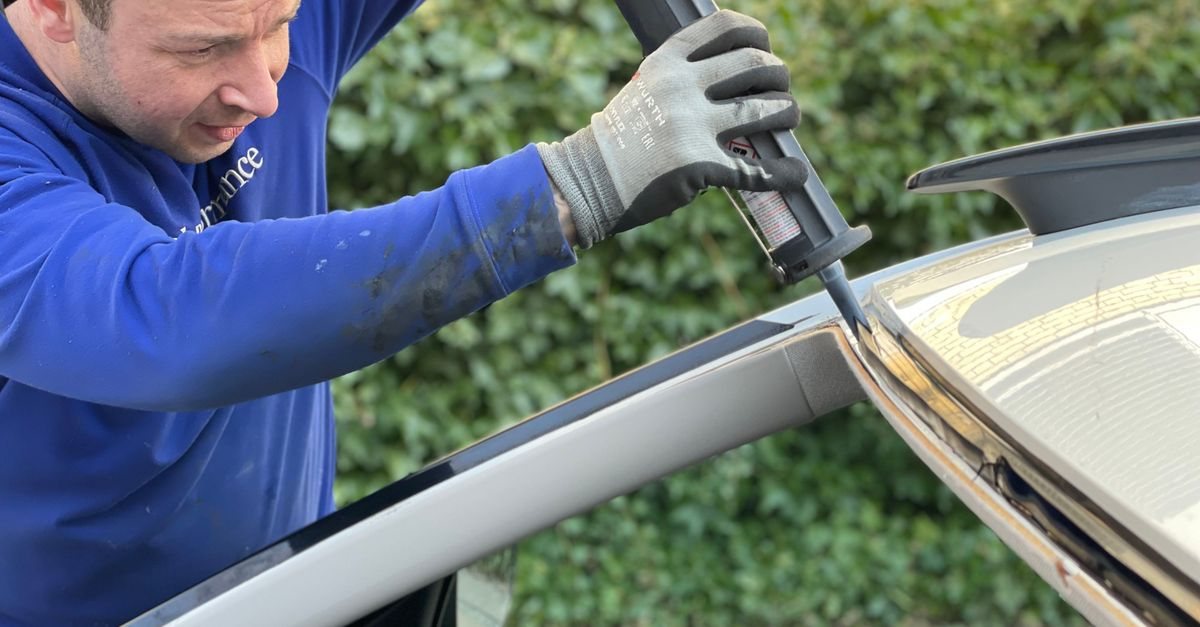 Silvia and 180SX Windscreen From Japan: Used vs New Glass (2026)
  2-Way vs 1.5-Way LSD for Drifting: What Japan Actually Runs (2026)
  Used S13, S14, S15 and 180SX Dashboards From Japan: Prices (2026)