
Buying a JDM Front Clip (Half-Cut) From Japan (2026)
The Rundown
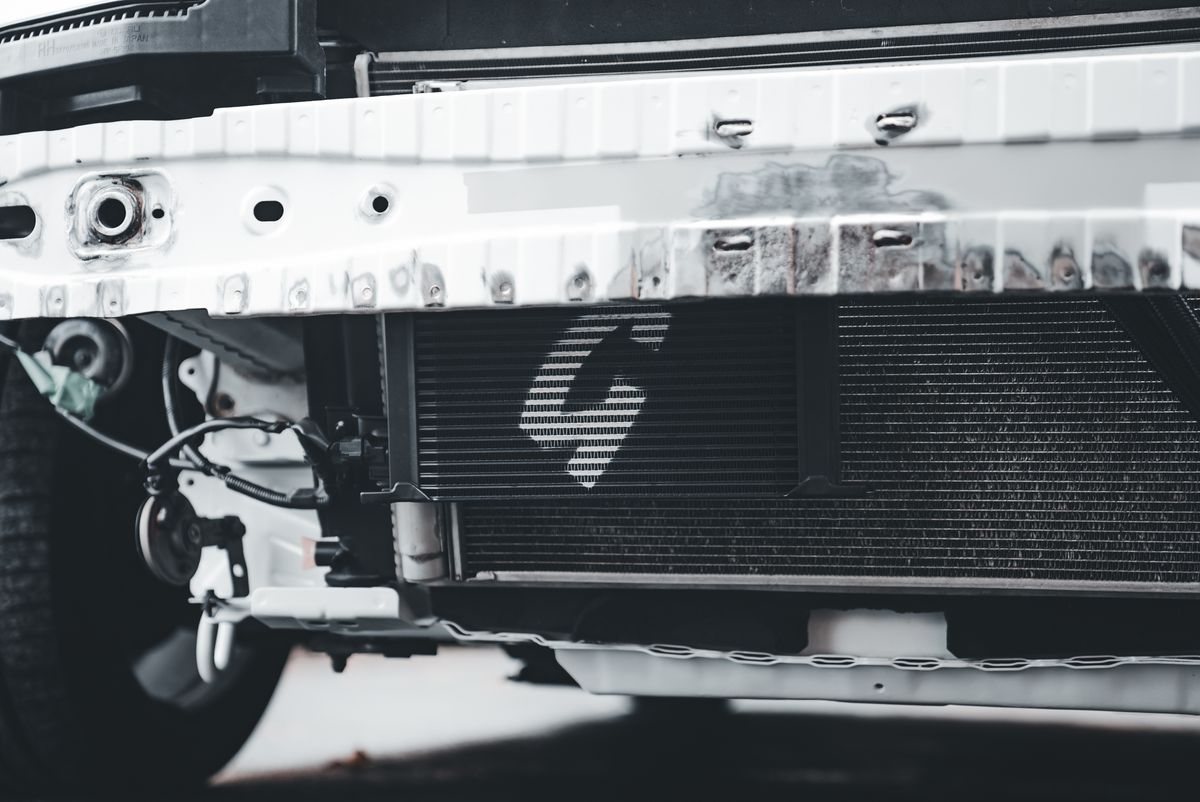
- A Japanese ハーフカット (half-cut) has no standard content list. One dismantler's own walkthrough (Auto Recycle Nakashima, Fukuoka, published 12 October 2018) removes the doors, boot lid and suspension before the shell is cut, so what reaches you is whatever that yard chose to leave attached.
- Yahoo! Auctions listed about 8,118 items under the keyword ハーフカット in the cars and bikes category on 7 September 2026, but only about 6 under ハーフカット plus エンジン. Sorted by price, the top results are all marked 引取限定 (collection only) or 発送不可 (cannot be shipped).
- Published prices exist for the pieces, not the package: 廃車ドットコム's used-parts price examples list a used S13 Silvia engine at ¥100,000 and an R32 Skyline engine at ¥120,000, and a live Yahoo listing on 7 September 2026 offered a 2JZ-GTE with ECU and an R154 five-speed at ¥1,133,000, ¥1,430,000 buy-it-now.
- A half-cut itself has no published price — the Kyoto exporter La Terre lists ハーフカット as an export product and quotes by phone, and Inoguchi Kaitai in Gunma sells from a 7.5-million-item shared network with no prices on the page (both checked 7 September 2026).
- There is no postal route. Buyee's prohibited list for all countries names Engines and Internal-combustion engines, tenso.com's names Engine, and Japan Post caps international parcels at 30 kg. It moves as freight, quoted per shipment.
Contents
- What is a Japanese half-cut, and what actually comes with it?
- Where are half-cuts actually sold in Japan?
- What does a half-cut cost, and what has no price at all?
- Why do proxies bounce it, and how does it really move?
- The step that traps an overseas buyer
- What happens when a loose engine reaches the USA or Australia?
- What is wrong with a half-cut that no photograph shows?
- What they sell for in Japan right now
- The short version
JDM half-cut at a glance
You can buy a Japanese half-cut, and none of the route runs through a proxy account. Yahoo! Auctions carried about 8,118 items under the keyword ハーフカット in the cars and bikes category on 7 September 2026, and sorted by price the top results are all marked 引取限定 (hikitori gentei, collection only) or 発送不可 (cannot be shipped). The package is bought domestically, collected by road inside Japan, drained, crated, and then moved as freight quoted per shipment.
Every price, rule and listing below was read off the live pages and official documents on 7 September 2026.
What is a Japanese half-cut, and what actually comes with it?
Start with the honest answer: there is no standard content list, and the word describes an act of cutting rather than a defined product.
| Listing word | What it reads as | What the source actually says |
|---|---|---|
| ハーフカット (half-cut) | The car cut in half | Auto Recycle Nakashima’s own dismantling walkthrough (Fukuoka, published 12 October 2018) puts it plainly — 「ハーフカットとは、文字通り車を半分に切ってしまいます」 — and the doors, boot lid and suspension come off before the cut: 「まずは、ドアやトランク、足廻りなどを外します」 |
| ノーズカット (nose cut) | The front panel section | La Terre in Kyoto sells ハーフカット and ノーズカット as one export product line, listed separately from its エンジン部品 category (engine, starter, radiator, alternator) and its 駆動・足回り部品 category (transmission, steering gearbox, driveshafts) |
| エンジン・ミッション一式 | Engine and gearbox set | The live Yahoo listing we read pairs a 2JZ-GTE with its ECU and an R154 five-speed and no body structure at all |
So the model most overseas buyers arrive with — engine, gearbox, loom, ECU, ancillaries, radiator support and front subframe in one crate — describes the best version of a half-cut, not a guaranteed one. Two yards can use the same word and hand over very different objects.
One term you will meet next to it is ニコイチ (nikoichi). Goo-net’s glossary defines it as making one thing out of two, and in cars as building one vehicle from the usable parts of two old or damaged ones; three cars makes it サンコイチ, four ヨンコイチ. Applied to a half-cut it means the engine and the gearbox may never have run together.
Where are half-cuts actually sold in Japan?
Four places, and only two of them publish prices.
Search results lie about the size of this market
Yahoo! Auctions shows about 8,118 hits for ハーフカット, but the keyword is noisy — the first page is car covers, sound-deadening sheet cut in half, and window film. Search ハーフカット together with エンジン and the count drops to about 6. The real front-end packages hide under フロントカット, under the chassis code, or under no keyword at all because the yard never listed them online. Counts read 7 September 2026.
Yahoo! Auctions publishes prices, and the drivetrain packages there are real. Reading the listing is a skill of its own — our guide to Yahoo! Auctions parts listings covers the vocabulary.
Croooober / UP GARAGE does not serve this tier. A search for エンジン本体 on UP GARAGE’s EC site on 7 September 2026 dropped us into its general used-parts list of 648,895 items with no complete engines in it. That business is built around small, boxable parts.
Dismantlers and parts traders (解体屋・部品商) are where half-cuts genuinely live, and they publish nothing. Inoguchi Kaitai in Tatebayashi, Gunma, states it keeps 常時300台以上の部品取り車 — 300-plus donor cars on site at all times — and sells from a shared network of 約750万点以上, about 7.5 million parts, with a freephone number and no prices on the page.
Export-facing dismantlers are a subset of the same trade. La Terre in Kyoto works from 月間約1,000台の解体車 (about 1,000 dismantled cars a month) and says 入庫する車輌の中にはハーフ カットで出荷する車輌も多数入庫します — many of the cars arriving are shipped out as half-cuts. Its export page carries a Japanese phone number, Japanese text and not one price.
What does a half-cut cost, and what has no price at all?
| Route | What is actually priced | Figure read on 7 September 2026 |
|---|---|---|
| Bare used engine, domestic reference | 廃車ドットコム’s published used-part price examples | S13 Silvia engine ¥100,000, R32 Skyline ¥120,000, FD3S RX-7 ¥80,000. The page states 中古部品はひとつひとつ状態が違うので状態によって価格が違います — every used part differs, use as a reference only. It carries no publication date |
| Engine + ECU + gearbox set, public auction | Yahoo! Auctions listing s1243378114, Nagano | ¥1,133,000 current, ¥1,430,000 buy-it-now, 0 bids, closing 12 September 2026. Delivery: 法人様宛配送 又は西濃運輸支店止め配送のみ — business address or depot hold only |
| Front cut from a yard, public auction | Yahoo! Auctions listing k1239028597, Kyoto | ¥220,000 buy-it-now, 引取限定, handover at the counter with a ¥500 admin fee. Note what it is: an exterior-parts front cut, not an engine package |
| A true half-cut from a dismantler | La Terre, Inoguchi Kaitai and the yards behind them | No published price — quoted per unit on enquiry (checked 7 September 2026) |
| Collection, draining, crating, freight | Nobody’s rate card | Quoted per shipment. Actual costs plus a handling fee, given to you as one total before you commit |
The cheapest route you could attempt alone is the bare-engine one: buy an engine someone has already pulled, priced in public, around the ¥100,000 that 廃車ドットコム documents for an S13. You then own an engine and none of the loom, ECU, subframe, rad support, lines or brackets that make it start in a different shell — which is the whole reason people want a half-cut instead.
Why do proxies bounce it, and how does it really move?
Buyee’s prohibited items list for all countries names Engines and Internal-combustion engines, and says that for items it has determined it cannot handle, you cannot buy them through the service even for domestic delivery. tenso.com’s list names Engine and, usefully here, Suspensions (car parts). Japan Post’s International Parcel service caps at 最大30kgまで — 30 kg. We proved that out at length in shipping a used gearbox, diff or engine out of Japan, and what proxies can and cannot do covers their fees.
So it is freight. Crate or pallet, air cargo or ocean LCL, quoted from actual weight, outside dimensions, the port pair, whether fluids are drained and how it is crated — the same volumetric fight we set out for oversized aero, seats and wheels, except a half-cut is both bulky and dense. Any flat number you find online is TBC until it is a quote for your crate to your port.
The step that traps an overseas buyer
Name it precisely, because it is one link and it has no remote substitute. The seller is a Japanese dismantler who does not publish a price, quotes by phone in Japanese, and has no export desk. The item cannot be posted at any weight or by any service. And before a freight quote can even exist, somebody has to turn up at that yard on the yard’s day, pay domestically, load a half-car onto a truck, drain it and build a crate around it — inside Japan.
That is the part we take on
We call the yard, get the parts list and the price in Japanese, and buy it domestically on a Japanese address so the seller is dealing with a Japanese buyer. Before it moves we record it where it stands: block and head numbers, the loom and where it was cut, the ECU label, oil weeps on the sump and rear main, the gearbox and its bellhousing, and a cold start on video if the yard will run it. Then we collect it by road, drain it, crate it for the lane it is travelling on, and quote purchase, domestic collection, draining, crating and freight as one total — actual costs plus a handling fee, agreed before anything is bought. Send us the chassis code, the engine you want and your destination port to start a half-cut sourcing job.
What happens when a loose engine reaches the USA or Australia?
Importing an engine is not importing a vehicle, and the paperwork does not transfer across.
United States. EPA Form 3520-1, dated August 2024 and titled Importation of Motor Vehicles and Motor Vehicle Engines Subject to Federal Air Pollution Regulations, states that it must be submitted to CBP “for each motor vehicle (including motorcycles, disassembled vehicles, kit cars, light-duty vehicle/motorcycle engines) imported into the U.S.” A bare 1JZ, SR20 or RB is inside that scope. Which box gets ticked is the unresolved part. Code E, the 21-year provision, is written for a vehicle “at least 21 years old … and in original unmodified configuration”, and the only engine-specific entry, code W, covers a “non-chassis-mounted engine to be used in a light-duty vehicle or light-duty truck or motorcycle which is currently covered by an EPA certificate” — which a JDM engine is not. The form also warns that improper import can be fined “up to $44,539 per vehicle or engine”. We could not resolve from the form which code fits a bare JDM engine: TBC, and a question for a licensed customs broker before the crate is booked.
Australia. The asbestos prohibition is written against goods, not vehicles, so a whole-car exemption argument does not help you. The Australian Border Force’s list of goods that might contain asbestos includes “Brake linings, blocks or disc pads”, “Clutch linings”, “Gaskets or seals” and “Friction materials for, or in, internal combustion and electric motor vehicles” — which is a description of the clutch and gasket set that arrives bolted to a 1990s half-cut. Our asbestos and biosecurity guide covers how that is evidenced. On the dirt side, whether a loose engine assembly is treated the same way as a whole used vehicle — full inspection unless processed by a recognised offshore provider — is TBC: the department’s own pages did not respond when we tried to re-read them on 7 September 2026, so we are not going to state the rule from memory.
What is wrong with a half-cut that no photograph shows?
Compression. Oil weeping from the rear main. A loom cut 300 mm from the bulkhead instead of at the connectors. An ECU from the wrong model year. An immobiliser that will not let the engine run outside its donor car — Japanese sellers advertise 【イモビライザー無し】 in listing titles precisely because it is the difference between a running swap and a puzzle.
The listings say this out loud if you read the Japanese. The 2JZ-GTE set above discloses that the clutch will not disengage and states 写真に写っているものがすべてになります — what is in the photo is all you get. The 200 HiAce front cut is sold ノークレームノーリターン, no claims and no returns, because it is a cut part.
None of it is visible from a listing gallery, and none of it can be chased after the crate has sailed. It is settled by somebody standing next to the object in Japan with a compression tester, a torch and a camera, sending you the walkthrough — underside, block, loom, ECU label, cold start — so you decide on evidence before you commit.
What they sell for in Japan right now
A half-cut has no auction market to price it against, so here is the next best thing: what the engine inside it and the nose on the front of it sold for separately in Japan this season.
| Part | Sold (120 days) | Median | Middle half (Q1–Q3) |
|---|---|---|---|
| SR20DET engine (S13/S14/S15/180SX) | 31 | ¥321,500 ($2,009) | ¥214,000 – ¥450,000 |
| 1JZ-GTE engine (JZX90/100, JZZ30) | 17 | ¥500,000 ($3,125) | ¥294,500 – ¥649,000 |
| S13 Silvia front bumper (aftermarket) | 28 | ¥36,000 ($225) | ¥17,291 – ¥39,550 |
| S14 Silvia front bumper | 20 | ¥23,500 ($147) | ¥8,500 – ¥29,625 |
| S15 Silvia front bumper | 29 | ¥15,000 ($94) | ¥9,250 – ¥35,000 |
| 180SX front bumper | 46 | ¥35,000 ($219) | ¥10,000 – ¥42,125 |
Completed Yahoo! Auctions sales in the 120 days to 24 September 2026, the part only, before collection, crating and freight; dollars at ¥160 to $1. Complete front cuts themselves almost never trade on Yahoo! Auctions: our September 2026 read of closed listings for Silvia front cuts returned 28 sales, nearly all small parts that happened to use the term, which is why the clips come from dismantlers and exporters at quoted prices rather than from a bidding history. The live table, refreshed on the 1st of every month, is the JDM drift parts price index; what is listed this morning is on drift parts for sale today, and each chassis has its own page: S13, 180SX, S14, S15, AE86, JZX100.
The short version
A half-cut is a real product with no standard specification, sold mostly by yards that publish no prices and quote by phone in Japanese. The public anchors are for the pieces — ¥100,000 for a used S13 engine on 廃車ドットコム’s reference table, ¥1,133,000 for a 2JZ-GTE and R154 package on Yahoo! Auctions on 7 September 2026 — while the package itself is quoted per unit. No proxy will handle it, no postal service will carry it, and the destination rules for a loose engine are not the ones written for a car.
Everything hard about it happens in a yard in Japan, on a Tuesday, in Japanese.
Frequently asked questions
Can I buy a JDM front clip from Japan if Buyee and ZenMarket refuse engines?
Yes, but not through a proxy account. Buyee's prohibited items list for all countries names both Engines and Internal-combustion engines, and states that for items it has determined it cannot handle you cannot buy them through the service even for domestic delivery; tenso.com's prohibited list names Engine and Suspensions (car parts). Both were checked on 7 September 2026. A half-cut is bought domestically from the yard on Japanese payment rails, collected by road inside Japan, drained, crated, and then moved as air cargo or ocean LCL freight, which is quoted per shipment rather than by a published rate card.
How much does a half-cut cost in Japan?
There is no published price for a half-cut — the Kyoto exporter La Terre lists ハーフカット and ノーズカット as export products with no figures and a Japanese phone number, and Inoguchi Kaitai in Gunma sells from a shared network of about 7.5 million parts with nothing priced on the page, both checked on 7 September 2026. What is priced publicly is the pieces: 廃車ドットコム's used-parts price examples list a used S13 Silvia engine at ¥100,000 and an R32 Skyline engine at ¥120,000, and one live Yahoo! Auctions listing read on 7 September 2026 offered a 2JZ-GTE with its ECU and an R154 five-speed at ¥1,133,000, with a ¥1,430,000 buy-it-now.
Do I need EPA approval to import a used engine into the USA?
EPA Form 3520-1, dated August 2024 and titled Importation of Motor Vehicles and Motor Vehicle Engines Subject to Federal Air Pollution Regulations, states it must be submitted to US Customs and Border Protection for each motor vehicle including light-duty vehicle/motorcycle engines, so a loose 1JZ or SR20 is inside its scope. Which box you tick is the unresolved part: code E, the 21-year provision, is written for a vehicle in original unmodified configuration, and the only engine-specific code, W, covers a non-chassis-mounted engine already covered by an EPA certificate. As of 7 September 2026 we could not confirm from the form itself which code fits a bare JDM engine — treat that as TBC and put the question to a licensed customs broker before the crate is booked.
Why won't a courier or the post office take an engine out of Japan?
Because the weight ceiling and the dangerous-goods rules both close it. Japan Post's International Parcel service states a maximum of 30 kg (最大30kgまで), which no complete engine meets, and a complete engine is treated as an air dangerous good in Japan, which we set out in full in our drivetrain shipping guide. That leaves freight: a crate or pallet moving as air cargo or ocean LCL, priced on actual weight, dimensions, the port pair, whether fluids were drained and how it was crated — quoted per shipment, so any flat figure you see online is TBC until it is a quote for your crate to your port. Checked 7 September 2026.
 Buying Used JDM Wheels & Tyres from Japan (2026)
  Shipping a Used Gearbox, Diff or Engine Out of Japan (2026)
  JDM Drift Parts Arrived Damaged or Lost: Who Files the Claim? (2026)
  Shipping a Used Engine from Japan: SR20DET, 1JZ, RB (2026)